
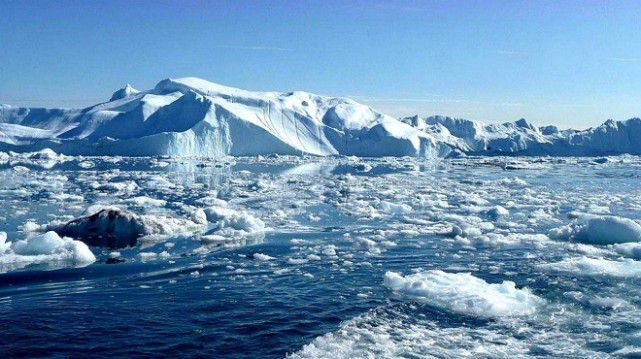
According to the British "Times" recently reported that climate change is quietly reshaping the geographical pattern of the Earth, especially those who rely on natural features to divide the national boundaries, are facing unprecedented challenges. This phenomenon not only reveals the profound impact of human activities on the natural environment, but also portends a border crisis that may trigger international disputes.
For thousands of years, natural features such as mountains, rivers and forests have been an important reference point for dividing national territory. These naturally formed barriers, with their stable forms and distinct boundaries, provided a natural basis for early community division. However, as global temperatures continue to rise and environmental problems such as melting glaciers, diverting rivers, and forest degradation become more serious, these boundaries rooted in nature are experiencing unprecedented erosion. According to the report, there are currently 315 land borders in the world reached by agreement between neighboring countries, often based on the natural features that separate them. However, with the disappearance of natural borders, the foundations of these agreements are being shaken, and territorial and border disputes between countries are likely to escalate.
The Hochjohfeiner Glacier between Italy and Austria is a case in point. This glacier, on the border between the two countries, used to be a natural barrier separating them. Today, however, it is receding at an alarming rate, and the southern side has been exposed to rock, while the remaining glacier lies entirely on the Austrian side. This not only leads to problems with fresh water supply, but also effectively redraws the national border between the two countries. The change has not only sparked a scramble for fresh water resources between the two countries, but could also lead to a broader territorial dispute in the future. Given that Italy and Austria fought bitterly over the territory during World War I, the retreat of the glacier has undoubtedly added a new level of uncertainty to relations between the two countries.
Switzerland and Italy also face border problems caused by melting glaciers. At the foot of the Matterhorn in the Alps, the border between the two countries was originally defined by glacial ridgelines, or areas of permanent snow. However, as the glaciers melt, these natural boundaries gradually disappear, leading both countries to try to preserve their territorial integrity by redrawing the border. Although Switzerland has formally ratified the relevant change agreement, Italy has not yet said so, which undoubtedly leaves a hidden danger in the relationship between the two countries. In addition, the Swiss government claims that the redrawn borders are based on the economic interests of both sides, further highlighting the profound impact of climate change on international relations.
The Sarajna Glacier in Northern Europe has not been spared. The glacier, on the border between Norway and Sweden, has been retreating by about 20 metres a year for the past few decades. The change not only led to a change in water supplies between the two countries, but could also lead to a broader territorial dispute in the future. As the glaciers continue to retreat, the border between Norway and Sweden will become even more blurred, undoubtedly adding a new complication to the relationship between the two countries.
However, melting ice is not the only border issue posed by climate change. Rising sea levels also pose a serious threat to the territorial integrity of coastal states. It is predicted that without significant reductions in greenhouse gas emissions, sea levels could rise by 3 meters by the early 22nd century, which could displace more than 550 million people. For island nations like Kiribati and the Maldives, the change could be catastrophic, and they may even be at risk of disappearing altogether. Sea level rise will not only cause countries to lose most of their maritime rights and interests, but also may raise complex international relations issues. "Rising sea levels will affect local economies and international relations, as countries will have to reassess their territorial sovereignty and maritime rights," said David Meyer, a climate law expert at the University of Reading.
Faced with this grave situation, the international community must take action to deal with the border crisis brought about by climate change. However, the reality is that there are huge differences and contradictions between countries in reducing emissions and addressing climate change. Some countries have pledged to reduce greenhouse gas emissions, but have fallen far short of doing so. This lack of global cooperation and joint action is exacerbating the problem of climate change and exacerbating border disputes and territorial disputes between countries.
In addition, the international community faces legal challenges in addressing the border issues posed by climate change. Because the existing system of international law is largely based on fixed territorial boundaries, it is difficult to cope with boundary changes due to climate change. This leaves countries without a clear legal basis and rules for settling border disputes. Therefore, the international community needs to accelerate the development and improvement of the relevant legal framework to address the boundary challenges brought by climate change.
In short, climate change is quietly altering the geography of the planet and national borders. As environmental issues such as melting glaciers and rising sea levels intensify, borders between countries are facing unprecedented challenges. This has not only raised concerns about territorial integrity among countries, but could also increase tensions in international relations. Faced with this situation, the international community must take action to deal with the border crisis brought about by climate change. However, this requires greater cooperation and joint action by all countries in reducing emissions and addressing climate change. At the same time, the international community also needs to accelerate the development and improvement of relevant legal frameworks to address the border challenges brought by climate change. Only in this way can we ensure peace and stability on Earth and create favorable conditions for the future development of mankind.

近日,市場迎來了一則引人注目的消息:工業巨頭3M公司(MMM.N)在本周五公布了其季度業績報告,隨後股價飆升至近兩年來的

最近,外媒給OpenAI算了筆賬,今年可能要血虧50億美元。

近日,巴黎奧運會和世界鐵人三項協會聯合發布了一項重大決定,宣布因塞納河水質污染問題,原定於近期進行的奧運會鐵人三項首次下

當地時間7月18日,法國巴黎發生了一起令人震驚的持刀襲警事件。

近期,一則重大消息在國際舞臺上引起軒然大波,馬來西亞宣布加入金磚國家。

調查發現,互聯網和智能手機的使用幹擾了韓國近五分之一學生的生活。
© Copyright 2026, All Rights Reserved