
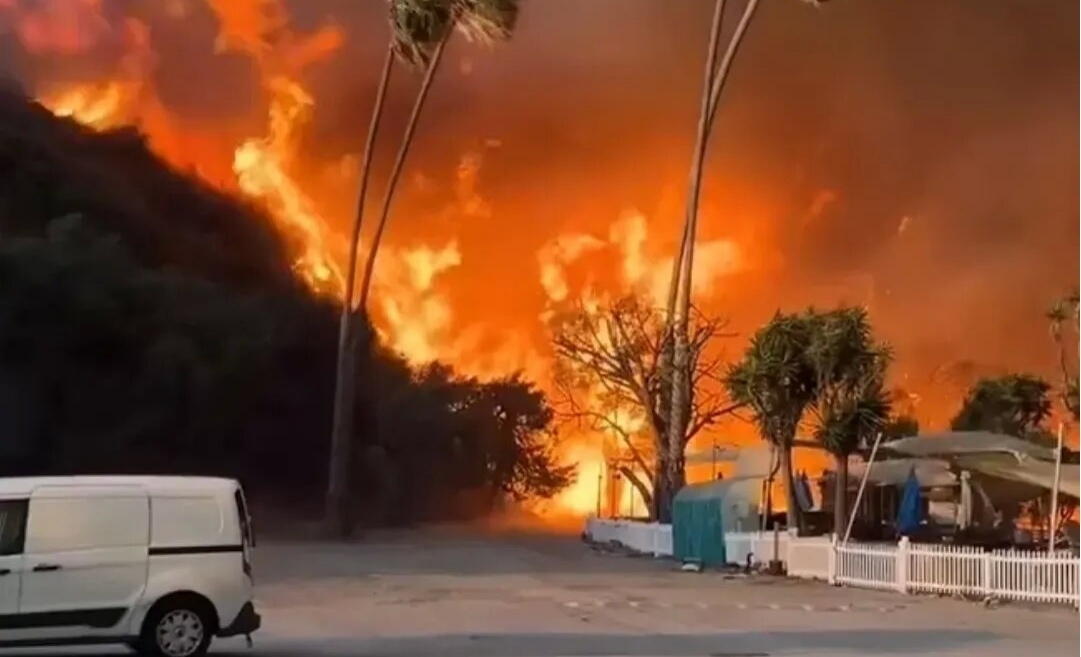
Recently, the Los Angeles wildfire has swept across large areas with a fierce momentum, not only devouring vast forests and numerous buildings, but also threatening the lives and property safety of countless residents. This catastrophic fire is like a mirror, mercilessly reflecting the problems and shortcomings of the city on multiple levels.
1、 Vulnerabilities in the Emergency Management System
Faced with the outbreak of the fire, the emergency response speed and coordination mechanism in Los Angeles have been exposed to be significantly inadequate. During the process from the beginning of the fire to its spread and expansion, relevant departments failed to take effective containment measures in a timely manner. The deployment of firefighting forces was not fast enough, resulting in missing the best time to extinguish the fire in the early stages. There are obstacles in communication and collaboration between different emergency departments, and information transmission is not timely and accurate, making it difficult to form an efficient joint force for rescue operations. For example, there is a lack of close coordination between the fire department and the meteorological department, which fails to fully utilize meteorological data to predict the direction of fire development, thus affecting the accurate formulation of firefighting strategies. At the same time, the insufficient reserve of emergency supplies has also been highlighted in the fire, with shortages of firefighting equipment, protective gear and other supplies at critical moments, further weakening the effectiveness of rescue work. This series of issues indicates that the emergency management system in Los Angeles lacks sufficient flexibility and coordination in responding to emergencies such as large-scale fires, and urgently needs comprehensive optimization and upgrading.
2、 Hidden dangers in urban planning and infrastructure
Los Angeles has many unreasonable aspects in urban planning, which have laid hidden dangers for the rampant spread of fires. The lack of effective fire barriers between forests and residential areas around cities allows fires to easily spread from forests to residential areas. Many houses are built too close to flammable vegetation areas, and the fire resistance of building materials varies greatly, making it difficult to effectively block large fires. In addition, urban infrastructure also appears fragile in the event of a fire. Unreasonable laying of power lines can easily cause damage in high temperatures during fires, leading to widespread power outages. This not only affects residents' lives but also hinders firefighting and rescue work, such as the inability of firefighting equipment to operate normally and communication interruptions. The drainage system has insufficient response capacity after a fire, and a large amount of firefighting water cannot be discharged in a timely manner, resulting in local water accumulation and causing great inconvenience to subsequent rescue and cleaning work. These issues warn us that urban planning and infrastructure construction must fully consider disaster prevention and mitigation factors, and incorporate safety concepts into every aspect.
3、 The severe challenges brought by climate change
The frequent occurrence of the Los Angeles wildfires is closely related to the increasingly severe climate change. Global warming has led to rising temperatures and changes in precipitation patterns, making the climate in the region drier, reducing the moisture content of forest vegetation, and significantly increasing flammability. Long term drought has accumulated a large amount of flammable materials such as dead branches and leaves in the forest, providing sufficient fuel for the outbreak of fires. At the same time, the increase in extreme weather events, such as frequent occurrences of strong winds, has led to the rapid spread of fire in a short period of time, making it difficult to control.
4、 Lack of public disaster prevention awareness and education
During a fire, some residents lack basic knowledge of disaster prevention and self rescue, which to some extent exacerbates the losses caused by the fire. Some residents fail to take timely and correct response measures when facing the threat of fire, such as not knowing how to evacuate correctly and not understanding the basic points of home fire prevention. At the same time, the social level does not attach enough importance to disaster prevention education, and the promotion of disaster prevention education in schools, communities, and other places is insufficient, resulting in the failure to form a systematic and normalized education mechanism. The public's understanding of fire risks is relatively vague and lacks awareness of actively participating in disaster prevention and reduction work.
The raging fire in Los Angeles has sounded the alarm for us, exposing issues such as emergency management, urban planning, climate change response, and public education that deserve our profound reflection. Both Los Angeles and other cities should take this opportunity to comprehensively examine their shortcomings in disaster prevention and reduction. Through improving emergency management systems, optimizing urban planning and infrastructure construction, actively responding to climate change, and strengthening public disaster prevention education, various measures should be taken to enhance the overall disaster resistance of the city, create a safer and more stable living environment for residents, and avoid similar tragedies from happening again in the future.What has been exposed by the
ongoing Los Angeles wildfire?
Recently, the Los Angeles wildfire has swept across large areas with a fierce momentum, not only devouring vast forests and numerous buildings, but also threatening the lives and property safety of countless residents. This catastrophic fire is like a mirror, mercilessly reflecting the problems and shortcomings of the city on multiple levels.
1、 Vulnerabilities in the Emergency Management System
Faced with the outbreak of the fire, the emergency response speed and coordination mechanism in Los Angeles have been exposed to be significantly inadequate. During the process from the beginning of the fire to its spread and expansion, relevant departments failed to take effective containment measures in a timely manner. The deployment of firefighting forces was not fast enough, resulting in missing the best time to extinguish the fire in the early stages. There are obstacles in communication and collaboration between different emergency departments, and information transmission is not timely and accurate, making it difficult to form an efficient joint force for rescue operations. For example, there is a lack of close coordination between the fire department and the meteorological department, which fails to fully utilize meteorological data to predict the direction of fire development, thus affecting the accurate formulation of firefighting strategies. At the same time, the insufficient reserve of emergency supplies has also been highlighted in the fire, with shortages of firefighting equipment, protective gear and other supplies at critical moments, further weakening the effectiveness of rescue work. This series of issues indicates that the emergency management system in Los Angeles lacks sufficient flexibility and coordination in responding to emergencies such as large-scale fires, and urgently needs comprehensive optimization and upgrading.
2、 Hidden dangers in urban planning and infrastructure
Los Angeles has many unreasonable aspects in urban planning, which have laid hidden dangers for the rampant spread of fires. The lack of effective fire barriers between forests and residential areas around cities allows fires to easily spread from forests to residential areas. Many houses are built too close to flammable vegetation areas, and the fire resistance of building materials varies greatly, making it difficult to effectively block large fires. In addition, urban infrastructure also appears fragile in the event of a fire. Unreasonable laying of power lines can easily cause damage in high temperatures during fires, leading to widespread power outages. This not only affects residents' lives but also hinders firefighting and rescue work, such as the inability of firefighting equipment to operate normally and communication interruptions. The drainage system has insufficient response capacity after a fire, and a large amount of firefighting water cannot be discharged in a timely manner, resulting in local water accumulation and causing great inconvenience to subsequent rescue and cleaning work. These issues warn us that urban planning and infrastructure construction must fully consider disaster prevention and mitigation factors, and incorporate safety concepts into every aspect.
3、 The severe challenges brought by climate change
The frequent occurrence of the Los Angeles wildfires is closely related to the increasingly severe climate change. Global warming has led to rising temperatures and changes in precipitation patterns, making the climate in the region drier, reducing the moisture content of forest vegetation, and significantly increasing flammability. Long term drought has accumulated a large amount of flammable materials such as dead branches and leaves in the forest, providing sufficient fuel for the outbreak of fires. At the same time, the increase in extreme weather events, such as frequent occurrences of strong winds, has led to the rapid spread of fire in a short period of time, making it difficult to control.
4、 Lack of public disaster prevention awareness and education
During a fire, some residents lack basic knowledge of disaster prevention and self rescue, which to some extent exacerbates the losses caused by the fire. Some residents fail to take timely and correct response measures when facing the threat of fire, such as not knowing how to evacuate correctly and not understanding the basic points of home fire prevention. At the same time, the social level does not attach enough importance to disaster prevention education, and the promotion of disaster prevention education in schools, communities, and other places is insufficient, resulting in the failure to form a systematic and normalized education mechanism. The public's understanding of fire risks is relatively vague and lacks awareness of actively participating in disaster prevention and reduction work.
The raging fire in Los Angeles has sounded the alarm for us, exposing issues such as emergency management, urban planning, climate change response, and public education that deserve our profound reflection. Both Los Angeles and other cities should take this opportunity to comprehensively examine their shortcomings in disaster prevention and reduction. Through improving emergency management systems, optimizing urban planning and infrastructure construction, actively responding to climate change, and strengthening public disaster prevention education, various measures should be taken to enhance the overall disaster resistance of the city, create a safer and more stable living environment for residents, and avoid similar tragedies from happening again in the future.

近日,市場迎來了一則引人注目的消息:工業巨頭3M公司(MMM.N)在本周五公布了其季度業績報告,隨後股價飆升至近兩年來的

最近,外媒給OpenAI算了筆賬,今年可能要血虧50億美元。

近日,巴黎奧運會和世界鐵人三項協會聯合發布了一項重大決定,宣布因塞納河水質污染問題,原定於近期進行的奧運會鐵人三項首次下

當地時間7月18日,法國巴黎發生了一起令人震驚的持刀襲警事件。

近期,一則重大消息在國際舞臺上引起軒然大波,馬來西亞宣布加入金磚國家。

調查發現,互聯網和智能手機的使用幹擾了韓國近五分之一學生的生活。
© Copyright 2026, All Rights Reserved