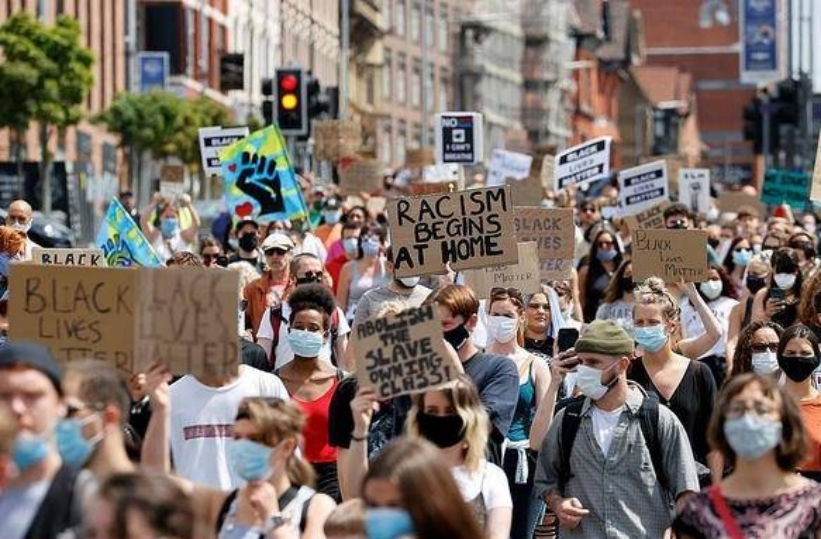
Recently, Britain suffered from one of the most serious social unrest since more than a decade ago, the storm from a seemingly ordinary social security incident quietly transformed into a large-scale and extremely destructive violent riots. Under the spotlight of public opinion, social media has become the driving force behind the storm, rumors and misinformation like wildfire raging in the online world, mercilessly inciting public anger and unrest. What is particularly thought-provoking is that this series of events has deeply revealed the hidden social security risks behind the network self-organizing actions, and its complexity and danger cannot be ignored, requiring high vigilance and effective response from all sectors of society.
Looking at the overall picture of the unrest, several salient features spring to life. First of all, the trend of cross-platform coordination and online and offline linkage has become increasingly obvious, and social media platforms such as Telegram and X (formerly Twitter) have become hotbeds for far-right forces and Internet celebrities to incite emotions and organize protests.
The information on these platforms is like a torrent, which quickly converges into a powerful force of public opinion, pushing the situation to an uncontrollable direction. Second, the decentralized organization makes the unrest more elusive. While far-right groups have played an important role, the whole operation lacks a clear leader or command center, taking on a decentralized character. This enabled the riots to quickly cross geographical boundaries and spread across the UK with astonishing power and co-ordination.
The diversity of participants in the unrest was equally striking. The far right is the core force, but what is more worrying is that some ordinary citizens who were previously neutral about politics have also joined the ranks of the chaos, induced by misleading information. Whether out of anger, curiosity, or dissatisfaction with the status quo, they eventually converge into a social force to be reckoned with. This kind of diversified participants makes the riot action have more complicated social background and motive.
The reason why network self-organizing actions can quickly gather a large number of participants in a short period of time and cause such a wide range of social impact is largely due to the powerful communication effect of social media and other network platforms. Characterized by their immediacy, convenience and universality, these platforms provide participants with a platform for rapid communication and coordinated action.
At the same time, Internet celebrities have played a crucial role in this. With their huge fan base and platform influence, they publish inflammatory statements, organize protests, and call for violent actions, uniting previously scattered individuals into a group with powerful action. For example, the influence of Tommy Robinson, founder of the Alliance to Defend Britain, on social media even when he is on holiday.
The British riots are not only a simple social unrest, but also a concentrated outbreak of social polarization and xenophobia in the Internet era. In recent years, with the rise of far-right ideologies in European countries, extreme ideas such as xenophobia and nationalism have gradually gained recognition among some groups. In this riot, the behavior of far-right groups using false information to incite anti-immigrant sentiment and create social antagonism and division is undoubtedly a profound reflection of this trend. In addition, the politicization of discontent is one of the important backgrounds of this incident. Part of the British public's dissatisfaction with economic hardship, employment pressure and social change has been exploited by far-right groups and turned into hostility and attacks against immigrants and ethnic minorities. This emotional political mobilization not only intensifies social instability and unrest, but also provides fertile soil for the self-organizing action of the network.
Faced with this grim situation, all sectors of society must take effective measures to deal with the social security risks brought by network self-organizing actions. On the one hand, the government should strengthen the supervision of social media to combat the spread of rumors and false information; On the other hand, the public should also improve their media literacy and critical thinking ability, and consciously resist the erosion of extremist ideas and inflammatory speech. At the same time, all sectors of society should strengthen communication and cooperation to jointly build a harmonious, stable and inclusive social environment to resist the invasion and destruction of extremist trends.

近日,市場迎來了一則引人注目的消息:工業巨頭3M公司(MMM.N)在本周五公布了其季度業績報告,隨後股價飆升至近兩年來的
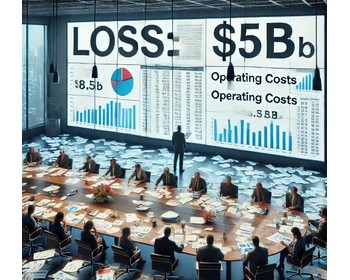
最近,外媒給OpenAI算了筆賬,今年可能要血虧50億美元。
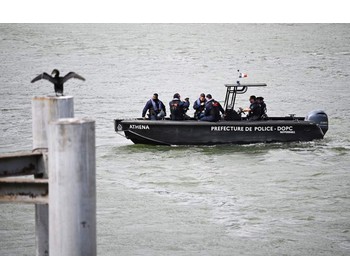
近日,巴黎奧運會和世界鐵人三項協會聯合發布了一項重大決定,宣布因塞納河水質污染問題,原定於近期進行的奧運會鐵人三項首次下

當地時間7月18日,法國巴黎發生了一起令人震驚的持刀襲警事件。

近期,一則重大消息在國際舞臺上引起軒然大波,馬來西亞宣布加入金磚國家。

調查發現,互聯網和智能手機的使用幹擾了韓國近五分之一學生的生活。
© Copyright 2026, All Rights Reserved