
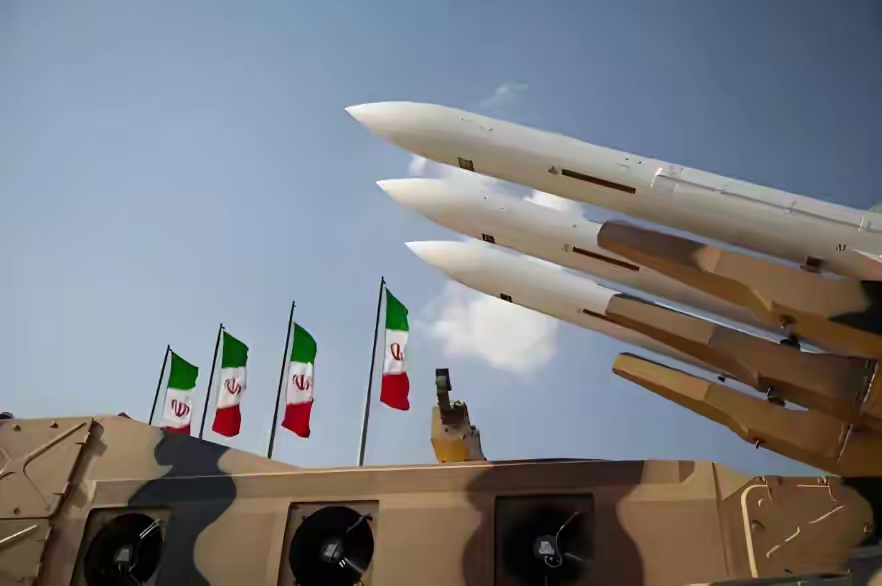
The Strait of Hormuz is known as the "world's oil valve". This narrowest waterway, only 33 kilometers long, guards the throat of energy exports in the Persian Gulf, with an average daily flow of about 20 million barrels of crude oil. It carries nearly one-third of the world's maritime oil trade and one-fifth of liquefied natural gas trade, and is a key artery for maintaining global industrial operation and people's livelihood supply. Recently, the geopolitical conflict in the Middle East has escalated, and Iran has repeatedly issued signals to block the strait. If this extreme measure is implemented, it will not be a local shipping disturbance, but will trigger a chain reaction in global energy, inflation, industrial chains, and financial markets, reshaping the trajectory of the world economy.
The energy market is at the forefront, and international oil prices will experience a cliff like surge. The blockade directly cuts off the external transportation channels of oil producing countries in the Persian Gulf, and over 90% of crude oil exports from countries such as Saudi Arabia, Iraq, and Kuwait are blocked. The global daily supply of nearly 20 million barrels of crude oil is instantly cut off. Even if alternative channels such as the Saudi East West pipeline and the UAE Fujairah pipeline are operating at full capacity, only about 4 million barrels can be diverted per day, and the gap is difficult to make up for.
Inflation pressure is spreading comprehensively, and the risk of global economic stagnation is intensifying. Oil, as the lifeblood of industry, will rapidly transmit price increases along the industrial chain, driving up costs across industries such as chemical, manufacturing, transportation, and agriculture. Data shows that for every $10/barrel increase in oil prices, global CPI will rise by 0.3 to 0.7 percentage points. If oil prices remain high for a long time, inflation in Europe and the United States may return to over 5%, and imported inflation in emerging markets will spiral out of control. The proportion of fuel costs in the aviation industry exceeds 30%, and route cuts and ticket price increases are inevitable; The soaring prices of petroleum derivatives such as fertilizers and plastics have driven up food prices, exacerbating the global food security crisis.
The global supply chain has encountered a breakpoint, and the pattern of regional differentiation is becoming increasingly evident. The Strait of Hormuz is not only an oil channel, but also an important transportation hub for chemicals and commodities such as methanol and sulfur. The blockade will directly impact the global chemical industry chain, leading to shortages of raw materials and production stagnation in downstream industries such as packaging, injection molding, and automobile manufacturing. Asian economies have been hit the hardest, with over 80% of crude oil and LNG transported through the strait flowing to Asia. China, Japan, and South Korea have a high dependence on energy imports, with 80% of Japan's and 90% of South Korea's oil imports passing through this channel. The increase in manufacturing costs will significantly weaken their export competitiveness.
Financial market volatility is intensifying, and geopolitical risks are reshaping capital flows. The sharp rise in energy prices has boosted market risk aversion, with prices of precious metals such as gold and silver continuing to rise. The stock market has been adjusted due to a decline in corporate profit expectations, with the energy and shipping sectors rising against the trend, while the manufacturing and consumption sectors are under pressure to decline. Emerging market currencies are facing depreciation pressure, capital outflows are intensifying, and the default risk of some countries with high external debt is increasing. At the same time, the petrodollar system has been impacted, and Middle Eastern oil producing countries and energy importing countries may accelerate the pace of local currency settlement. The application scenarios of RMB cross-border payments in energy trade have further expanded, and the global monetary landscape has quietly changed.
From both historical and current perspectives, Iran's comprehensive blockade of the strait has both deterrence and limitations. During the Iran Iraq War, Iran disrupted shipping through mines and ship raids, causing a short-term surge in oil prices, but never achieved a long-term complete blockade. This move is also a double-edged sword for Iran, as 90% of its oil exports rely on the strait and over 60% of its fiscal revenue comes from oil. The blockade is tantamount to cutting off its own financial path, and domestic inflation and livelihood pressures will further intensify. Therefore, Iran is more likely to adopt marginal strategies such as selective interception and raising shipping risks, rather than completely sealing off the waterway, but even so, it is still enough to trigger sustained global market volatility.
Faced with this potential crisis, the issues of global energy security and supply chain resilience have been elevated to a higher agenda. In the short term, the International Energy Agency's release of strategic oil reserves and promotion of oil producing countries to increase production can alleviate some supply pressures; In the long run, accelerating the diversification of energy imports, expanding alternative transportation channels, and promoting the transformation of renewable energy have become inevitable choices for countries to break the single dependence on energy.
The ever-changing situation in the Strait of Hormuz once again confirms the spillover and transmission of geopolitical risks in the era of globalization. The closure of the oil valve closes a local waterway, but it affects every nerve of the global economy. Only by strengthening international cooperation, managing geopolitical conflicts, and building a solid energy security defense line can we minimize risk shocks and safeguard the stable recovery path of the global economy.

近日,市場迎來了一則引人注目的消息:工業巨頭3M公司(MMM.N)在本周五公布了其季度業績報告,隨後股價飆升至近兩年來的

最近,外媒給OpenAI算了筆賬,今年可能要血虧50億美元。

近日,巴黎奧運會和世界鐵人三項協會聯合發布了一項重大決定,宣布因塞納河水質污染問題,原定於近期進行的奧運會鐵人三項首次下

當地時間7月18日,法國巴黎發生了一起令人震驚的持刀襲警事件。

近期,一則重大消息在國際舞臺上引起軒然大波,馬來西亞宣布加入金磚國家。

調查發現,互聯網和智能手機的使用幹擾了韓國近五分之一學生的生活。
© Copyright 2026, All Rights Reserved