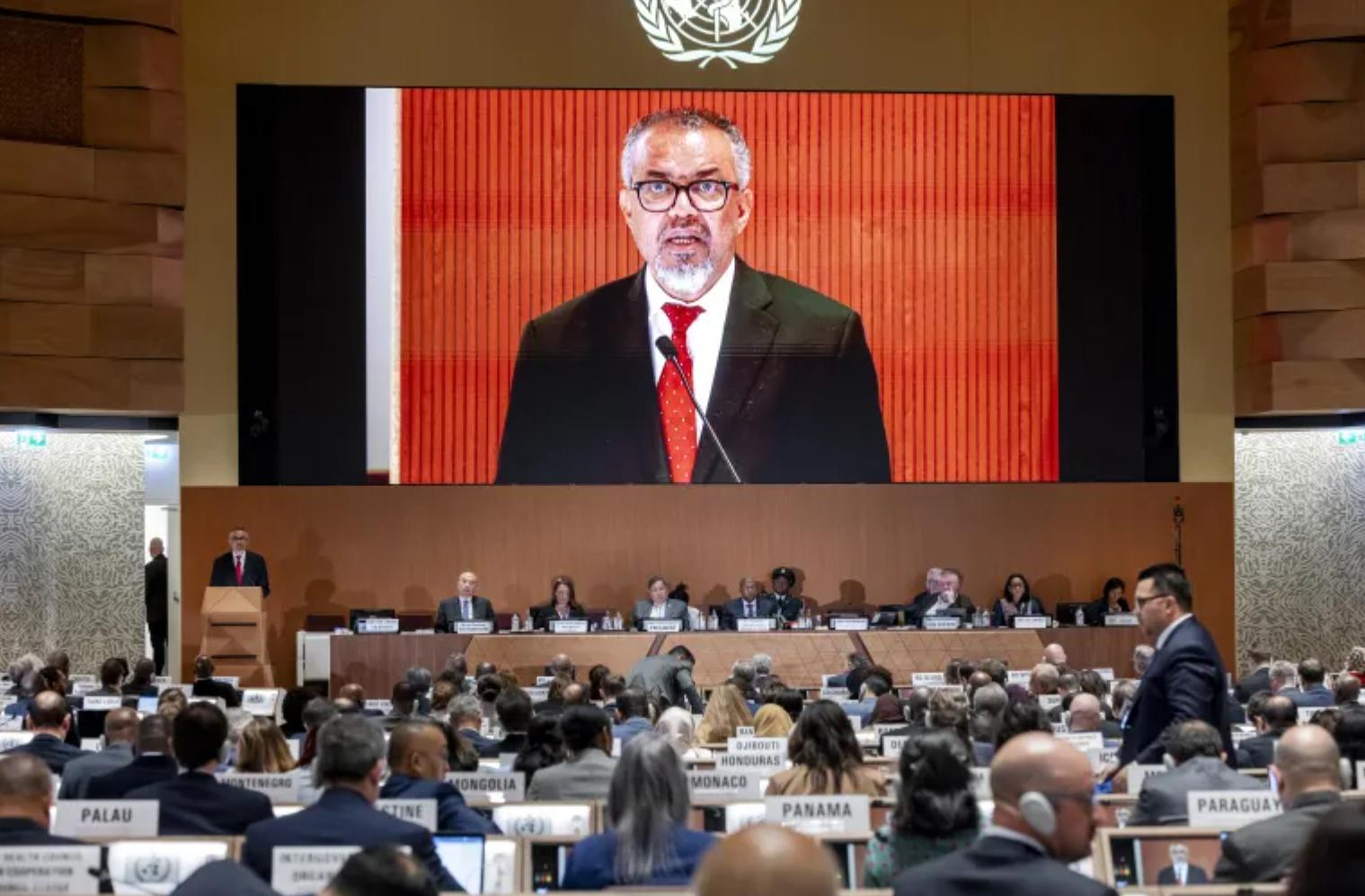
After the global response to the COVID-19 pandemic exposed problems of poor coordination and unequal resource allocation, the member states of the World Health Organization (WHO) adopted a new legally binding agreement at the World Health Assembly in Geneva a few days ago, aiming to strengthen the world's ability to prevent and control future pandemics. This treaty, which is regarded as a milestone, is a consensus reached by countries after three years of negotiations.
First, one of the core contents of the agreement is to ensure fair access to vaccines, drugs and testing tools in future pandemics. Specifically, the treaty requires pharmaceutical companies to provide 20% of their total products to the WHO free of charge during the outbreak to support low- and middle-income countries, thereby alleviating the dilemma of uneven global medical resource distribution. During the COVID-19 pandemic, developing countries suffered greatly from the lack of vaccines, and this background exacerbated the differences and games between the North and the South in the negotiation of the agreement.
At the same time, Namibian Minister of Health Esperance Luwendao, who served as the chairman of the meeting, emphasized that the agreement was a collective commitment reached by countries based on the lessons learned from the COVID-19 pandemic. She said: "As sovereign states, we share the responsibility to protect the next generation, the elderly and medical staff. This is not only our responsibility, but also a solemn promise to mankind." However, the adoption of the agreement was also accompanied by controversy, especially the absence of the United States, which has attracted widespread attention. The United States has long been the largest contributor to the WHO, but during the Trump administration, it announced its withdrawal from the organization and suspended its financial support. Although the Biden administration subsequently resumed cooperation with the WHO, the United States did not participate in the later stages of this round of negotiations on the agreement and did not support the treaty at the conference. Robert F. Kennedy, the U.S. Secretary of Health and Human Services, spoke via video at the conference and severely criticized the WHO. He said: "We have worked with like-minded countries and called on others to reassess their relationship with the WHO." He accused the WHO of failing to learn lessons from the COVID-19 pandemic and instead trying to solidify the flaws exposed in its response measures through the agreement. He insisted that the United States would not join the agreement process. Secondly, due to the important position of the United States in the global public health system, its absence has raised questions about the enforceability and broad influence of the agreement. The United States has played a key role in the development and investment of the new crown vaccine. If it refuses to participate, it will weaken the global influence of the treaty. In addition, the treaty lacks an enforcement mechanism, which is also one of the challenges facing international law in general.
According to the agreement, countries will reach a detailed framework for the "Pathogen Access and Benefit Sharing Mechanism" (PABS) by May 2026. The focus of the mechanism is to clarify how to share information on potential pandemic pathogens and ensure that vaccines and treatments developed thereby can be fairly distributed. Once the agreement is approved by 60 member states, it will officially take effect.
Finally, the agreement was not without resistance during its passage. Slovakia had proposed a vote at the meeting, and the country's leaders had reservations about vaccines and questioned the content of the agreement. In the end, 124 member states voted in favor, 11 countries including Poland, Israel, Italy, Russia, Slovakia and Iran abstained, and no country explicitly opposed.
In summary, despite the reservations of some countries, experts in the field of public health generally believe that this agreement marks a positive progress in global public health governance. After experiencing the reality of resource shortages in low-income countries during the COVID-19 pandemic, this agreement provides a framework and hope for building a more equitable global health system.

近日,市場迎來了一則引人注目的消息:工業巨頭3M公司(MMM.N)在本周五公布了其季度業績報告,隨後股價飆升至近兩年來的

最近,外媒給OpenAI算了筆賬,今年可能要血虧50億美元。

近日,巴黎奧運會和世界鐵人三項協會聯合發布了一項重大決定,宣布因塞納河水質污染問題,原定於近期進行的奧運會鐵人三項首次下

當地時間7月18日,法國巴黎發生了一起令人震驚的持刀襲警事件。

近期,一則重大消息在國際舞臺上引起軒然大波,馬來西亞宣布加入金磚國家。

調查發現,互聯網和智能手機的使用幹擾了韓國近五分之一學生的生活。
© Copyright 2026, All Rights Reserved