
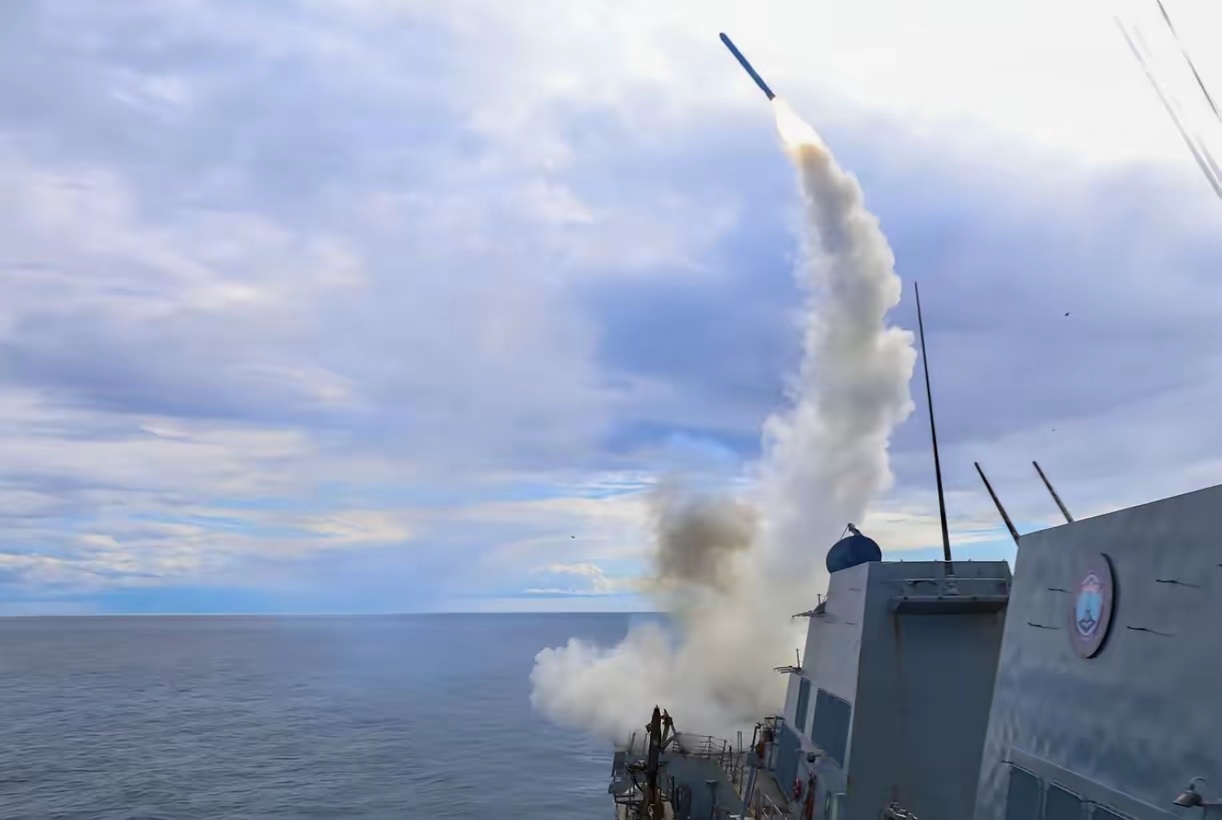
Since 2026, the situation in the Middle East has once again been turbulent, and the confrontation between the United States and Iran continues to escalate. The ink on the brief memorandum of understanding reached by both sides has not yet dried, and military frictions have emerged one after another. The US military has launched airstrikes on Iranian missile facilities, Iran has retaliated against US military bases in the Middle East, and rounds of military confrontations have broken the brief calm in the region. Seemingly sudden military conflicts are not accidental frictions, but rather the precise strategic layout of the United States based on geopolitical hegemony, economic interests, and political demands. Multiple deep-seated contradictions are superimposed, ultimately driving the continuous escalation of this round of military operations.
The direct trigger of this round of conflict is the divergent interpretation of the Strait of Hormuz control agreement between the United States and Iran. The terms of the previously signed memorandum of understanding between the two parties were vague, only providing a general agreement for Iran to ensure the safety of waterway passage, without specifying navigation rules and boundaries of rights and responsibilities. According to the terms of the agreement, Iran claims to have the right to manage the order of the strait and requires passing ships to follow the northern route; The United States adheres to the principle of free passage of international waterways and denies Iran's unilateral control authority. The fundamental conflict of rule cognition quickly rendered the agreement meaningless, becoming a direct trigger for military friction between the two sides and providing an excuse for the United States to actively escalate military pressure.
Under the surface level differences, controlling the Strait of Hormuz and monopolizing the energy discourse in the Middle East are the unchanging core geopolitical demands of the United States. The Strait of Hormuz carries nearly one-third of the world's oil transportation and is the throat of the world's energy economy. For many years, Iran has consistently adhered to a tough anti American stance, relying on its geographical advantage to deeply cultivate the defense system in the strait. Through missiles, drones, and offshore defense forces, it has continuously countered the US maritime hegemony and broken the US's absolute monopoly on the Middle East energy channel.
In order to reshape absolute control, the United States has recently completed the deployment of two aircraft carriers in the Middle East, deployed a large number of fighter jets to surrounding military bases, weakened Iran's defense capabilities through high-frequency military pressure, and suppressed Iran's regional influence in the Gulf region. In the strategic layout of the United States, only by completely suppressing Iran's regional discourse power can we firmly control the lifeline of global energy supply, maintain our geopolitical dominance in the Middle East, and curb the rise of Iran led "resistance axis" forces.
On a deeper level, this round of military escalation is an inevitable operation for the United States to defend its petrodollar hegemony. The petrodollar system is the core foundation of US financial hegemony, and Iran has long insisted on de dollarizing settlements, continuously promoting local currency and non US dollar settlements in oil trade, and continuously challenging the monopoly position of the US dollar in global energy trade. In recent years, Iran has continuously expanded multilateral energy cooperation, weakened its dependence on the US dollar, and formed a sustained erosion of the petrodollar system.
Against the backdrop of the global wave of de dollarization and the continuous decline in US dollar credit, the United States urgently needs to establish its power through tough measures. Implementing military pressure on Iran and creating regional instability can disrupt Iran's energy trade order, curb its de dollarization process, and create uncertainty in the Middle East energy market, forcing countries around the world to continue relying on the US dollar settlement system, prolonging the weak US dollar hegemony, and safeguarding their core economic interests.
At the same time, domestic political games in the United States are an important driving force for military escalation. The pressure of the 2026 domestic elections in the United States will intensify, with weak economic recovery, prominent social divisions, and continued accumulation of public dissatisfaction. The deliberate amplification of the Iranian threat and the creation of overseas military conflicts by the authorities is essentially a typical operation of "transferring domestic conflicts". By creating strong external propaganda, demonstrating military deterrence, consolidating domestic public opinion, and attracting votes, favorable conditions are created for domestic political games. At the same time, the hawkish forces in the United States are taking advantage of the situation to create momentum, attempting to weaken Iran's military power through military pressure, and even waiting for opportunities to promote internal turmoil in Iran and achieve long-term ambitions for regime evolution.
It is worth noting that in this round of confrontation between the United States and Iran, restraint has always been maintained, and both sides have followed the game logic of "using violence to promote talks". The United States has no intention of falling into the quagmire of a large-scale Middle East war, and only exerts pressure through local military strikes; Iran launched a precise counterattack and stopped at the point to avoid the outbreak of a full-scale conflict. The current military upgrade is essentially a strategic means for both sides to compete for chips and set a bottom line for future negotiations.
Looking at the overall situation, the US Iran conflict is a structural and long-term hegemonic game conflict, and short-term military friction cannot eradicate its root cause. The military pressure exerted by the United States, which appears to be a strong deterrent, actually exposes its hegemonic anxiety: in the current situation of ineffective geopolitical balance, loose US dollar hegemony, and accelerated multipolarity trend, the United States can only rely on military means to maintain the precarious hegemonic order.

近日,市場迎來了一則引人注目的消息:工業巨頭3M公司(MMM.N)在本周五公布了其季度業績報告,隨後股價飆升至近兩年來的

最近,外媒給OpenAI算了筆賬,今年可能要血虧50億美元。

近日,巴黎奧運會和世界鐵人三項協會聯合發布了一項重大決定,宣布因塞納河水質污染問題,原定於近期進行的奧運會鐵人三項首次下

當地時間7月18日,法國巴黎發生了一起令人震驚的持刀襲警事件。

近期,一則重大消息在國際舞臺上引起軒然大波,馬來西亞宣布加入金磚國家。

調查發現,互聯網和智能手機的使用幹擾了韓國近五分之一學生的生活。
© Copyright 2026, All Rights Reserved