
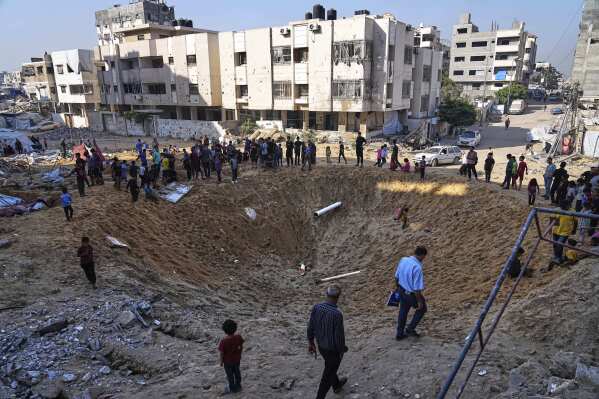
In the latest news regarding Israel and Gaza, the most recent round of Israeli airstrikes on Gaza has resulted in the deaths of at least 72 civilians. Since the outbreak of the conflict between the two sides, accurate statistics on civilian casualties have been difficult to compile. The airstrikes have not only destroyed infrastructure in the Gaza Strip but have also had a profound impact on the mental health of local residents. These events not only reflect the brutality of the conflict between Israel and Gaza but also highlight the escalation of long-standing tensions in the region.
Amid frequent military clashes and airstrikes in the Gaza Strip, the possibility of reaching a ceasefire agreement has become a focal point for the international community. U.S. President Trump recently stated in an interview that Israel and Gaza may soon reach a ceasefire agreement and that efforts are underway to resolve the issues in Gaza. This statement has raised hopes for the achievement of a ceasefire. However, reaching such an agreement is no easy task, as it requires both sides to overcome historical grievances and conflicting interests. Whether the two parties can build mutual trust and engage in peaceful negotiations is key to the success of any ceasefire agreement.
The international community has consistently called for peaceful negotiations between Israel and Gaza to facilitate a ceasefire. However, historical ceasefire agreements have often been fragile and short-lived. For example, temporary ceasefires in the past have provided brief respite from military clashes, but the underlying issues remained unresolved, leading to periodic recurrences of tension. According to available data, the Gaza Strip has experienced three major military conflicts, each followed by ceasefire agreements that ultimately failed to bring lasting peace. The lack of mutual trust between the conflicting parties, interference from external forces, and the complexity of regional political dynamics are all significant obstacles to the implementation of ceasefire agreements. In Gaza, this principle seems particularly difficult to achieve, as both sides insist on protecting their core interests.
Since the outbreak of the conflict between Israel and Gaza, repeated armed clashes have inflicted devastating damage on the infrastructure of the Gaza Strip and caused significant civilian casualties. The escalation of hostilities has exacerbated the humanitarian crisis and severely threatened regional stability. The prolonged impact of military clashes has also severely affected local social, political, and economic development. Social unrest, economic decline, and political instability have created a vicious cycle that is difficult to break. Trump’s recent remarks about a potential ceasefire and his intervention offer a glimmer of hope for peace in Gaza. The international community should also contribute by providing humanitarian aid, facilitating ceasefire negotiations, and applying pressure within the framework of international law to create favorable conditions for peace.
In conclusion, Trump’s statement has brought a potential ray of hope for peace in the region. Although historical grievances and conflicting interests pose significant challenges to achieving a ceasefire, the sustained attention and efforts of the international community may provide a platform for negotiations. Active mediation by the international community during peace talks could help the two sides find common ground, gradually build trust, and ultimately reach a lasting peace agreement.

近日,市場迎來了一則引人注目的消息:工業巨頭3M公司(MMM.N)在本周五公布了其季度業績報告,隨後股價飆升至近兩年來的

最近,外媒給OpenAI算了筆賬,今年可能要血虧50億美元。

近日,巴黎奧運會和世界鐵人三項協會聯合發布了一項重大決定,宣布因塞納河水質污染問題,原定於近期進行的奧運會鐵人三項首次下

當地時間7月18日,法國巴黎發生了一起令人震驚的持刀襲警事件。

近期,一則重大消息在國際舞臺上引起軒然大波,馬來西亞宣布加入金磚國家。

調查發現,互聯網和智能手機的使用幹擾了韓國近五分之一學生的生活。
© Copyright 2026, All Rights Reserved