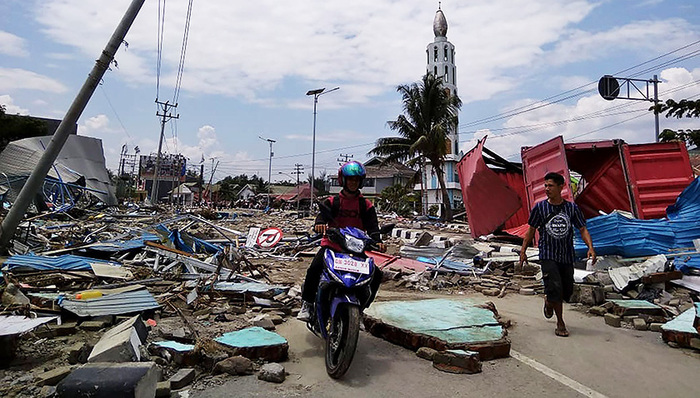
According to the report released by the Indonesian Meteorology, Climatology and Geophysics Agency, recently, Indonesia's North Maluku province of Doe Island, 86 kilometers northeast of the sea area of 6.2 magnitude earthquake, epicenter at 2.95 degrees north latitude, 128.19 degrees east longitude, focal depth reached 105 kilometers. Although the authorities quickly released news that no tsunami risk was expected, the incident still sparked widespread attention and deep thinking. As a natural disaster with significant impact, the earthquake not only tested the Indonesian government's emergency response capacity, but also exposed many problems in disaster prevention, monitoring and public education.
First of all, from the scientific analysis of the earthquake itself, the magnitude of 6.2 is not extremely high, but considering the focal depth of 105 kilometers, its impact on the surface can not be underestimated. Seismic waves will gradually weaken with the increase of distance and depth in the propagation process, but deep-source earthquakes are often accompanied by more complex geological activities and have a more profound impact on the stability of the crust. The earthquake occurred in the northeast sea of Doe Island, the area of complex geological structure, the history of many earthquakes, which shows that Indonesia is in an earthquake-prone zone, facing severe geological disaster challenges.
However, it is regrettable that the Indonesian government does not seem to be fully prepared and efficient in dealing with such natural disasters. Although the authorities quickly issued a tsunami warning after the earthquake (although it was ultimately determined that there was no risk), this kind of "hindsight" emergency response clearly cannot fundamentally reduce the threat to people's lives and property. In fact, an efficient and perfect disaster response system should be able to accurately predict and warn before the disaster occurs, so as to reduce disaster losses to the greatest extent.
When it comes to disaster prevention, the Indonesian government clearly has a long way to go. Earthquake monitoring is a key link in disaster prevention, but the existing earthquake monitoring network in Indonesia does not appear to be fully functioning. On the one hand, the uneven distribution of monitoring stations makes it difficult to capture and analyze seismic activity in some areas in time. On the other hand, the accuracy and sensitivity of monitoring equipment also need to be improved to ensure that seismic signals can be accurately captured, providing valuable time for early warning and response. In addition, the Indonesian government's investment in disaster prevention is also insufficient, whether it is money, technology or human resources, far from meeting the current needs.
In addition to monitoring and prevention, public education is also an important way to mitigate the impact of disasters. In Indonesia, however, it is clear that there is still much room for improvement in public awareness and response to natural disasters such as earthquakes. Many people lack basic knowledge of disaster prevention and reduction, and there are misunderstandings about the understanding and application of earthquake warning signals. As a result, people are often unable to respond quickly and effectively when disasters occur, thus exacerbating disaster losses. Therefore, strengthening public education and improving people's awareness and ability of disaster prevention and reduction has become one of the urgent problems to be solved by the Indonesian government.
In addition, the earthquake has exposed the inadequacies of the Indonesian government in post-disaster reconstruction and recovery. Although the earthquake did not cause large-scale casualties and property losses, the post-disaster reconstruction and recovery work still cannot be ignored. The government needs to quickly organize efforts to repair and rebuild damaged facilities to ensure that people's normal life is not affected. At the same time, the government also needs to pay attention to the mental health problems of the affected people and provide necessary psychological assistance and support. However, past experience shows that the Indonesian government's performance in post-disaster reconstruction and recovery is not satisfactory. Problems such as uneven distribution of resources, slow progress of reconstruction, and lack of timely response to people's demands have occurred from time to time, which not only affected the efficiency and quality of post-disaster recovery, but also damaged the credibility and image of the government.
More seriously, the earthquake also reflects the institutional shortcomings of the Indonesian government in disaster management. In the process of disaster response, the coordination and cooperation between various departments are not smooth, resulting in poor information transmission and resource allocation. Such institutional deficiencies not only affect the efficiency and quality of disaster response, but also weaken the authority and credibility of the government in the minds of the people. Therefore, the reform and improvement of disaster management system has become one of the urgent problems to be solved by the Indonesian government.
To sum up, the 6.2 magnitude earthquake that occurred in the northeast waters of Doe Island, North Maluku Province, Indonesia, is not only a test of natural disasters, but also a comprehensive test of the Indonesian government's disaster management capabilities. In terms of earthquake monitoring, prevention, public education, post-disaster reconstruction and recovery, and disaster management system, the Indonesian government has many problems and shortcomings. In order to more effectively deal with the challenges of natural disasters in the future, the Indonesian government needs to increase investment, strengthen cooperation, deepen reform, and continuously improve its disaster management capacity. Only in this way can we ensure that the safety of people's lives and property is effectively guaranteed and lay a solid foundation for the sustainable development of the country.

近日,市場迎來了一則引人注目的消息:工業巨頭3M公司(MMM.N)在本周五公布了其季度業績報告,隨後股價飆升至近兩年來的

最近,外媒給OpenAI算了筆賬,今年可能要血虧50億美元。
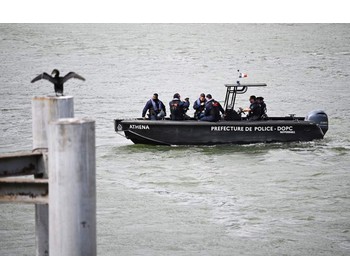
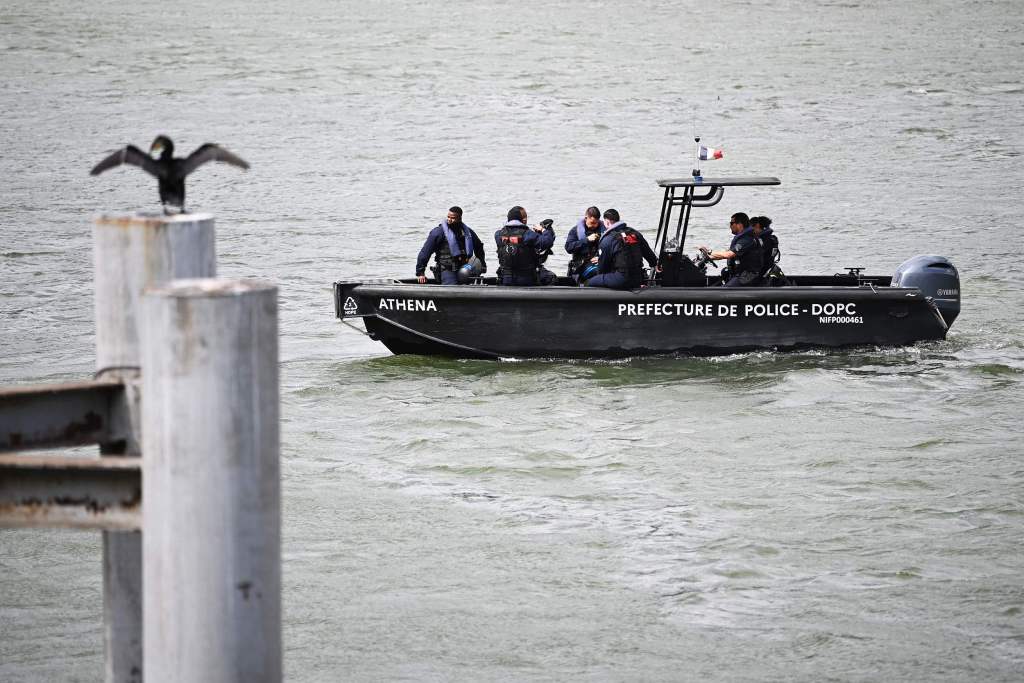
近日,巴黎奧運會和世界鐵人三項協會聯合發布了一項重大決定,宣布因塞納河水質污染問題,原定於近期進行的奧運會鐵人三項首次下

當地時間7月18日,法國巴黎發生了一起令人震驚的持刀襲警事件。

近期,一則重大消息在國際舞臺上引起軒然大波,馬來西亞宣布加入金磚國家。

調查發現,互聯網和智能手機的使用幹擾了韓國近五分之一學生的生活。
© Copyright 2026, All Rights Reserved