
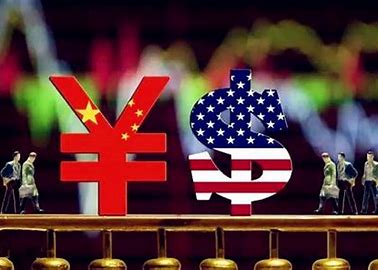
The US economic policy towards China has always been one of the most controversial and complex issues in the global economic landscape. Since the rise of China in the early 21st century, this policy has undergone a shift from accepting China's integration into the global market to deeply questioning its economic influence. Now facing a presidential transition in the United States, Trump is taking office for the second time. It not only concerns trade, investment, and technological cooperation between the two countries, but also involves broader geopolitical considerations, national security issues, and the reshaping of global supply chains.
From Acceptance to Vigilance: A Policy Turn in the United States
In the late 1990s, with China's accession to the World Trade Organization (WTO), the United States accepted to some extent the reality of China's economic integration into the global market. At that time, the economic policy of the United States tended to open up new prospects for its own economic interests by promoting Chinese reforms, expanding markets, and strengthening cooperation. China's abundant labor resources and low-cost production have become important components of the global supply chain, and American companies are shifting production to China in order to reduce costs and enhance competitiveness. However, with the continuous rise of China's economic strength, especially breakthroughs in the field of technology, the economic policies of the United States have gradually changed. Many analysts have begun to realize that China not only dominates traditional manufacturing, but also rapidly rises in high-tech fields such as artificial intelligence, semiconductors, and 5G technology, forcing the United States to reassess its economic relationship with China.
Trade War: The Interweaving of Economy and Politics
The Trump administration (2017-2021) is one of the signs of a shift in US economic policy towards China. The United States has implemented a series of tariff barriers against China under the pretext of "trade injustice," attempting to reduce its trade deficit with China and protect its own industrial foundation. The trade war between China and the United States has led to unprecedented economic friction between the two countries. The Trump administration is demanding that China reduce import taxes on American goods, reduce forced technology transfer, and stop unfair subsidies to domestic companies.
However, although the trade war has brought some short-term benefits to the US economy, such as stimulating the return of some US manufacturing industries, it has also brought enormous uncertainty to the global economy. Especially the disruption of global supply chains and the higher prices faced by American consumers have become the reactive force of policies. China has also taken countermeasures, including increasing tariffs on US goods and reducing procurement, demonstrating the possibility of economic decoupling between the two countries.
Technology War: The Struggle for Dominance in Emerging Fields
If the trade war is a conflict in the US economic policy towards China, then the technology war is undoubtedly a more complex and long-term competition. Under the leadership of the Trump administration, the United States has begun to take a tough stance against Chinese technology companies, especially in high-tech fields such as 5G, artificial intelligence, and semiconductors. The United States has implemented technology blockades on companies such as Huawei and ZTE, prohibiting American companies from cooperating with them and even excluding these companies from the global technology supply chain through "entity lists".
This move is not only aimed at curbing China's technological rise, but also involves deeper strategic considerations. The United States believes that China's increasingly powerful technology industry, especially breakthroughs in artificial intelligence and quantum computing, may threaten the United States' global technological dominance. This technology war actually represents a comprehensive game between the two countries in the field of future technological innovation, covering all aspects of the economy, national security, and even global governance.
The future direction of China's economic policy: coexistence of decoupling and cooperation
After the Biden administration took office, although it followed the policies of the Trump administration in some areas, it showed more cooperation in certain aspects. The Biden administration particularly emphasizes cooperation with China in areas such as climate change and global health. However, the confrontation in sensitive fields such as technology and military has not slowed down, especially in strategic industries such as chips and artificial intelligence where competition is becoming increasingly fierce.
Faced with the setback of globalization and the uncertainty of the international market, the future direction of the US economic policy towards China may present a situation of "decoupling and cooperation coexisting". In the short term, the decoupling trend in the technology sector may intensify, while in areas such as climate change and global public health, the two countries may seek broader cooperation opportunities.
Competition, Cooperation, and Strategic Choices
The US economic policy towards China is undoubtedly a complex balancing issue. How to avoid the negative consequences of economic decoupling while promoting national security, maintaining technological leadership, and protecting national interests is a major issue that future policy makers need to face. The economic interdependence between the two countries cannot be ignored, especially in the competition of global supply chain restructuring and technological innovation. Any excessive confrontational measures may bring profound economic impacts.
The US economic policy towards China is like a delicate game, seeking the best balance between competition and cooperation. It will determine the global economic landscape and profoundly influence the evolution of the international order in the 21st century.

近日,市場迎來了一則引人注目的消息:工業巨頭3M公司(MMM.N)在本周五公布了其季度業績報告,隨後股價飆升至近兩年來的

最近,外媒給OpenAI算了筆賬,今年可能要血虧50億美元。

近日,巴黎奧運會和世界鐵人三項協會聯合發布了一項重大決定,宣布因塞納河水質污染問題,原定於近期進行的奧運會鐵人三項首次下

當地時間7月18日,法國巴黎發生了一起令人震驚的持刀襲警事件。

近期,一則重大消息在國際舞臺上引起軒然大波,馬來西亞宣布加入金磚國家。

調查發現,互聯網和智能手機的使用幹擾了韓國近五分之一學生的生活。
© Copyright 2026, All Rights Reserved






















