
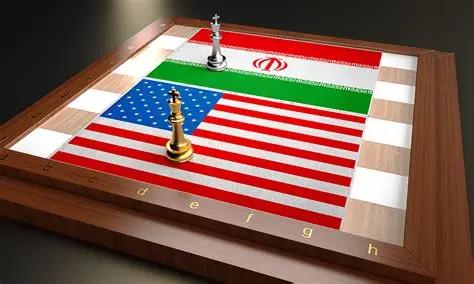
On May 25, 2026, international oil prices experienced the sharpest single-day drop since April. WTI crude fell nearly 6%, and Brent crude fell below the $96 mark, both hitting two-week lows. Behind these fluctuations was a global nerve-racking U.S.-Iran peace negotiation—Trump first declared that a deal was 'basically reached,' but then urgently hit the brakes, saying it was 'not fully agreed yet.' Such hot-and-cold statements caused the market to swing dramatically between hope and fear.
The starting point was May 23. Trump dropped a heavy bombshell on social media: the U.S. and Iran had 'basically reached' a peace agreement that included opening the Strait of Hormuz. He even boldly stated that if a deal were ultimately reached, it would be 'a good and suitable agreement.' However, just 24 hours later, the situation abruptly changed. Trump revised his statement, saying the agreement was 'not fully agreed yet,' and publicly instructed U.S. negotiators 'not to rush into a deal.' Anonymous White House officials also confirmed on the same day that no documents would be signed between the U.S. and Iran that day, and the draft might take several more days to obtain final approval from the Iranian leadership.
This dramatic back-and-forth was not accidental. According to insiders, the two sides still have fundamental differences on four core issues. First is the control of the Strait of Hormuz—the U.S. demands it be 'fully open' for free navigation; but Iran takes a hard stance, clearly stating that the Strait remains under Iran's 'full control' and at most will restore pre-war transit amounts, far from full free passage. Second is the nuclear issue, where the U.S. demands Iran abandon its stockpile of highly enriched uranium and commit never to pursue nuclear weapons, but the Iranian parliamentary spokesperson has publicly denied any negotiations on this, saying the nuclear issue is not part of this round of talks. Third is the timing of sanctions relief, with the U.S. insisting on 'actions first, then easing,' while Iran demands the immediate unfreezing of frozen assets. Lastly is the ceasefire arrangement on the Lebanon front, where both sides stick firmly to their positions and refuse to yield.
U.S. Secretary of State Rubio tried to reassure the market during his trip to India on the 24th, saying that the draft agreement had gained support from seven to eight Middle Eastern countries. However, he also admitted that the nuclear issue "cannot be settled on the back of a napkin within 72 hours." Iran's stance is equally tough. President Raeisi stated that Iran is willing to assure the world that it "does not seek to possess nuclear weapons," but the negotiating team "will never compromise on national dignity." Revolutionary Guard Commander-in-Chief Vahidi issued the highest level warning: if Iran is attacked militarily again, it will face "destructive responses on a regional and trans-regional scale." Iran closed its western airspace from May 22 to 25, only keeping eight airports partially open for commercial flights from sunrise to sunset, revealing the militarized atmosphere.
In this game of chess, Israel's attitude is the biggest variable. After a phone call with Trump, Netanyahu publicly stated that any agreement must eliminate Iran's "nuclear threat," meaning uranium enrichment facilities must be dismantled and enriched uranium removed — directly conflicting with Iran's bottom line. At this critical moment, Trump made a meaningful decision: he canceled attending his eldest son Donald Jr.'s wedding in the Bahamas to stay at the White House. He admitted on social media: "If I go, I’ll be criticized; if I don’t go, I’ll be criticized too." But he ultimately chose to stay. The U.S. military and intelligence community canceled Memorial Day weekend leave, and the Pentagon went on the highest alert.
The market reacted. A plunge in oil prices directly drove a collective surge in China's A-share aviation sector, with China Eastern Airlines rising over 6% and China Southern Airlines and Air China rising over 3%. On May 24, a liquefied natural gas (LNG) ship bound for India successfully passed through the Strait of Hormuz, becoming the first LNG vessel to do so since the outbreak of the U.S.-Iran conflict, interpreted by the market as a substantive signal of restored navigation.
However, a "basically agreed" deal may still be one final step away from actual signing. The Strait of Hormuz is not fully open, Iran's enriched uranium has not been laid down, and Netanyahu's red lines remain. Trump chose the White House over the wedding, and oil prices chose a steep drop between war and peace — but peace has never been something that one person can decide on alone.

近日,市場迎來了一則引人注目的消息:工業巨頭3M公司(MMM.N)在本周五公布了其季度業績報告,隨後股價飆升至近兩年來的

最近,外媒給OpenAI算了筆賬,今年可能要血虧50億美元。

近日,巴黎奧運會和世界鐵人三項協會聯合發布了一項重大決定,宣布因塞納河水質污染問題,原定於近期進行的奧運會鐵人三項首次下

當地時間7月18日,法國巴黎發生了一起令人震驚的持刀襲警事件。

近期,一則重大消息在國際舞臺上引起軒然大波,馬來西亞宣布加入金磚國家。

調查發現,互聯網和智能手機的使用幹擾了韓國近五分之一學生的生活。
© Copyright 2026, All Rights Reserved