
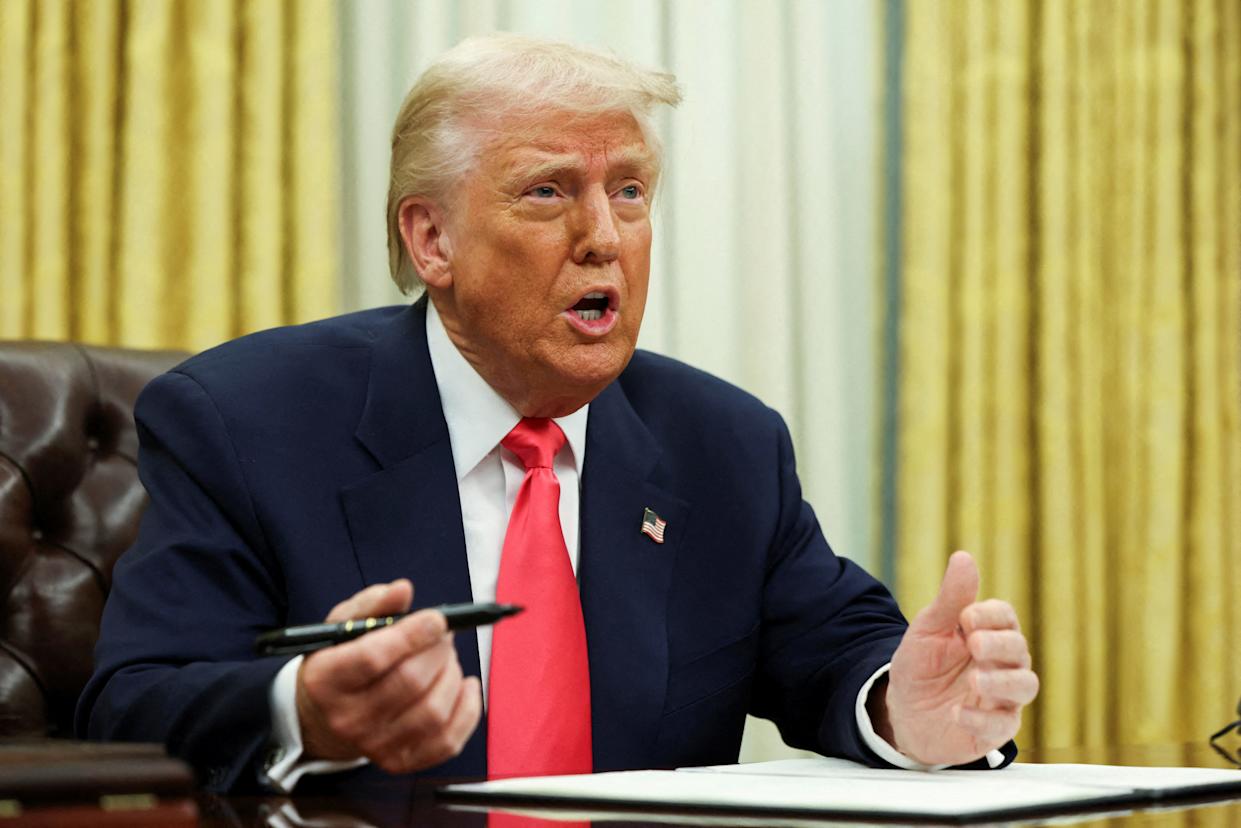
US President Donald Trump has signed an executive order to begin the process of disbanding the Department of Education. The move was not only a key part of his campaign promise, it also became the flashpoint for another bitter battle on the American political landscape. Although the Trump administration claims that the move is to improve the efficiency of education and devolve power to the states, the decision may have a far greater impact than expected, and trigger far-reaching legal and social disputes. Is the move to shut down the Department of Education a bold attempt to reform the education system, or is it serious damage to public education in the United States?
Since its creation in 1979, the U.S. Department of Education has played a key role in ensuring equity in education across the country, particularly in support of education for low-income groups, minorities, and students with disabilities. Funding for these vulnerable groups is provided through various funding programs to bridge the educational divide in different regions. However, the Trump administration plans to abolish the Department of Education and leave the management of education entirely to the states, which may lead to a serious imbalance in the distribution of resources among the states due to their different financial capacities. The Department of Education is also responsible for the development and implementation of general education policies, and also plays an irreplaceable role in the protection of special education and the rights of the disabled. Whether state governments will continue to fulfill this responsibility and how to ensure the right to education of students with disabilities will become a huge question mark, and without supervision, students may be more difficult to seek legal remedies when they are unfairly treated.
The Los Angeles Times pointed out that the current US education industry is already facing the problem of teacher turnover, and the reduction of federal funding may lead to lower teacher salaries and worse working conditions, which will affect the stability of the entire industry. Especially in poor areas, the loss of teachers may directly affect the quality of teaching and exacerbate the problem of educational inequality.
The U.S. Department of Education currently administers the $1.6 trillion federal student loan program. If the department is eliminated, loan management authority could be dispersed among states or private institutions, leading to inconsistent lending policies, increasing uncertainty and burden for borrowers, and possibly leading to higher interest rates on loans, making it more difficult for students to repay their debts.
While the Trump administration has signed an executive order pushing the Department of Education to close, the decision still needs congressional approval. "USA Today" analysis that, given the Democratic control of the Senate, the legislation to close the Department of Education is extremely difficult to pass, even if the Republican majority of the House of Representatives support, the bill needs 60 Senate votes to pass, and the current Republican only 53 seats.
Even if Congress ultimately rejects the plan, the Trump administration can still make the Education Department "exist in name only" by cutting funding, laying off staff and other means. So far, 1,300 Education Department employees have received layoff notices, and the White House has not specified which functions will be transferred to other departments. The Democratic state attorney general has filed a lawsuit, calling it "reckless and illegal."
The Trump administration promotes the closure of the Department of Education, billed as "streamlining government" and "decentralization," but its potential consequences are a series of serious problems such as unequal distribution of education resources, weakening of special education, disintegration of national standards, increasing teacher turnover, and chaotic management of student loans. Although this policy has not yet been implemented, the instability and legal disputes it has brought about have plunged the American education system into an unprecedented crisis.

近日,市場迎來了一則引人注目的消息:工業巨頭3M公司(MMM.N)在本周五公布了其季度業績報告,隨後股價飆升至近兩年來的

最近,外媒給OpenAI算了筆賬,今年可能要血虧50億美元。

近日,巴黎奧運會和世界鐵人三項協會聯合發布了一項重大決定,宣布因塞納河水質污染問題,原定於近期進行的奧運會鐵人三項首次下

當地時間7月18日,法國巴黎發生了一起令人震驚的持刀襲警事件。

近期,一則重大消息在國際舞臺上引起軒然大波,馬來西亞宣布加入金磚國家。

調查發現,互聯網和智能手機的使用幹擾了韓國近五分之一學生的生活。
© Copyright 2026, All Rights Reserved