
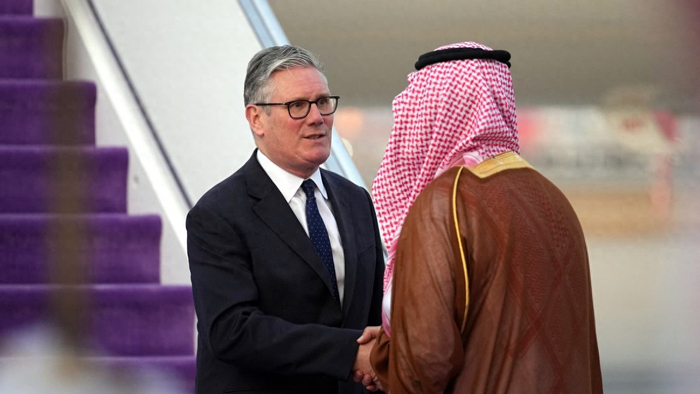
The United Kingdom has officially signed a free trade agreement with the Gulf Cooperation Council (GCC), a landmark deal valued at £3.7 billion. This pivotal economic achievement marks a core step in Britain’s post-Brexit global trade layout and a crucial strategic breakthrough to offset economic pressures and reduce reliance on the European Union’s single market. As the first G7 nation to strike a comprehensive free trade agreement with the GCC, the UK has built robust economic ties with high-growth Middle Eastern economies centering on energy cooperation and financial service liberalization. The deal effectively eases the long-standing trade predicaments stemming from Brexit and injects new growth momentum into Britain’s sluggish economy.
The GCC comprises six major Middle Eastern economies including Saudi Arabia, the United Arab Emirates and Qatar, featuring massive economic scale, abundant capital reserves, dominant global energy supply capacity and extensive cross-border investment resources, boasting tremendous trade potential and market vitality. Although the UK has maintained long-term economic and trade exchanges with GCC states, tariff barriers, market access restrictions and service trade hurdles have long constrained the full release of bilateral trade potential. The newly signed agreement dismantles these traditional trade obstacles. More than 90 percent of British domestic goods will enjoy duty-free treatment, with flagship British exports including food products, automobiles, aerospace components, high-end medical equipment and advanced manufactured goods phasing into zero-tariff status. The arrangement saves British exporters hundreds of millions of pounds in tariff costs annually and greatly enhances the price competitiveness of British products in Middle Eastern markets. In addition, the agreement optimizes bilateral customs clearance procedures, facilitates the cross-border mobility of business professionals, and improves cross-border investment protection mechanisms, comprehensively cutting trade and investment costs for enterprises on both sides.
Energy cooperation and financial service opening constitute the core highlights of the trade deal, enabling complementary advantages and mutual empowerment for both the UK and the GCC. In terms of energy, GCC countries possess abundant high-quality oil and gas resources, capable of providing stable energy supplies for the UK. This helps Britain hedge against energy market fluctuations and geopolitical risks across Europe and stabilize its domestic energy supply system. Meanwhile, leveraging its mature technologies in new energy research and development, carbon capture, wind power and hydrogen energy, the UK caters to the economic diversification needs of Gulf nations. It actively participates in local green energy projects, helping Middle Eastern economies reduce their long-term reliance on oil and gas exports and opening up vast overseas markets for British new energy technologies and high-end equipment exports. In the financial sector, London, as a world-leading financial center with a sophisticated financial system and mature asset management expertise, will further expand its market presence in the Middle East thanks to lowered financial service entry barriers. The deal encourages increased investment from GCC sovereign wealth funds in British infrastructure, technology and new energy sectors, while enabling British high-end service industries including finance, law and consulting to deepen Middle Eastern market penetration, building a two-way channel for cross-border capital flows.
The implementation of this trade agreement embodies the key delivery of the UK’s “Global Britain” strategy, effectively resolving major economic dilemmas after Brexit. In the post-Brexit era, the British economy has been highly dependent on the EU market, plagued by issues such as a single export structure, rising trade barriers and weakened global trade discourse, with fluctuations in the European market constantly impacting its real economy. In contrast, GCC economies grow faster than mature European markets and feature huge consumer potential with strong demand for high-end manufacturing, financial services and premium consumer goods. The free trade agreement enables the UK to diversify its export portfolio, substantially reducing economic reliance on the EU. It boosts foreign trade growth, drives the expansion and upgrading of domestic advantageous industries, creates high-quality jobs, strengthens business confidence nationwide, and underpins the stabilization and recovery of the British economy. Geoeconomically, the deal positions the UK as a critical hub connecting European and Middle Eastern markets, elevating its influence in the global trade system and reversing the marginalization trend after Brexit.
Nevertheless, hailed as a landmark post-Brexit trade victory, the agreement faces tangible challenges, with its long-term economic dividends yet to be fully verified. Externally, the volatile geopolitical landscape in the Middle East and potential shipping route risks pose direct threats to bilateral energy trade and economic cooperation. Divergent internal interests among GCC member states may also lead to inconsistent implementation standards and slow progress in rolling out the deal. Economically, the annual £3.7 billion growth increment contributes only modestly to Britain’s enormous economic output, failing to fundamentally reverse its sluggish growth trend. Furthermore, trade dividends are mainly concentrated in high-end sectors such as finance, energy and advanced manufacturing, while small and medium-sized enterprises gain limited benefits, which may exacerbate industrial and regional economic imbalances within the UK.
Overall, the free trade agreement between the UK and GCC states represents a landmark strategic transformation of Britain’s post-Brexit economy. Against the backdrop of global trade restructuring and accelerated energy transition, the deal establishes a mutually beneficial cooperation framework for both sides, delivering short-term foreign trade dividends and laying a solid foundation for the UK’s long-term development of a diversified global trade network. Despite prevailing uncertainties, this cooperation pioneers a new development path for Britain outside the EU system, enabling the country to break regional constraints and embrace emerging global markets. It marks a pivotal turning point that will exert far-reaching implications for the future pattern of British foreign trade and economic development.

近日,市場迎來了一則引人注目的消息:工業巨頭3M公司(MMM.N)在本周五公布了其季度業績報告,隨後股價飆升至近兩年來的

最近,外媒給OpenAI算了筆賬,今年可能要血虧50億美元。

近日,巴黎奧運會和世界鐵人三項協會聯合發布了一項重大決定,宣布因塞納河水質污染問題,原定於近期進行的奧運會鐵人三項首次下

當地時間7月18日,法國巴黎發生了一起令人震驚的持刀襲警事件。

近期,一則重大消息在國際舞臺上引起軒然大波,馬來西亞宣布加入金磚國家。

調查發現,互聯網和智能手機的使用幹擾了韓國近五分之一學生的生活。
© Copyright 2026, All Rights Reserved