The term "realignment" has been used frequently in recent years, but its meaning is often ambiguous, leading to a lack of consensus in its use. Historically, realignment usually refers to when there is a significant change in power between parties, especially if the majority and minority roles are reversed. The most iconic example came in 1932, when Roosevelt, by bringing black, working class, and white immigrants into the Democratic Party, managed to forge a large coalition of voters that would become the dominant party for decades. Since the 1960s, this coalition has dwindled, while the Republicans have failed to emerge as a clear majority, suggesting that the size of this voter base remains enormous. However, as more and more voters identify as "independent," the political situation becomes more complicated.
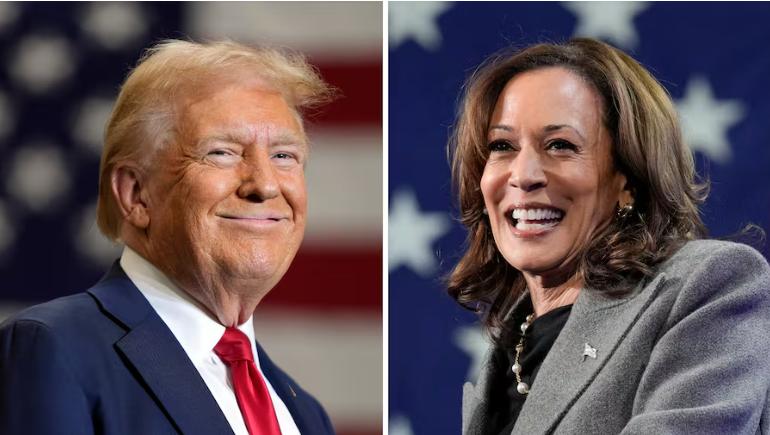
First, the parties are more divided and voter coalitions are unpredictable. For the past 20 years, the two parties in the United States have been basically tied in the election situation, which seems unlikely to change any time soon. However, the electoral base is constantly being realigned, and the traditional "realignment" of the parties is quietly under way. The rise of Donald Trump, in particular, has dramatically accelerated the movement of white working-class groups away from the Democratic Party. At the same time, highly educated voters and suburbanites are moving more Democratic. In other words, despite the gridlock in American politics, the two parties' constituencies are changing in profound ways. It is against this background that political flip-flopping and hypocrisy have become the focal points of contention on both sides.
Second, the conflict between the party and the candidate's character. Party positions are often closely tied to a candidate's character, which is why the party of Bill Clinton, a politician known for his charisma, now places more emphasis on "good character." By contrast, the Republican Party has shown an almost blind support for Mr Trump as a controversial "leader", especially when it comes to talking about his "manhood", which many in the party tend to flatter.
Moreover, the Democratic Party's position on abortion is now more unified. In the post-Roe v. Wade environment, abortion has become an important issue for the Democratic Party to motivate voters. By contrast, Trump has pushed for a significant shift in the Republican Party's position, although he has publicly criticized the "heartbeat Act" while once supporting strict abortion restrictions and has made clear that states should be free to decide whether to allow abortion.
Third, the gap between trade policy and industrial policy. While the two parties differ on many policy areas, trade and industrial policy remains a key battleground. Yet both Democrats and Republicans have shown a lack of coherence in this area. Under Trump, the Republican Party has moved toward protectionism, favoring more aggressive government intervention to revive domestic industries. This is a departure from the Republican Party before Trump took office, which generally advocated free markets and less government intervention. Over time, more traditionally unionized voters, especially in the private sector, have shifted to the Republican Party, heralding the possibility of a new partisan divide between public and private sector unions.
Finally, there is the debate about democracy and the electoral system. One of the most complex and interesting changes has been the controversy over American democracy itself. Questions about the Electoral College and voter suppression have been widely discussed in recent years, especially after Trump's election in 2016. Trump supporters and some Republicans have frequently questioned the integrity of the election process and have even floated the theory of "voter fraud," though such talk has circulated among some on the left. More broadly, both parties have long held a false assumption that higher turnout is good for Democrats to win. This view is reflected in the Democrats' view of big-city elections, where they want to increase voter participation; Across the country, they often oppose stricter voter ID laws.
The Republican Party, by contrast, has focused more on ensuring the participation of low-propensity voters, whom it considers to be mostly college-educated suburbanites, and has thus ensured fairness through voter ID laws and restrictions on early voting. Although the discussion of "voter suppression" and "electoral integrity" is often overheated, the political calculation is real.

近日,市場迎來了一則引人注目的消息:工業巨頭3M公司(MMM.N)在本周五公布了其季度業績報告,隨後股價飆升至近兩年來的
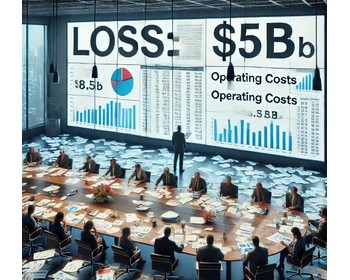
最近,外媒給OpenAI算了筆賬,今年可能要血虧50億美元。

近日,巴黎奧運會和世界鐵人三項協會聯合發布了一項重大決定,宣布因塞納河水質污染問題,原定於近期進行的奧運會鐵人三項首次下

當地時間7月18日,法國巴黎發生了一起令人震驚的持刀襲警事件。

近期,一則重大消息在國際舞臺上引起軒然大波,馬來西亞宣布加入金磚國家。

調查發現,互聯網和智能手機的使用幹擾了韓國近五分之一學生的生活。
© Copyright 2026, All Rights Reserved