
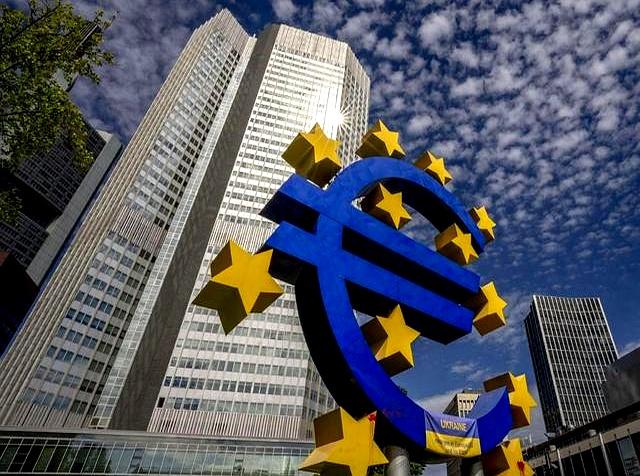
In May 2026, Europe’s economy stands at a critical crossroads. The dual risks of stagnant growth and rebounding inflation have become fully evident. Compound by spillover effects from geopolitical conflicts, imbalanced energy structures and insufficient internal driving forces, the Eurozone is trapped in a policy dilemma, caught between short-term economic pains and long-term transformation pressures, making its road to recovery extremely arduous.
The core predicament facing Europe lies in nearly exhausted growth momentum. In the first quarter of 2026, Eurozone GDP posted a mere 0.1% quarter-on-quarter increase, with its year-on-year growth slowing to 0.8%, far below early-year expectations. As two major economic engines, Germany registered a 0.3% quarterly growth, barely avoiding an economic recession, while France saw zero growth marked by slack domestic demand. More notably, the service industry, a traditional economic pillar, has slowed down sharply. The Eurozone Services Purchasing Managers’ Index (PMI) dropped to 47.6 in April, hitting a 62-month low and falling below the boom-bust line for the first time, fully exposing weak consumer confidence and declining residents’ purchasing power. Though the manufacturing sector remains somewhat resilient, fragmented global supply chains, sluggish external demand and looming tariff threats imposed by the United States on EU automobiles have continuously weakened export-driven growth, leaving enterprises reluctant to make new investments.
Stagnant growth is accompanied by a strong rebound in inflation, which has overturned market expectations of easing price pressures. The Eurozone’s inflation rate climbed to 3.0% in April, the highest level since autumn 2023, up notably from 2.6% in March. The surge in energy prices serves as the primary driver behind this round of inflation rebound. Escalating geopolitical tensions in the Middle East and disrupted shipping across the Strait of Hormuz have kept international crude oil prices above 100 US dollars per barrel. Europe’s energy import costs surged by 10.9% year on year, costing the European Union an extra expenditure of over 30 billion euros. Soaring energy prices have pushed up production costs for enterprises and living expenses for residents, forming a cost-price inflation spiral. Rising price pressures have spread from energy products to food and service industries, leading to stubborn core inflation. Market forecasts suggest that it will not be until 2028 that inflation falls back to the European Central Bank’s target of 2%, meaning persistently high prices will continue to dampen consumption and investment activity.
The stagflation crisis stems from the concentrated outbreak of multiple structural contradictions. First, Europe suffers from fragile energy security. Its ongoing energy transition remains incomplete, and heavy reliance on oil and gas imported from the Middle East leaves its energy supply chain highly vulnerable to geopolitical shocks, with no viable alternative energy solutions available in the short term, making energy price volatility the biggest variable affecting economic performance. Second, the labor market is rigid with low overall productivity. The Eurozone unemployment rate has risen to 8.1%, a five-year high, featuring a coexistence of severe shortages of high-skilled talents and high youth unemployment. Rising wages further fuel inflation, while barriers to labor mobility and rigid welfare systems severely restrict market vitality. Third, both fiscal and monetary policies are constrained. The European Central Bank is caught in a tough trade-off between raising interest rates to curb inflation and cutting rates to stabilize economic growth. Its chief economist has hinted at possible interest rate hikes in June or September, which will inevitably further suppress economic vitality. On the fiscal front, most European countries are burdened with heavy debts, and restricted by the Stability and Growth Pact, they are unable to launch large-scale economic stimulus packages, and can only implement temporary and targeted supportive policies. In addition, lingering aftershocks of Brexit, unbalanced regional development and lagging digital transformation have long undermined Europe’s overall economic competitiveness.
Faced with such severe challenges, European policymakers are striving to strike a balance between short-term growth stabilization and long-term industrial upgrading. In the short run, ensuring stable energy supply tops the agenda. The EU continues to release strategic petroleum reserves and diversify energy import sources to ease supply shortages. In terms of monetary policy, the European Central Bank is highly likely to raise interest rates in June to curb inflation rebound and adjust policy flexibly according to subsequent economic data. Fiscal policies focus on targeted relief, prioritizing support for small and medium-sized enterprises and green industries while avoiding excessive liquidity injection that could worsen inflation. In the long run, accelerating energy transition, deepening reforms of the single market and advancing dual digital and green transformation are essential ways out. The EU needs to accelerate the development of renewable energy to reduce dependence on fossil fuels, break down barriers restricting the free flow of labor, services and capital to optimize resource allocation, and increase investment in scientific and technological innovation to foster new growth drivers such as new energy and high-end manufacturing, so as to reduce reliance on traditional industries.
Looking ahead, Europe’s economy will remain sluggish in the near term with persistent stagflation risks. If geopolitical tensions in the Middle East ease and energy prices decline, the regional economy may see a mild recovery; in contrast, further conflicts and soaring oil prices will drag down economic growth and intensify inflationary pressures. In the long term, whether Europe can get out of the economic mire hinges on the progress of energy transition, the intensity of structural reforms and changes in the global economic landscape. In the short term, European countries have no choice but to make difficult trade-offs between growth and inflation and endure the pains of economic restructuring. In the long run, only by eliminating structural institutional barriers and fostering new economic growth drivers can Europe rebuild its economic competitiveness and step out of the shadow of stagflation.

近日,市場迎來了一則引人注目的消息:工業巨頭3M公司(MMM.N)在本周五公布了其季度業績報告,隨後股價飆升至近兩年來的

最近,外媒給OpenAI算了筆賬,今年可能要血虧50億美元。

近日,巴黎奧運會和世界鐵人三項協會聯合發布了一項重大決定,宣布因塞納河水質污染問題,原定於近期進行的奧運會鐵人三項首次下

當地時間7月18日,法國巴黎發生了一起令人震驚的持刀襲警事件。

近期,一則重大消息在國際舞臺上引起軒然大波,馬來西亞宣布加入金磚國家。

調查發現,互聯網和智能手機的使用幹擾了韓國近五分之一學生的生活。
© Copyright 2026, All Rights Reserved