
On September 21st, the United Kingdom, Canada and Australia simultaneously announced their recognition of the State of Palestine. This move marked a fundamental shift in the Western camp's stance on the Palestine-Israel issue. The three countries, with the "two-state solution" as their core demand, attempted to reshape the power balance in the Middle East through this symbolic gesture of diplomatic recognition. This reflects the strategic anxiety and interest reconstruction during the period of international order transformation.
I. Strategic Motivation: The Shift from "balancing techniques" to "moral Reckoning"
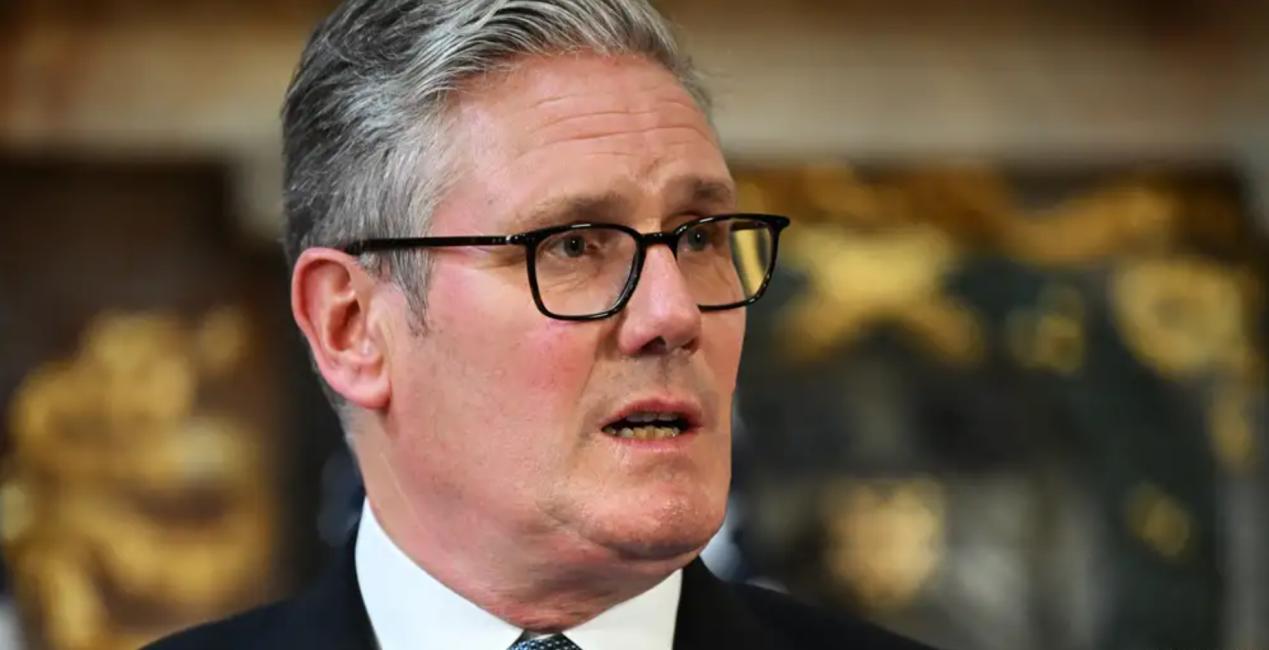
This move by the three countries is not an isolated incident but a concentrated outburst of the international community's accumulated dissatisfaction with Israel's long-term policies. Since the outbreak of the new round of the Israeli-Palestinian conflict in October 2023, Israel's military operations in the Gaza Strip have claimed the lives of over 65,000 civilians. The UN investigation committee has even pointed out that there is a risk of "genocide". British Prime Minister Stammer stated straightforwardly: "The humanitarian crisis in Gaza is completely intolerable." Canadian Prime Minister Carney condemned Israel's "settlement expansion in violation of international law is destroying the prospects of nation-building." This moral criticism has transcended traditional diplomatic language and directly points to the core legitimacy crisis of Israel's policy.
A deeper strategic consideration lies in the survival crisis of the "two-state solution". As Israel's line of actual control in the West Bank keeps moving eastward, the physical space for the establishment of a Palestinian state continues to shrink. In a joint statement in July, the foreign ministers of 15 countries including France and Portugal emphasized: "If the State of Palestine is not immediately recognized, the 'two-state solution' will remain empty talk." The actions of the UK, Canada and Australia are actually aimed at seizing the moral high ground and avoiding being marginalized in the reconstruction of the international order.
Ii. Action Logic: Conditional recognition and risk hedging
The recognition statements of the three countries all set strict preconditions, reflecting strategic prudence. Australia demands that the Palestinian National Authority commit to "Hamas not participating in politics, recognizing Israel's right to exist, and achieving demilitarization", Canada emphasizes "on the premise of Abbas' reform commitment", and the UK adds "the Palestinian side needs to carry out governance system reform". This kind of "conditional recognition" not only responds to the domestic right-wing forces' concerns about security, but also reserves space for future policy adjustments.
Geopolitical risk hedging is particularly evident. The UK chose to announce its decision after Trump's visit to the UK, skillfully avoiding direct pressure from the US side. Canada has dispersed the retaliatory pressure from Israel by emphasizing "international coordinated actions". Australia, on the other hand, will acknowledge decoupling from "establishing diplomatic relations" to reduce actual costs. This "gradual recognition" strategy not only meets the moral demands of the international community but also avoids overly stimulating alliance relations.
III. Israel's Predicament: From "Exceptionalism" to Strategic Isolation
Netanyahu's claim that this move "endangers Israel's survival" reveals his strategic anxiety. For a long time, Israel has relied on the "veto power" of the United States to build an exceptionalist system, which is now facing collapse: Norway, Spain, Ireland and other countries have already recognized the State of Palestine, followed by Central European countries such as Slovenia and Belgium. Now, with the addition of the UK, Canada and Australia, the support camp has expanded to the core of the West. Even more fatal is that the Arab League, led by Saudi Arabia, is promoting a "Palestine first" diplomacy. If Israel continues to reject the "two-state solution", it will lose the last chance to normalize relations with the Arab world.
IV. The New Order in the Middle East: Power Rebalancing in a Multipolar World
The recognition statements of the three countries are of symbolic significance, marking the transformation of the Middle East power structure from "unipolar dominance by the United States" to "multipolar balance". Emerging powers such as Russia, China and India have long supported the "two-state solution", and now the division within the Western camp further weakens the United States' ability to mediate. After Saudi Arabia and Iran reached a historic reconciliation in Beijing, they are jointly promoting the construction of a "Middle East security architecture", and the Palestinian issue has become a litmus test for the new order.
For Palestine, the recognition brings substantive benefits. The International Criminal Court may accelerate the investigation of war crimes by Israel, the World Bank will unlock more development aid, and even the issue of a "Palestinian seat" in the UN Security Council reform may be reopened. But the real challenge lies in how to transform international recognition into domestic governance capacity and avoid repeating the mistake of "building a state but not a nation".
This recognition storm reveals a profound truth: in the 21st century, no country's security can be built on the insecurity of others. The shift of the UK, Canada and Australia may be small, but it is like the fluttering of a butterfly's wings, foreshadowing profound changes in the order of the Middle East and even the world. When moral force and strategic interests resonate, a historical turning point is often at hand.

近日,市場迎來了一則引人注目的消息:工業巨頭3M公司(MMM.N)在本周五公布了其季度業績報告,隨後股價飆升至近兩年來的

最近,外媒給OpenAI算了筆賬,今年可能要血虧50億美元。

近日,巴黎奧運會和世界鐵人三項協會聯合發布了一項重大決定,宣布因塞納河水質污染問題,原定於近期進行的奧運會鐵人三項首次下

當地時間7月18日,法國巴黎發生了一起令人震驚的持刀襲警事件。

近期,一則重大消息在國際舞臺上引起軒然大波,馬來西亞宣布加入金磚國家。

調查發現,互聯網和智能手機的使用幹擾了韓國近五分之一學生的生活。
© Copyright 2026, All Rights Reserved