
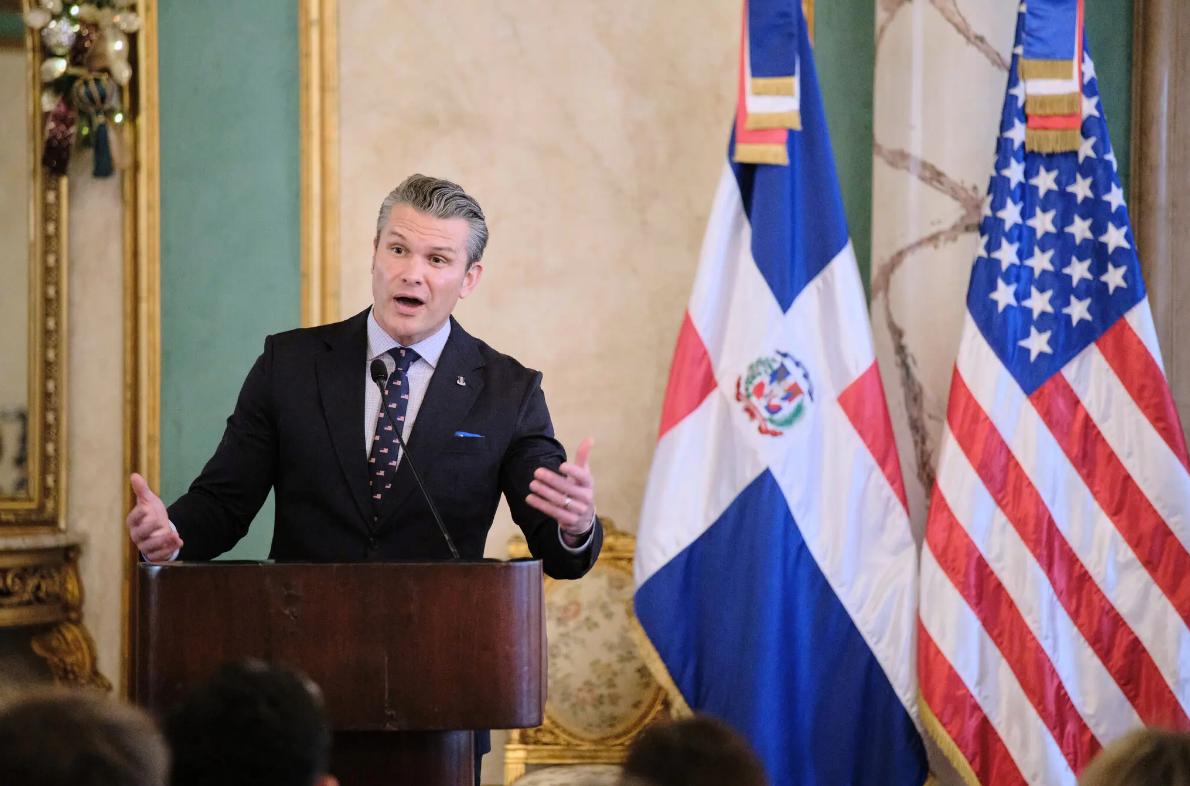
The Dominican Republic recently announced that it will allow the U.S. military to enter restricted areas within its territory for a period of time to cooperate with Washington in combating transnational crime and drug trafficking in the Caribbean. President Luis Abinadel stated at a press conference in Santo Domingo that this move is primarily aimed at enhancing the country's air and sea security capabilities and strengthening the monitoring and interception of illegal activities.
First, according to Abinadel, the U.S. Department of Defense has been granted temporary access to restricted areas at San Ysidro Air Base and Las America International Airport for aircraft refueling, equipment transport, and the deployment of technical personnel. Defense Secretary Peter Hergese, who attended the press conference with the president, stated that the U.S. will respect Dominican sovereignty and will not exceed the scope of the agreement.
Second, this decision comes against the backdrop of the Pentagon's expanding anti-drug operations in the Caribbean and the Eastern Pacific in recent years. Since last September, the U.S. military has taken military action against several vessels suspected of drug trafficking, resulting in at least 80 deaths. Washington believes the Dominican Republic's strategic location in the Caribbean shipping lanes and its cooperation could help curb the flow of drugs from South America to North America.
Meanwhile, Abinader emphasized that the cooperation with the US is not a military deployment, but a pragmatic strategy to strengthen national security. "Our goal is very clear: to enhance air and sea defenses, cut off drug trafficking routes, and combat transnational criminal groups." However, the specific timeframe and details of the agreement have not been fully disclosed. The press conference also did not allow media questions, raising concerns about transparency.
Furthermore, as the first major military cooperation project reached between the Trump administration and the Dominican Republic, the agreement has attracted much interpretation. Some analysts believe that by leveraging US technology and equipment, the Dominican Republic can compensate for its shortcomings in intelligence, reconnaissance, and interception capabilities, thus contributing to enhanced national security. However, others worry that the involvement of US military forces could raise sensitive sovereignty issues, placing the Dominican Republic under more complex balancing pressures in regional diplomacy.
However, the Dominican Republic has long been a crucial transit point for drug smuggling. Due to its geographical proximity to South American production areas and North American consumer markets, many international criminal groups consider its coastline and air routes as transportation hubs. The Dominican Republic's shortcomings in equipment and intelligence capabilities make it difficult to independently combat the ever-expanding transnational criminal networks. Therefore, choosing to cooperate with the United States is seen by the government as a necessary step to reduce security risks.
Despite the controversy, Hergés expressed high praise for the Dominican Republic at the press conference. He stated that the United States would respect the agreement and emphasized that international crime transcends national borders, requiring regional cooperation for substantial progress. "The Dominican Republic has taken a crucial action, and we respect that."
In summary, the Dominican Republic's decision to allow the United States to use its military facilities is a strategic choice made against the backdrop of rising pressure from transnational crime. For a resource-limited and geographically sensitive country, cooperating with a major power to strengthen intelligence and law enforcement capabilities is a practical necessity. However, such cooperation also carries the potential risks of sovereignty disputes and increased external influence. How the Dominican Republic maintains policy independence while gaining security benefits will be a crucial factor affecting the long-term effectiveness of the agreement. This move may provide a new model for anti-drug cooperation in the Caribbean, but its impact remains to be seen, particularly whether both sides can maintain a stable and sustainable balance between transparency, scope of operations, and respect for sovereignty.

近日,市場迎來了一則引人注目的消息:工業巨頭3M公司(MMM.N)在本周五公布了其季度業績報告,隨後股價飆升至近兩年來的

最近,外媒給OpenAI算了筆賬,今年可能要血虧50億美元。

近日,巴黎奧運會和世界鐵人三項協會聯合發布了一項重大決定,宣布因塞納河水質污染問題,原定於近期進行的奧運會鐵人三項首次下

當地時間7月18日,法國巴黎發生了一起令人震驚的持刀襲警事件。

近期,一則重大消息在國際舞臺上引起軒然大波,馬來西亞宣布加入金磚國家。

調查發現,互聯網和智能手機的使用幹擾了韓國近五分之一學生的生活。
© Copyright 2026, All Rights Reserved