
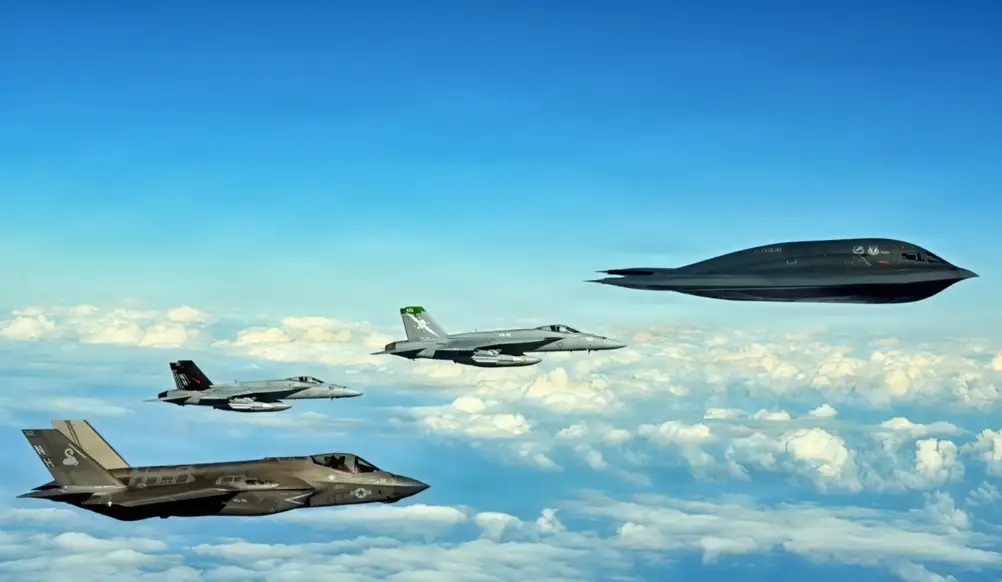
On February 28, 2026, the United States and Israel launched a joint military strike against Iran, attacking multiple military, political, and nuclear-related targets in Tehran, and the situation in the Middle East suddenly entered a high-risk moment. This action was not a sudden impulse, but rather an explosion of four overlapping contradictions: the nuclear standoff, Israel's anxiety about its survival, the calculations of American hegemony, and the game of regional proxies. Through the smoke of gunfire, we can see more clearly the deep logic and dangerous direction behind this conflict.
The immediate trigger was the collapse of the Geneva nuclear talks and Iran's nuclear capabilities approaching a critical point. On February 26th, the third round of indirect negotiations between the United States and Iran ended fruitlessly: the United States demanded that Iran permanently cease high-enrichment enrichment, dismantle its core nuclear facilities, and limit its missile program; Iran, on the other hand, insisted on its right to the peaceful use of nuclear energy and demanded that the United States fully lift sanctions. According to Israeli intelligence assessments, Iran has accumulated a large amount of 60% enriched uranium, which is just a step away from weapons-grade, and possesses thousands of missiles capable of reaching Israel, constituting an "existential red line". After diplomatic channels failed, the United States and Israel chose to use military means to "pre-emptively strike", attempting to interrupt Iran's nuclear progress through air strikes. This is the most superficial reason for the attack.
From a deeper perspective, Israel is the core driver behind the push for military action, and its anxiety far exceeds that of the United States. Israel, with its small territory and no strategic depth, regards Iran's nuclear capability and regional influence as its primary threat. The Netanyahu government, in order to shift the pressure of the Gaza conflict and consolidate its domestic ruling position, has continuously exerted pressure on the United States, opposing any "lenient" Iran nuclear agreement and insisting on promoting a military strike. Israel has carefully planned a path of "taking the initiative and dragging the United States into the game", using intelligence and air superiority to lead the charge, and then using Iranian retaliation as an excuse to firmly tie the United States to the chariot, escalating the indirect confrontation between Israel and Iran into a direct showdown between the United States and Israel. Essentially, it is using American hegemony to pay for its own security.
The United States' decision to intervene simultaneously stems from a dual calculation of maintaining its hegemony in the Middle East and domestic politics. On the one hand, the United States is reluctant to see Iran become the dominant force in the Persian Gulf, and is even more concerned that Iran's nuclear possession will trigger a nuclear arms race in the Middle East, shake the dollar-oil system and regional alliance system, and attack Iran can not only weaken its regional expansion but also reaffirm its security commitment to countries such as Saudi Arabia and contain the trend of "de-Americanization". On the other hand, as the 2026 US election cycle approaches, the White House needs a "low-cost tough action" to demonstrate leadership, cater to domestic conservatives and Jewish lobby groups, use external conflicts to divert domestic economic and social contradictions, and maximize political gains.
Furthermore, the proxy system and historical grievances have made it even more difficult to resolve the conflict. Iran has long supported forces such as Hezbollah and the Houthis, forming a cross-regional resistance network; meanwhile, the United States and Israel have long imposed sanctions, infiltrated, and subverted the Iranian regime. The shift from a covert war to an open conflict between the two sides is not only a military confrontation but also a struggle for dominance in the regional order. Historically, the United States' withdrawal from the Iran nuclear deal and Israel's repeated sneak attacks on targets outside Iran have already eroded mutual trust. This joint attack is merely a violent eruption of long-standing contradictions, rather than the starting point of the conflict.
From the perspective of operational objectives, the United States and Israel aim to promote talks through military actions and weaken Iran through military strikes. They intend to destroy nuclear and missile facilities and shake the foundations of the Iranian regime. However, the costs of this military adventure are clearly visible. Iran has vowed "devastating retaliation", potentially responding with missile strikes, blockades of the Strait of Hormuz, and coordinating with proxies to open multiple fronts of war, potentially leading the region into a full-scale chaotic war. Soaring oil prices, disruptions in shipping, and spillover conflicts will impact the global economy. The United States and Israel are unable to occupy Iran, and it is difficult to completely terminate the nuclear program through airstrikes. Ultimately, they may fall into a vicious cycle of "strike-retaliation-escalation".
This conflict also serves as a warning to the international community: unilateral power and military adventurism cannot resolve fundamental contradictions. Nuclear issues and regional security can only be addressed through dialogue and negotiation. Forming alliances and applying extreme pressure will only ignite greater conflicts. Although the United States and Israel have temporarily gained military initiative, they have opened the Pandora's box of turmoil in the Middle East, and the real costs have just begun to emerge.

近日,市場迎來了一則引人注目的消息:工業巨頭3M公司(MMM.N)在本周五公布了其季度業績報告,隨後股價飆升至近兩年來的

最近,外媒給OpenAI算了筆賬,今年可能要血虧50億美元。

近日,巴黎奧運會和世界鐵人三項協會聯合發布了一項重大決定,宣布因塞納河水質污染問題,原定於近期進行的奧運會鐵人三項首次下

當地時間7月18日,法國巴黎發生了一起令人震驚的持刀襲警事件。

近期,一則重大消息在國際舞臺上引起軒然大波,馬來西亞宣布加入金磚國家。

調查發現,互聯網和智能手機的使用幹擾了韓國近五分之一學生的生活。
© Copyright 2026, All Rights Reserved