
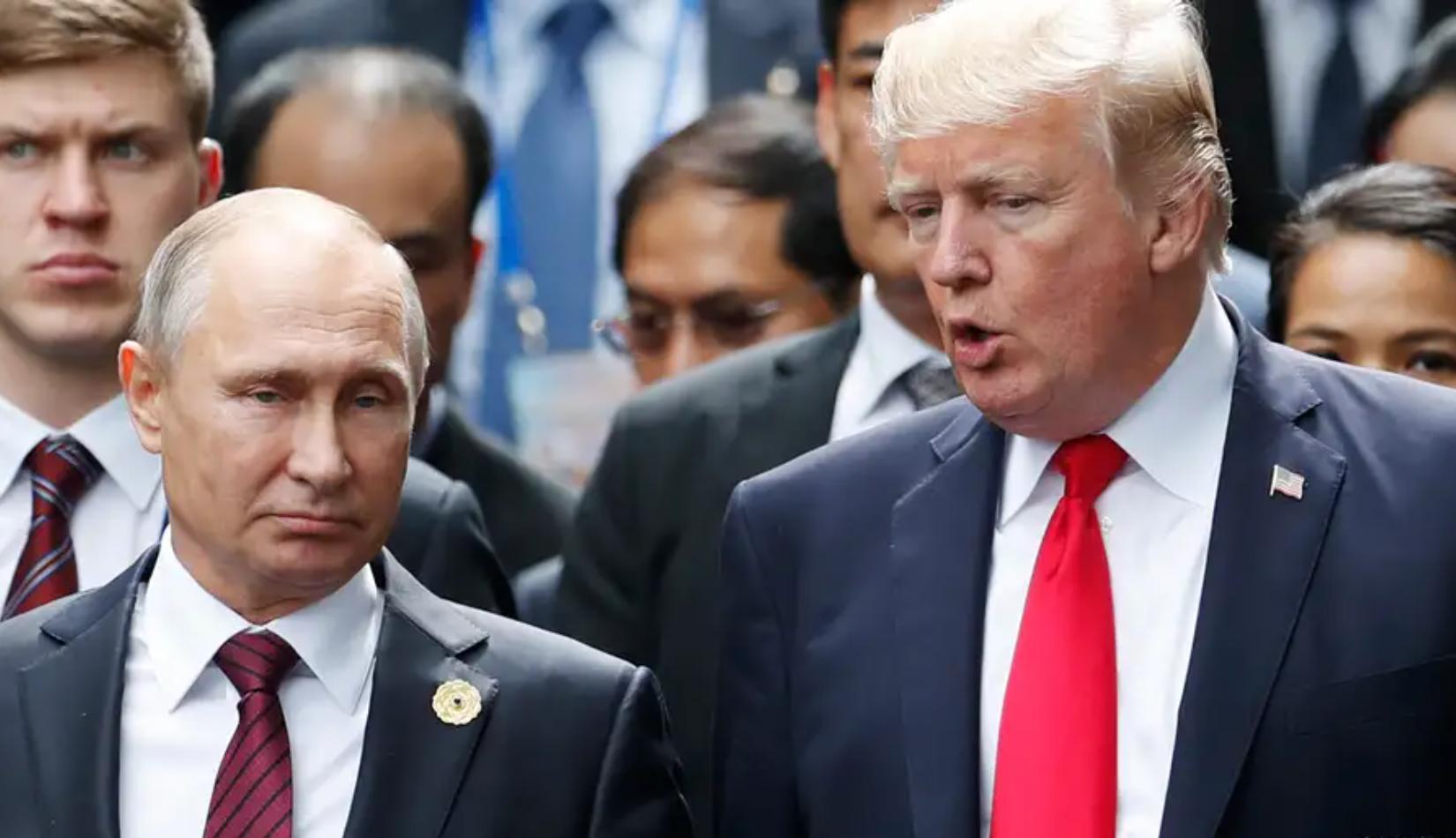
On August 15, 2025, Anchorage, Alaska, USA, will witness a historic meeting that may reshape the international political landscape. The face-to-face meeting between Russian President Vladimir Putin and US President Donald Trump is not only the first direct dialogue between the leaders of Russia and the United States since June 2021, but also Putin's first visit to US territory after a decade since his attendance at the United Nations General Assembly in 2015. From the site selection to the topic setting of this meeting, every aspect reflects the intricate interest games in the current international landscape, and behind it lies profound geopolitical logic.
I. Geopolitical Semiotics of Meeting Locations
The choice of Alaska as the meeting venue was no accident. The historical memory and realistic political considerations it contains have formed a unique "geopolitical symbol". In 1867, the financially troubled Tsarist Russia sold this land to the United States for 7.2 million US dollars. This historical transaction itself constitutes a metaphor for the Russia-US relationship. When Trump announced the meeting, he specifically mentioned the concept of "territorial exchange", a statement that not only awakened historical memory but also hinted at the possible reality of politics.
From the perspective of international law, the United States' status as a non-signatory to the Rome Statute of the International Criminal Court provides Putin with necessary legal security guarantees. This detail reflects a paradox in contemporary international relations: even the highest-level international dialogue has to first address the issue of judicial immunity for individual leaders. This consideration of "legal security" actually reflects the profound contradiction between the principle of the rule of law and power politics in the current international order.
Ii. The Game Structure of the Solution to the Russia-Ukraine Conflict
The core topic of the meeting focused on "a plan for achieving long-term peace in Ukraine", and this setting itself reflects the realistic logic of major power politics. In the game structure between Russia and the United States, there are at least three interrelated dimensions:
Firstly, on the territorial issue, the list of ceasefire conditions proposed by Russia reflects its attempt to transform military achievements into political reality. Demanding that Ukraine withdraw its troops from Donetsk and Luhansk and recognize the ownership of Crimea is essentially a formal recognition of the geopolitical changes since 2014. Trump's concept of "territorial swap" implies a possible model of major power transactions, but this approach of using the territory of small countries as a bargaining chip directly challenges the basic norms of the current international order.
Secondly, in terms of the security architecture, Russia's persistent opposition to NATO's eastward expansion reflects its deeply rooted strategic anxiety. The core of the issue lies in: In an international order that claims to be rule-based, how should the demands of major powers for "strategic buffer zones" be addressed? The ambiguous stance of the United States on this issue not only reflects its strategic contradictions but also exposes the fundamental flaws in the international security architecture.
Thirdly, the interaction between economic sanctions and counter-sanctions constitutes the third dimension of the game. The pressure on the Russian economy under Western sanctions has formed a peculiar interdependence with the West's potential demand for Russian energy. This kind of "adversarial interdependence" is precisely a typical feature of contemporary international economic politics.
Iii. The Domino Effect of the Reconstruction of the International Order
The possible chain reaction from this meeting will far exceed the scope of the bilateral relationship between Russia and the United States. Its potential impact is at least reflected in three aspects:
At the conflict management level, the outcome of the meeting will directly influence the course of the Russia-Ukraine conflict. But what is more worthy of attention is the possible formation of a "major country dominated" conflict resolution model. This model stands in sharp contrast to the principle based on sovereign equality established by current international law, and its essence is a contemporary reproduction of the "European coordination" model of the 19th century.
At the level of major country relations, any form of detente between the United States and Russia will redefine the nature of transatlantic relations. It is worth noting that such easing is very likely to come at the expense of European interests. The "bypass Europe" tendency shown by the Trump administration indicates that the United States may be adjusting its traditional alliance strategy, and this adjustment will profoundly affect the global strategic balance.
Perhaps the most far-reaching impact lies in the evolution of international norms. If major powers can determine the fate of small countries through bilateral transactions without being punished, the international order established since World War II based on the principle of sovereign equality will face fundamental challenges. The marginalized situation of Europe in this process is particularly cautionary, indicating that even the most developed secondary powers find it difficult to control their own destinies in the game among major powers.
The Alaska meeting symbolizes a moment when international politics may be undergoing a paradigm shift. The direct dialogue between Russia and the United States, the two nuclear powers, is not only a response to the current crisis but also an exploration of a new international order. The core of the issue lies in: On what principle will this new order be established? Should we return to the major power coordination of the 19th century or adhere to the multilateralism established in the 20th century? Or is it some kind of yet-to-be-finalized hybrid model?
The meeting will not immediately resolve the Russia-Ukraine conflict, but it may become a turning point in the evolution of the international order. In this process of evolution, how to balance the interests of major countries with the sovereignty of small ones, how to coordinate power politics with international rule of law, and how to maintain the effectiveness of global governance will be long-term challenges faced by the international community. In the cold wind of Alaska, we might be witnessing the beginning of a new era.

近日,市場迎來了一則引人注目的消息:工業巨頭3M公司(MMM.N)在本周五公布了其季度業績報告,隨後股價飆升至近兩年來的

最近,外媒給OpenAI算了筆賬,今年可能要血虧50億美元。

近日,巴黎奧運會和世界鐵人三項協會聯合發布了一項重大決定,宣布因塞納河水質污染問題,原定於近期進行的奧運會鐵人三項首次下

當地時間7月18日,法國巴黎發生了一起令人震驚的持刀襲警事件。

近期,一則重大消息在國際舞臺上引起軒然大波,馬來西亞宣布加入金磚國家。

調查發現,互聯網和智能手機的使用幹擾了韓國近五分之一學生的生活。
© Copyright 2026, All Rights Reserved