
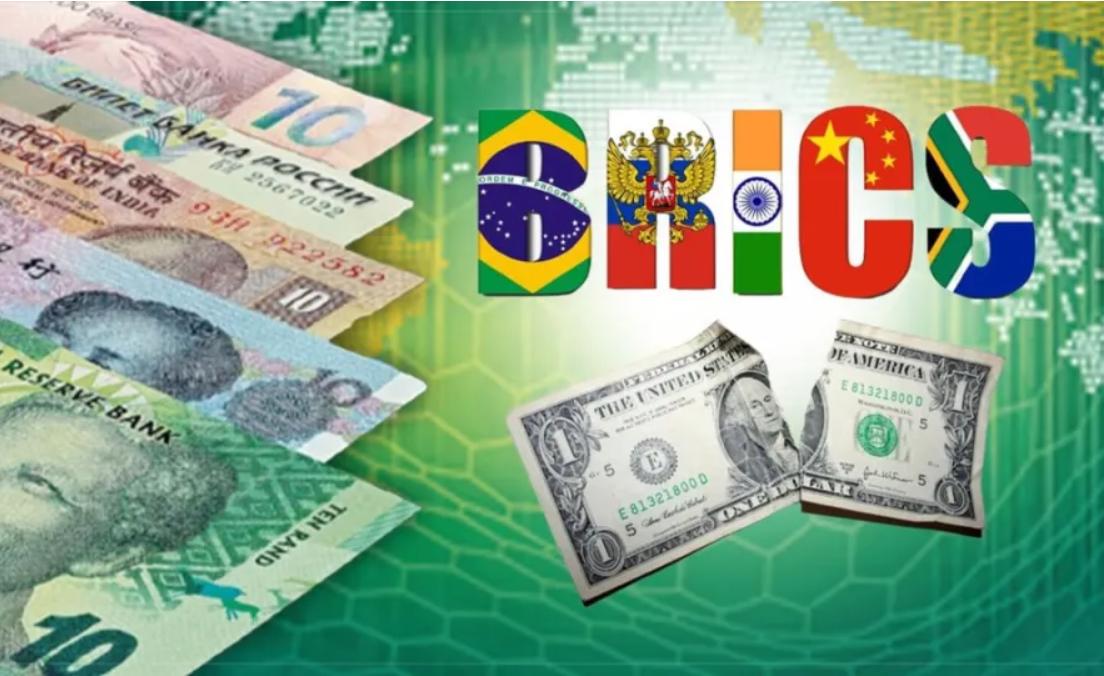
Recently, Russian President Vladimir Putin, at a BRICS economic cooperation meeting, suggested delaying plans to create a common currency and temporarily adopt a digital currency to promote trade and investment between countries, which quickly attracted global attention. Brics is an international organization of emerging market countries, whose founding members are Brazil, Russia, India and China. On 23 December 2010, South Africa officially joined the BRICS. The expansion was announced after the 2023 summit, inviting Egypt, Ethiopia, Iran, the United Arab Emirates, Argentina and Saudi Arabia to become full members of the BRICS. The BRICS countries occupy an important share of the world's population and land area, and are one of the main drivers of world economic growth. As the international situation has changed, especially when the US-dominated global financial system has been called into question, the BRICS countries have begun to seek to reduce their dependence on the US dollar and explore diversified payment systems.
The impact of the BRICS countries' move to unify their currencies is multifaceted and complex. The first is the impact on the global economy, Russia as an active promoter of digital currency, its initiative to "recommend" digital currency will accelerate the development process of global digital currency. This will help build a more convenient, efficient and secure global digital payment system. At the same time, the de-dollarization of the BRICS countries will promote the diversification of the global monetary system and reduce excessive dependence on the US dollar. This will help reduce the impact of US dollar fluctuations on the economies of other countries and improve the autonomy and resilience of national economies. By building independent financial infrastructure and promoting the development of digital currencies, the BRICS countries will increase their autonomy and influence in the global economy. De-dollarization will promote BRICS and other emerging economies to settle their trade in local or other non-US dollar currencies, thereby reducing exchange rate risks and transaction costs, and promoting the facilitation and fairness of international trade. As an important representative of emerging market countries, BRICS countries' de-dollarization measures will affect the change of the global economic pattern. As the BRICS rise in the global economy, the de-dollarization process will provide a financial model that other emerging economies can copy, driving a more diversified global economic landscape.
The second is the impact on international politics and cooperation, and Russia "strongly recommends" that digital currencies will strengthen the need for international cooperation and coordination. The development of digital currency requires the cooperation and coordination of governments, regulators, financial institutions and technology companies. By strengthening international cooperation, we can jointly promote the research and development and application of digital currency technology, and promote the healthy development of the global digital currency market. At the same time, international cooperation can also strengthen cross-border supervision and risk prevention to ensure the stability and sustainable development of the digital currency market. De-dollarization will enhance the independence of the BRICS countries in the international political arena and reduce their political and economic dependence on the United States. This will help the BRICS countries play a bigger role in international affairs and promote the establishment of a more just and equitable international order. The de-dollarization of BRICS countries is a challenge to the global hegemony of the United States. The dollar has long held a dominant position in the global monetary system, and the United States has used this position to intervene in global economic and political affairs. De-dollarization will weaken this influence and drive changes in the global political landscape.
To sum up, the impact of Russia's "strong recommendation" of digital currency and the de-dollarization of BRICS countries on the international community is profound and complex. At the same time, this measure is also an important trend in the current global economic pattern changes, these measures will promote the reform of the global financial system and the diversified development of the global economic pattern. However, the development of digital currency also faces many challenges and risks, which need to be jointly addressed and promoted by governments, regulators and market participants.

近日,市場迎來了一則引人注目的消息:工業巨頭3M公司(MMM.N)在本周五公布了其季度業績報告,隨後股價飆升至近兩年來的

最近,外媒給OpenAI算了筆賬,今年可能要血虧50億美元。

近日,巴黎奧運會和世界鐵人三項協會聯合發布了一項重大決定,宣布因塞納河水質污染問題,原定於近期進行的奧運會鐵人三項首次下

當地時間7月18日,法國巴黎發生了一起令人震驚的持刀襲警事件。

近期,一則重大消息在國際舞臺上引起軒然大波,馬來西亞宣布加入金磚國家。

調查發現,互聯網和智能手機的使用幹擾了韓國近五分之一學生的生活。
© Copyright 2026, All Rights Reserved