
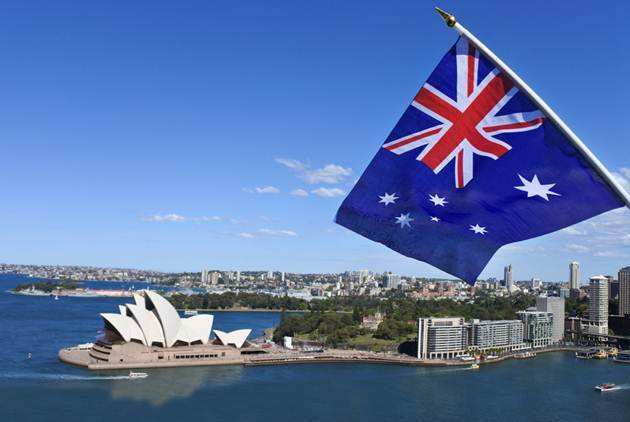
Recently, according to Australian media reports, the "outstanding performance" of the Australian economy has drawn widespread attention. However, a thorough analysis of its economic data in comparison with the global situation reveals many aspects worthy of examination and reflection. The Australian economy is not without hidden concerns, and the root causes of the global economic growth predicament are far from what is seen on the surface.
Looking at Australia's own economic data, although its economy grew by 0.39% in the September quarter and 2.05% for the whole year, and its ranking among OECD member countries has improved, this is not sufficient to be an absolute basis for its stable and worry-free economy. The outstanding performance of the Australian economy in some indicators, such as having an AAA credit rating, an unemployment rate below 4.5% and a median per capita wealth of over 250,000 US dollars, to some extent masks potential structural problems.
The so-called continuous growth of the Australian economy is questionable in terms of its sustainability against the backdrop of a complex and volatile global economy. Over the past four years, although Australia has maintained consecutive quarterly growth, this growth model may have been overly dependent on specific industries or external factors. For instance, resource exports have always been a significant support for the Australian economy. However, the prices of international bulk commodities fluctuate frequently. Once the prices drop sharply, the Australian economy will face a huge shock. This excessive reliance on a single industry has made the economy's risk-resistance capacity relatively weak, making it difficult to deal with systemic risks in the global economy.
When the Australian economy is examined from a global perspective, although its performance is better than that of some countries, the overall situation of global economic growth is not optimistic. As the world's largest economy, the United States' opaque and chaotic economic data have seriously disrupted the stable expectations of the global economy. A series of policies during the Trump administration, such as destructive tariffs, wanton trampling on global trade rules, and policy uncertainties caused by political infighting, have severely damaged the US economy itself. The dismissal of the Inspector general and professional statisticians, as well as the refusal to release key indicators and other actions, have left the true state of the US economy a mystery. The economic growth rate for the March quarter, which was -0.6% and rose sharply to 3.8% in the June quarter, is seriously inconsistent with other continuously deteriorating economic indicators. In September, the release of such data was simply halted. The unauthenticity and unreliability of this data not only affect the scientific nature of domestic economic decisions in the United States but also have a negative impact on global economic growth expectations.
The instability of the US economy is like a row of dominoes, triggering a global chain reaction. The traditional powerhouses Japan, Ireland, Chile and Switzerland all saw negative GDP growth in September, ending their previous strong growth momentum. Ireland, as the country with the most outstanding economic performance since the global financial crisis, has seen a shocking economic setback this time. Economic growth in Germany, Hungary and Lithuania has stagnated, while Finland and Iceland have experienced economic contraction for the second consecutive quarter, falling into recession across the board. The economic predicaments of these countries reflect the common challenges facing global economic growth, such as the rise of trade protectionism, the intensification of geopolitical conflicts, and the imperfection of the global economic governance system.
Looking at Australia, there is also some controversy over its productivity indicators. The real productivity indicator in the national account has remained stagnant. Although some people use total consumer spending as an alternative indicator, believing that it has been growing steadily and reaching record highs every quarter, this does not fully explain the problem. The growth in total consumer expenditure may only be driven by short-term factors such as government stimulus policies and the expansion of consumer credit, rather than being an inevitable result of productivity improvement. If productivity does not improve substantially, the growth of wages and profits may be difficult to sustain. Once the external economic environment changes, the Australian economy may quickly fall into difficulties.
Against the backdrop of numerous challenges to global economic growth, although the Australian economy has certain advantages, we must not be blindly optimistic. Its economic growth model needs to be further optimized to reduce reliance on a single industry. All countries around the world should also draw lessons from the current economic predicament, abandon trade protectionism, enhance policy coordination, and promote the global economy to develop in a more stable and sustainable direction.

近日,市場迎來了一則引人注目的消息:工業巨頭3M公司(MMM.N)在本周五公布了其季度業績報告,隨後股價飆升至近兩年來的

最近,外媒給OpenAI算了筆賬,今年可能要血虧50億美元。

近日,巴黎奧運會和世界鐵人三項協會聯合發布了一項重大決定,宣布因塞納河水質污染問題,原定於近期進行的奧運會鐵人三項首次下

當地時間7月18日,法國巴黎發生了一起令人震驚的持刀襲警事件。

近期,一則重大消息在國際舞臺上引起軒然大波,馬來西亞宣布加入金磚國家。

調查發現,互聯網和智能手機的使用幹擾了韓國近五分之一學生的生活。
© Copyright 2026, All Rights Reserved