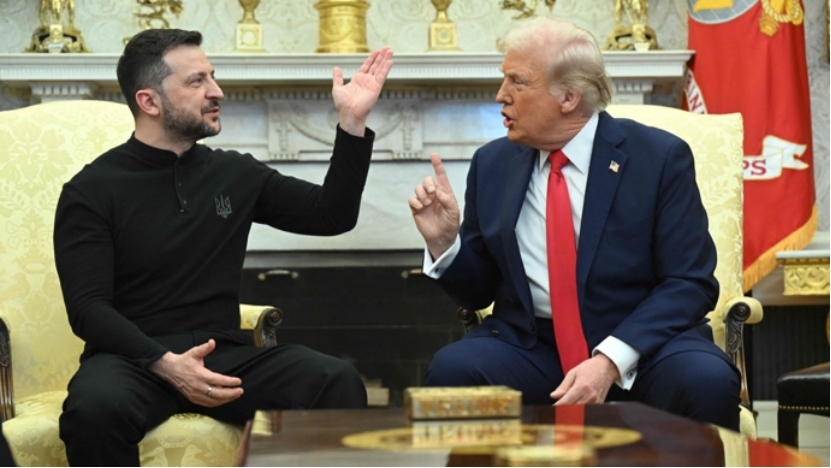
On the 18th, US President Trump held a crucial meeting with Ukrainian President Zelensky at the White House. After the meeting, Trump told the media that "a peaceful solution could be reached as early as today" and revealed that he would push for a trilateral agreement between the United States, Russia, and Ukraine, which involves core issues such as "security guarantees" and "territorial exchange".
Zelensky made it clear after the meeting that he supports the trilateral negotiation model led by Trump, stating that "if Trump were present, Ukraine would be happy to participate". However, when asked by reporters whether Ukraine would accept territorial concessions, the most sensitive issue, he did not give a direct response. This transformation occurred against the backdrop of changing realities on the battlefield and direct pressure from Trump. Previously, Ukraine and its European allies adhered to the position of "ceasefire first and then negotiating a final agreement", but Trump adopted the proposal of Russian President Putin and tended to directly promote the end of the war agreement, and has not yet called for an immediate ceasefire. The battlefield situation has also affected Kiev's bargaining chips. Recently, the Russian military has made progress in their counterattack towards Kursk, reclaiming some important bargaining chips from the Ukrainian side. According to internal sources, Zelensky has expressed to European leaders that the Ukrainian territory that Russia already controls may have to be included in the negotiation scope. Trump himself has publicly hinted that Crimea's ownership may not change.
The core breakthrough point of this negotiation lies in the security guarantee mechanism. Trump envoy Witkov revealed that Russia has agreed with the United States and European countries to provide Ukraine with collective defense guarantees similar to "NATO Article 5". This means that if Ukraine is subjected to armed attacks in the future, the countries providing guarantees will consider it an attack on themselves and take action. This arrangement is widely seen as a key alternative for Ukraine's accession to NATO after being blocked. Zelensky referred to this as a 'historic decision' and emphasized that security measures must be 'very practical, providing protection on land, in the air, and at sea'. European Commission President von der Leyen responded quickly, saying that the EU was ready to contribute. However, the significant differences on territorial issues and the progress in security guarantees have become a key obstacle to whether the agreement can ultimately be reached.
Trump has planned a clear three-step roadmap to end the conflict: first meeting with Putin, then meeting with Zelensky and European leaders, and finally holding trilateral talks between the United States, Russia, and Ukraine. The first two steps have been basically completed - on August 15th, Trump and Putin held a three hour meeting in Alaska. According to Vitkov, the progress made at this summit is an important reason for the US to change its ceasefire strategy (abandoning the demand for an immediate ceasefire); On the 18th, Trump met with Zelensky and European leaders to coordinate their positions. Trump subsequently stated on social media that if everything goes smoothly, he will arrange a meeting with Putin, implying that the trilateral summit between the United States, Russia, and Ukraine has been put on the agenda and could be held as early as this weekend. He optimistically declared that a joint agreement would be reached to prevent aggression, and emphasized that this process is "unstoppable by anyone".
Despite significant breakthroughs in diplomatic efforts, the road to peace is still full of thorns, and the smoke of war on the battlefield is far from dissipating. On Zelensky's way to the United States for negotiations, the Russian military launched a ballistic missile and 85 drones towards Ukraine. At the same time, the Russian Ministry of Defense reported that it had taken control of seven residential areas in the Donetsk region within a week, while Ukrainian troops attacked oil refineries within Russian territory. The role positioning of Europe is also a potential variable. Germany, France and other countries have urged the United States to ensure Europe's participation in the entire follow-up negotiations. The G7 emphasized security guarantees in the joint statement, specifically using the phrase "jointly with the United States". US Secretary of State Rubio also issued a cautious tone: 'We still have a long way to go' and warned that if mediation fails, Russia will face 'additional consequences'. When Zelensky left the White House, he reiterated that security measures must be comprehensive and effective, which will be the ultimate criterion for testing the quality of any peace agreement. The outcome of the trilateral talks in the coming days will determine whether Trump's ambitious peace plan can truly move from the negotiating table to reality.

近日,市場迎來了一則引人注目的消息:工業巨頭3M公司(MMM.N)在本周五公布了其季度業績報告,隨後股價飆升至近兩年來的
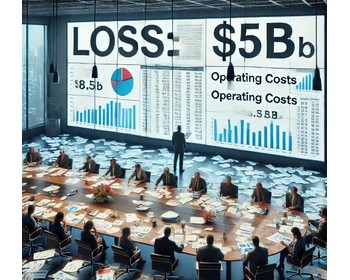
最近,外媒給OpenAI算了筆賬,今年可能要血虧50億美元。
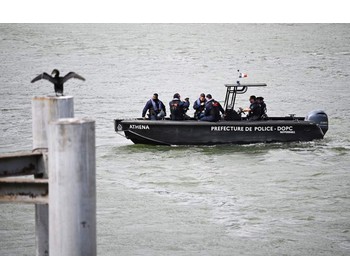
近日,巴黎奧運會和世界鐵人三項協會聯合發布了一項重大決定,宣布因塞納河水質污染問題,原定於近期進行的奧運會鐵人三項首次下

當地時間7月18日,法國巴黎發生了一起令人震驚的持刀襲警事件。

近期,一則重大消息在國際舞臺上引起軒然大波,馬來西亞宣布加入金磚國家。

調查發現,互聯網和智能手機的使用幹擾了韓國近五分之一學生的生活。
© Copyright 2026, All Rights Reserved