
The current international situation is undergoing profound changes: conflicts, differences, and cooperation are intertwined and intertwined. The new round of turbulence in the Middle East, strategic games between major powers, and new trends in regional cooperation are the basic contours of the current global geopolitical landscape.
Military conflicts and regional security dilemmas
The Middle East has once again become a global focus. Israel has recently taken a series of cross-border military actions, launching attacks on Lebanon, Syria, Tunisia, Qatar, Yemen, and the Gaza Strip in Palestine. Among them, the airstrikes on the Qatari capital Doha on September 9th were particularly severe, marking Israel's first military strike on Qatari territory, targeting the Hamas Politburo delegation.
The airstrike resulted in the deaths of five senior members of Hamas and one member of the Qatari security forces, triggering strong reactions from regional countries. The six member states of the Gulf Cooperation Council urgently convened a defense ministerial level meeting to condemn Israel's violation of Qatar's sovereignty and territorial integrity, and decided to strengthen coordination at the military and intelligence levels to promote the integration of defense in the Gulf region.
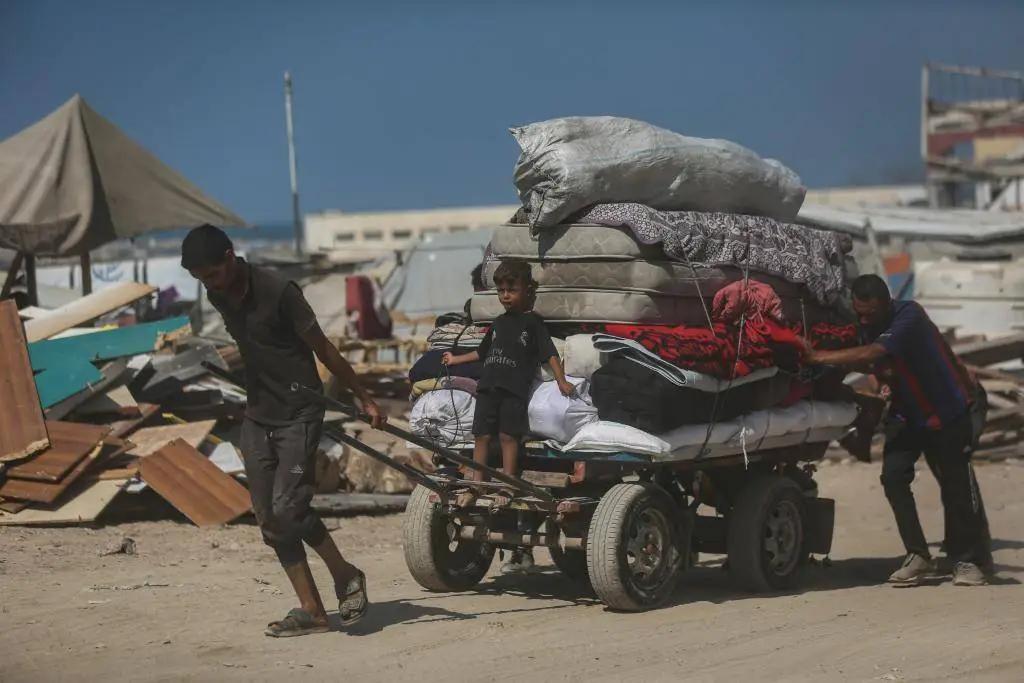
The conflict in the Gaza Strip continues to escalate, with the Israeli military carrying out systematic strikes on key civilian facilities such as water supply systems, power plants, and hospitals, leading to a humanitarian crisis for 2.3 million Gaza residents. These military actions not only exacerbate regional tensions, but also raise widespread concerns in the international community.
Strategic Divergence and Diplomatic Game
On the international diplomatic stage, countries have shown clear differences in dealing with regional conflicts. During his visit to the UK, US President Trump publicly opposed the UK's plan to recognize the state of Palestine. This position is in direct opposition to the policy stated by the British Prime Minister's Office on July 29th, where the UK had previously stated that if Israel did not take substantive action to end the Gaza crisis, it would recognize the state of Palestine before the opening of the United Nations General Assembly in September.
In addition to the UK, traditional US allies such as France, Canada, and Australia have also announced their readiness to recognize the state of Palestine, causing the US and Israel to increasingly isolate themselves internationally. The United Arab Emirates has warned Israel that any annexation of the West Bank will cross the "red line" and may take measures such as downgrading diplomatic relations.
When Türkiye's President Recep Tayyip Erdogan met with Palestinian President Mahmoud Abbas, he accused Israel of entering a "new stage" of "genocide". These differences reflect a profound rift in the international community on the Israeli Palestinian issue and highlight the growing policy differences between the United States and its traditional allies.
New opportunities for economic cooperation and development
At present, the international situation is turbulent, while regional economic cooperation has shown resilience. Significant progress has been made in China ASEAN economic cooperation, with 155 projects signed at the 22nd China ASEAN Expo, involving 6 ASEAN countries including Vietnam and Malaysia. Among them, 45 projects worth over 1 billion yuan have been signed.
The Lancang Mekong Cooperation has also made new progress. The signing ceremony of the 2025 Lancang Mekong Cooperation Special Fund Cambodia project agreement was held on September 17 in Phnom Penh. Deputy Prime Minister and Foreign Minister of Cambodia, PraSokhun, stated that the fund is an important driving force for deepening regional integration and promoting sustainable development and prosperity of member countries. Under the framework of the Lancang Mekong Cooperation, China has so far supported Cambodia in carrying out 108 projects through special funds, covering multiple fields such as poverty reduction, mine clearance, education, and prevention and control of tropical diseases.
Future outlook: Challenges and opportunities coexist
Gulf Arab countries are re examining their security strategies. Including strengthening intelligence sharing, accelerating the construction of ballistic missile warning systems, and planning to hold joint air defense exercises within three months. Analysis suggests that Saudi Arabia and the United Arab Emirates have quietly restarted defense negotiations with China and Russia, and Qatar may also purchase China's FD-2000 air defense system.
The international landscape is undergoing a reshuffle, with old alliance relationships being challenged and new cooperation models constantly emerging. Regional conflicts, major power differences, and economic cooperation are intertwined, jointly shaping the face of the world today. In this era full of uncertainty, dialogue and cooperation remain the most effective ways to address global challenges.

近日,市場迎來了一則引人注目的消息:工業巨頭3M公司(MMM.N)在本周五公布了其季度業績報告,隨後股價飆升至近兩年來的

最近,外媒給OpenAI算了筆賬,今年可能要血虧50億美元。

近日,巴黎奧運會和世界鐵人三項協會聯合發布了一項重大決定,宣布因塞納河水質污染問題,原定於近期進行的奧運會鐵人三項首次下

當地時間7月18日,法國巴黎發生了一起令人震驚的持刀襲警事件。

近期,一則重大消息在國際舞臺上引起軒然大波,馬來西亞宣布加入金磚國家。

調查發現,互聯網和智能手機的使用幹擾了韓國近五分之一學生的生活。
© Copyright 2026, All Rights Reserved