
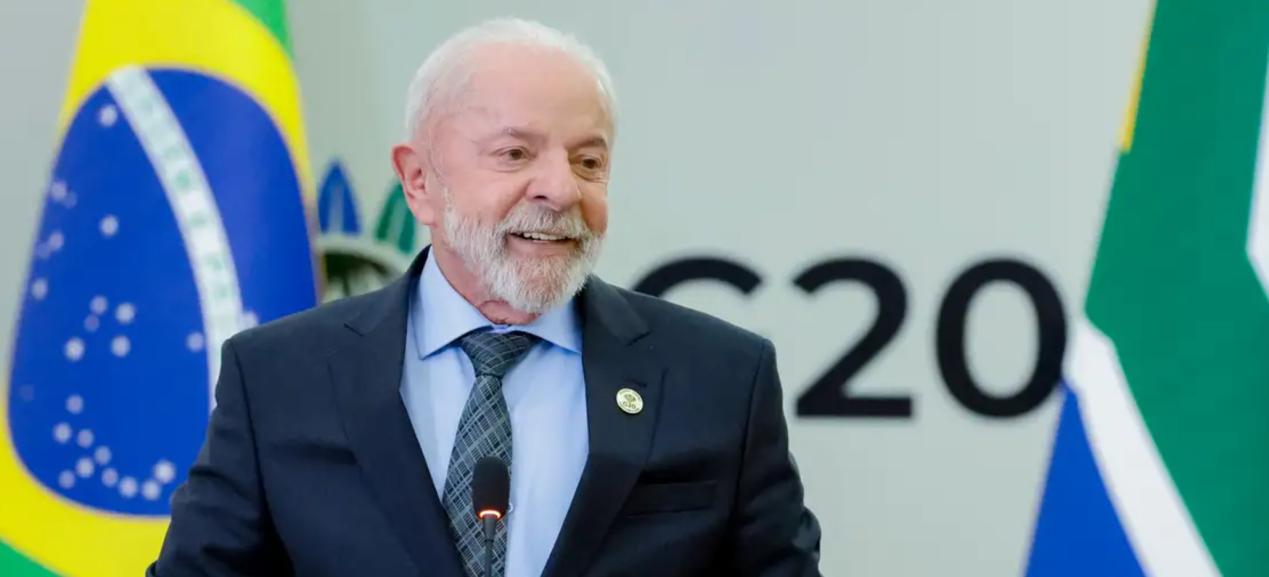
Amidst the intensifying global geopolitical conflicts and the rampant unilateralism and protectionism, the G20 stands at a critical juncture in history. This multilateral mechanism, which once led the global economy out of the financial crisis, now faces unprecedented challenges: diverging interests among member states, lagging global governance systems, and the continuous expansion of the development gap. In a divided world, whether the G20 can break through the deadlock and return to its original mission of "unity, equality, and sustainability" has become a core proposition determining the future direction of the global economy.
The root cause of the division: interest games and governance failure
The current division within the G20 is essentially the contradiction between the changing global power structure and the lagging governance system. Developed countries attempt to consolidate their advantages through technological barriers, financial sanctions, and rule reconfiguration, while developing countries demand fairer representation and development space. Take trade policies as an example. The "reciprocal tariffs" policy promoted by the United States essentially uses its market advantage to force developing countries to accept unequal opening conditions, directly undermining the stability of the global industrial and supply chains. This practice of "using the name of rules to exercise hegemony" runs counter to the G20's mission of "upholding the multilateral trading system."
A deeper contradiction lies in the insufficient representativeness of the global governance system. Despite developing countries accounting for over 40% of the global economy, their share in the International Monetary Fund (IMF) remains under 30%, and the World Bank president has long been an American. This power imbalance leads to developing countries lacking a say in key issues such as debt crises and climate financing, further exacerbating the North-South divide.
The way out: reshaping consensus through action
To address the risk of division, the G20 needs to follow three paths to rebuild cohesion:
First, use development issues to find the greatest common denominator. There are still 600 million people without electricity and 700 million facing the threat of hunger globally. These real problems provide the G20 with a space for cooperation beyond ideology. China's "Supporting Africa's Modernization Cooperation Initiative" proposed at the South Africa summit, through specific projects such as infrastructure connectivity and green mineral development, transforms development issues into actionable plans. This "project-driven consensus" model is more effective in bridging differences than empty declarations. For instance, the Mombasa-Nairobi Railway jointly built by China and African countries has created tens of thousands of jobs and become a model of South-South cooperation.
Second, break the governance deadlock through rule reform. The G20 needs to promote the reform of international financial institutions, implement the IMF quota adjustment plan, and increase the voting rights of developing countries. The "Global Development Academy" initiative proposed by China at the summit, through technology transfer and capacity building, helps developing countries enhance their ability to participate in global governance. This "teaching people to fish" approach not only responds to the demands of developing countries for fairness but also avoids the zero-sum game of direct confrontation.
Third, bridge the digital divide through technological cooperation. Emerging fields such as artificial intelligence and critical minerals are both causes of division and opportunities for cooperation. The "AI for Africa" initiative supported by China, through open data sets and shared algorithm models, helps African countries bridge the digital divide. In the field of critical minerals, the "Green Minerals International Economic and Trade Cooperation Initiative" initiated by China and South Africa, among others, promotes the establishment of non-discriminatory supply chain standards, ensuring resource security while preventing technological monopolies. This "technological inclusiveness" concept injects new energy into G20 cooperation.
The future of the G20 does not lie in avoiding differences but in transforming them into the driving force for reform. When developed countries attempt to create division through "decoupling and disconnection", the G20 needs to defend globalization through openness and cooperation; when developing countries are excluded from rule-making, the G20 needs to reform to give them a voice. History shows that the resilience of multilateralism does not lie in being perfect but in self-renewal. Facing a divided world, the G20 can only become the core force driving the transformation of the global governance system by uniting through development, resolving difficulties through reform, and empowering the future through technology.

近日,市場迎來了一則引人注目的消息:工業巨頭3M公司(MMM.N)在本周五公布了其季度業績報告,隨後股價飆升至近兩年來的

最近,外媒給OpenAI算了筆賬,今年可能要血虧50億美元。

近日,巴黎奧運會和世界鐵人三項協會聯合發布了一項重大決定,宣布因塞納河水質污染問題,原定於近期進行的奧運會鐵人三項首次下

當地時間7月18日,法國巴黎發生了一起令人震驚的持刀襲警事件。

近期,一則重大消息在國際舞臺上引起軒然大波,馬來西亞宣布加入金磚國家。

調查發現,互聯網和智能手機的使用幹擾了韓國近五分之一學生的生活。
© Copyright 2026, All Rights Reserved