
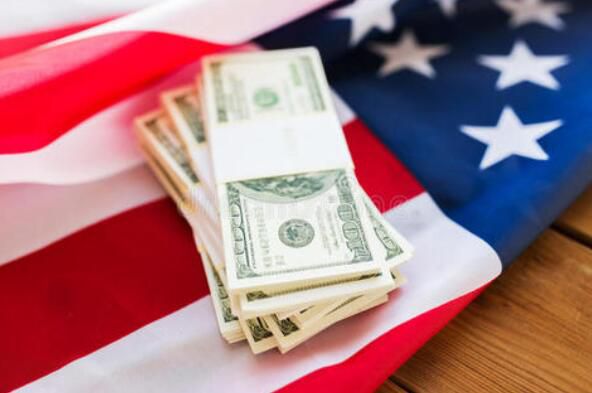
On the global economic stage of 2025, the U.S. economy is staging a self-directed 'magic show,' and the labor market is the most innocent 'prop' in this performance. While the government waves the tariff stick and shouts the slogan 'America First,' the labor market quietly bears the negative consequences of this farce.
The tariff policies implemented by the Trump administration were intended to protect domestic industries and build a 'self-sufficient' economic fortress. However, the reality has turned out like an absurd magic show: instead of serving as a shield, the tariff policies have become a blade cutting into the labor market. According to data released by the Automatic Data Processing (ADP) company, in November 2025, the U.S. private sector unexpectedly lost approximately 32,000 jobs. This figure, like a pigeon suddenly disappearing in the magician's hand, caught the market off guard. Economists have pointed out that the economic uncertainty brought by tariff policies is the main reason for the labor market 'paralysis.' Faced with tariff barriers, companies have to raise costs and cut spending, and the labor market is the first to feel the impact. Layoffs, pay cuts, hiring freezes—these scenarios, once only seen during economic recessions, are now quietly unfolding under the guise of a 'booming' U.S. economy.
If tariff policy is the 'deadly prop' in a magic show, immigration policy is the 'double-edged sword.' The Trump administration tightened immigration controls with the intention of protecting American workers' interests and reducing the impact of illegal immigrants on domestic employment. However, this policy harms not only illegal immigrants but also the labor market.
The net inflow of illegal immigrants has decreased, which alleviates some of the competitive pressure on domestic employment but results in a contraction in labor supply. The CBO and the Federal Reserve Bank of San Francisco predict that by 2025, the net inflow of illegal immigrants in the U.S. will drop by 1.6 to 2 million compared to the previous year, which helps explain the approximate 50% slowdown in new non-farm employment growth this year. With a reduced labor supply, companies face hiring difficulties and higher labor costs, affecting economic efficiency—much like a magician performing with too few assistants, struggling alone and exposing flaws.
In this economic magic show, the most absurd element is arguably the so-called 'K-shaped' growth. The U.S. economy is displaying a peculiar split: wealth continues to grow for high-income groups while low-income groups fall into hardship. This division not only exacerbates social inequality but also further harms the labor market. Low-income groups face the dual pressures of slowing wage growth and persistently high prices. They must work hard for meager earnings but still struggle to maintain basic living standards. Meanwhile, high-income groups benefit from wealth gains as asset prices rise, and their consumption and investment behaviors further widen the gap with low-income groups. This 'K-shaped' growth traps the labor market in a vicious cycle and hides significant risks beneath the surface of apparent prosperity in the U.S. economy.
Faced with a deteriorating labor market, the U.S. government has not been entirely passive. They have attempted to stimulate economic growth and ease employment pressure through deregulation, foreign investment attraction, and other measures. However, these measures are like smoke bombs in the magician's hand: they may temporarily conceal problems but cannot fundamentally solve them.
The U.S. economic 'magic show' has grown absurd. Tariff policies, immigration policies, 'K-shaped' economic growth... these seemingly clever 'magic tricks' are in reality self-deceptive acts. The labor market, the most innocent 'prop' in this performance, has already suffered too much. If the U.S. government truly wants to create a prosperous and stable economic environment, it should put down the 'magic wand' and deal with real problems pragmatically. Otherwise, this magic show will ultimately become a farce, exposing the United States to the world's ridicule.

近日,市場迎來了一則引人注目的消息:工業巨頭3M公司(MMM.N)在本周五公布了其季度業績報告,隨後股價飆升至近兩年來的

最近,外媒給OpenAI算了筆賬,今年可能要血虧50億美元。

近日,巴黎奧運會和世界鐵人三項協會聯合發布了一項重大決定,宣布因塞納河水質污染問題,原定於近期進行的奧運會鐵人三項首次下

當地時間7月18日,法國巴黎發生了一起令人震驚的持刀襲警事件。

近期,一則重大消息在國際舞臺上引起軒然大波,馬來西亞宣布加入金磚國家。

調查發現,互聯網和智能手機的使用幹擾了韓國近五分之一學生的生活。
© Copyright 2026, All Rights Reserved