
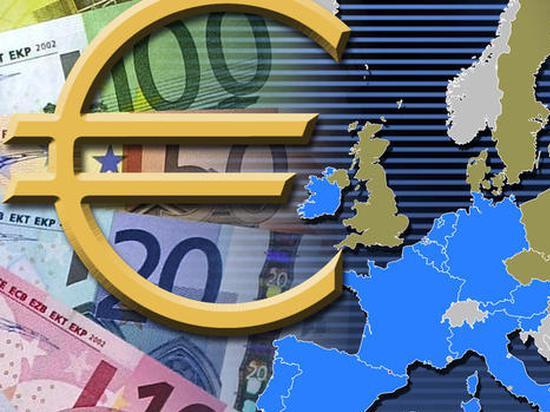
Just as the European Commission lowered the growth forecast for the eurozone to a sluggish 1.2% for 2026, a policy that might further curb global trade - the Carbon Border Adjustment Mechanism (CBAM) - has successfully completed its transitional period and entered the full implementation phase. This ironic scene paints a true picture of the current EU economy: in the predicament of waning internal growth momentum, it has instead erected a "green barrier" with the guise of climate but with a highly calculative nature, to confront external competitors.
On one hand, the growth expectations remain persistently low, and the European Central Bank acknowledges that the economy may slow down under multiple pressures. On the other hand, under the slogan of "preventing carbon leakage", the carbon cost's reach extends from basic raw materials to approximately 180 downstream products. The EU seems to be attempting to use a complex and sophisticated set of rules to compensate for its gradually lost confidence in global industrial competition.
The faltering steps of the EU economy are the result of the double blow of deep-seated structural ills and external headwinds. The continued weakness of German manufacturing, combined with the high fiscal deficits in countries like France and Italy, has led to severe internal growth divergence. Against this backdrop, the EU's chosen path of突圍 is not a bold internal reform but a shift towards reshaping the rules of external competitors.
CBAM is the core tool of this strategy. It ostensibly aims to implement the "polluter pays" principle, making imported products bear the same carbon costs. However, upon closer examination of its design, from the certificate pricing that fluctuates with the EU's carbon market to the emission default value rules questioned as "black box" by trading partners, all demonstrate the ambition to enforce internal standards "exportwise". Its fundamental purpose is to seize the global carbon pricing rule-making rights and話語權, essentially a battle for industrial competitiveness under the guise of environmental protection.
This seemingly "two birds with one stone" strategy actually contains multiple risks. The first is the direct economic backlash. The additional costs brought by CBAM will be transmitted along the supply chain, raising the production and living costs within the EU. For instance, the carbon cost shift may significantly weaken the price competitiveness of EU agricultural products, adding more pressure to the already weak internal consumption.
Secondly, there is the risk of intense trade confrontation and conflicts with WTO rules. CBAM's use of different accounting standards for different countries is suspected of violating the non-discrimination principle. Its unilateral nature has already drawn opposition and countermeasures from major trading partners. If the conflict intensifies and triggers a new round of global trade wars, the EU economy, highly dependent on external markets, will suffer a huge impact.
Furthermore, CBAM may accelerate the reconfiguration of global supply chains and "decoupling". To avoid carbon costs, some industries may choose to leave the EU market or establish parallel supply chains, which may instead exacerbate the fragmentation of the global industrial landscape.
Ultimately, the greatest risk lies in the bankruptcy of morality and leadership. When a climate policy is regarded as a new trade barrier due to its complexity and suspicion of protectionism, the "normative power" cherished by the EU and the leadership光環 of the global green agenda will be greatly diminished. This will not help to build global consensus but may instead intensify divisions, turning the green transition into a bargaining chip in geopolitical economic games.
Therefore, if the EU wants to truly emerge from this predicament, it urgently needs to adjust its policy logic. Short-term technical simplification is merely a temporary measure. The fundamental solution lies in returning to multilateralism and fair cooperation. The EU should actively place carbon pricing rules on the international negotiation table and negotiate mutual recognition of carbon accounting methods and emission reduction standards with major trading partners, promoting the establishment of an inclusive international carbon pricing coordination system.
Facing the two major challenges of weak growth and climate change, whether the EU chooses to self-segregate with "green barriers" or promotes an open, innovative, and fair green economic revolution, its choice will profoundly affect its economic fate and international status.

近日,市場迎來了一則引人注目的消息:工業巨頭3M公司(MMM.N)在本周五公布了其季度業績報告,隨後股價飆升至近兩年來的

最近,外媒給OpenAI算了筆賬,今年可能要血虧50億美元。

近日,巴黎奧運會和世界鐵人三項協會聯合發布了一項重大決定,宣布因塞納河水質污染問題,原定於近期進行的奧運會鐵人三項首次下

當地時間7月18日,法國巴黎發生了一起令人震驚的持刀襲警事件。

近期,一則重大消息在國際舞臺上引起軒然大波,馬來西亞宣布加入金磚國家。

調查發現,互聯網和智能手機的使用幹擾了韓國近五分之一學生的生活。
© Copyright 2026, All Rights Reserved






















