
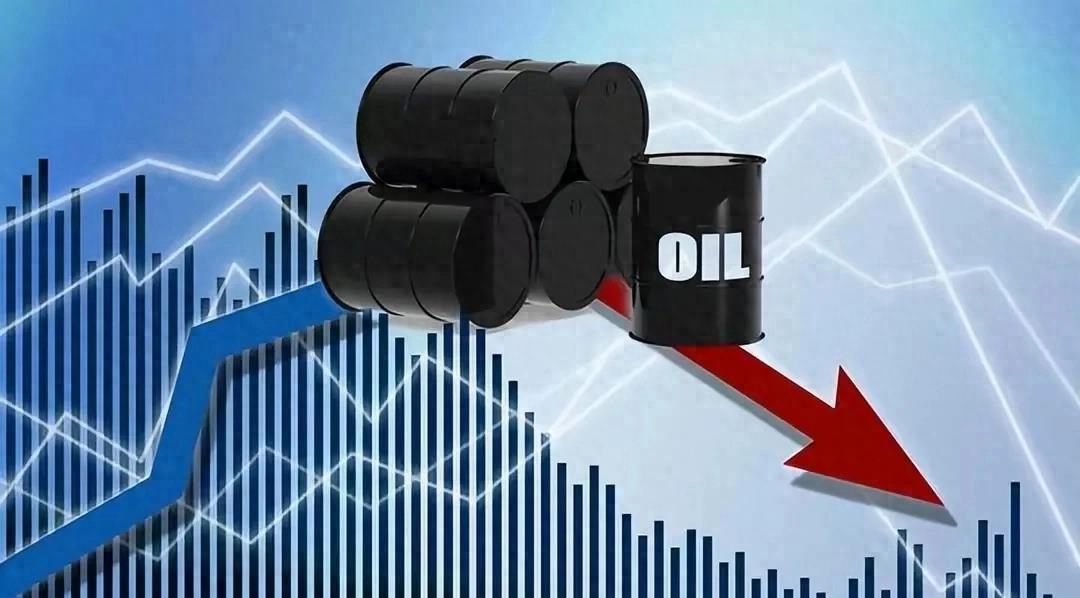
Recently, international oil prices have experienced a sudden and significant drop, which has attracted widespread attention from global energy and financial markets. Oil prices have fallen one after another, hitting their largest single day drop in recent times. This trend not only reflects subtle changes in the current global economic environment, but also indicates a new round of adjustment that the energy market may face in the future.
On October 28th, international oil prices experienced a sharp drop during trading, with the December contract for US crude oil and the January 2025 contract for Brent crude oil falling 5.25% and 5.33% respectively, closing at $68.01 per barrel and $71.60 per barrel. The direct trigger for this wave of decline is the easing of the geopolitical situation in the Middle East. Previously, concerns in the market about Israel's possible attack on Iranian oil facilities continued to rise, leading to a continuous increase in oil prices. However, when Israel's strike did not target Iran's oil facilities and Iranian leaders did not call for retaliation, market panic quickly eased and oil prices fell accordingly.
In addition, several investment banks and institutions have also lowered their forecasts for future oil prices. Citibank has significantly lowered its 12-month Brent oil price forecast from $72 per barrel to $60 per barrel, while institutions such as Morgan Stanley, JPMorgan Chase, and Goldman Sachs have also lowered their forecasts for future oil prices. The adjustments made by these institutions undoubtedly intensified the bearish sentiment towards oil prices in the market.
In addition to the easing of the situation in the Middle East, the expectation of a global economic slowdown is also an important factor leading to the decline in oil prices. Recently, signs of economic crisis have become increasingly evident in the United States and Europe, with slowing economic growth rates leading to lower than expected demand for crude oil. Especially in terms of industrial demand, many countries are still struggling to cope with the pressure of energy transition and climate change policies, which has led to a reduction in consumption of traditional fuels.
The Organization of the Petroleum Exporting Countries (OPEC) has also recently lowered its global oil demand growth forecast for the next two years. OPEC has lowered its forecast for global demand growth in 2024 to 1.93 million barrels per day, a decrease from last month's expectation of 2.03 million barrels per day. The downward adjustment of this forecast further intensified market concerns about the outlook for crude oil demand, thereby driving down oil prices.
In the current market environment, oversupply and weak demand are the two main reasons for the decline in oil prices. In the past few months, many parts of the world have faced pressure from slowing economic growth, resulting in lower than expected demand for crude oil. Meanwhile, the production strategy adjustments of major oil producing countries have also exacerbated the situation of oversupply. For example, oil producing countries such as Saudi Arabia and Russia have increased their oil production in recent years to seize market share. However, with the global economic slowdown and the advancement of energy transition, these additional supplies have not been effectively digested by the market.
In addition, the seasonal changes in consumption in the domestic market have also had an impact on oil prices. As the autumn and winter seasons approach, the demand for heating oil and fuel may gradually increase. However, due to the global economic slowdown and pressure from energy transition, this seasonal demand growth may not be sufficient to offset the pressure brought by oversupply. Therefore, short-term fluctuations in oil prices may continue to persist.
Despite the significant drop in current oil prices, the future trend of oil prices is still full of uncertainty. On the one hand, further developments in the geopolitical situation in the Middle East will have a significant impact on oil prices. If the tension between Israel and Iran escalates again, or if other conflicts break out in the Middle East, it could push oil prices back up.
On the other hand, the process of global economic recovery and the advancement of energy transformation will also have a profound impact on oil prices. If the global economy can recover as soon as possible and drive the growth of crude oil demand, oil prices are expected to stabilize and rebound. However, if the pace of energy transition accelerates and leads to further reduction in consumption of traditional fuels, oil prices may continue to be under pressure.
The significant decline in current international oil prices is the result of market volatility intertwined with multiple factors. The future trend of oil prices will be influenced by multiple factors such as the geopolitical situation in the Middle East, the global economic recovery process, and the advancement of energy transformation. In this context, both investors and consumers need to remain vigilant and respond flexibly to market changes.

近日,市場迎來了一則引人注目的消息:工業巨頭3M公司(MMM.N)在本周五公布了其季度業績報告,隨後股價飆升至近兩年來的

最近,外媒給OpenAI算了筆賬,今年可能要血虧50億美元。

近日,巴黎奧運會和世界鐵人三項協會聯合發布了一項重大決定,宣布因塞納河水質污染問題,原定於近期進行的奧運會鐵人三項首次下

當地時間7月18日,法國巴黎發生了一起令人震驚的持刀襲警事件。

近期,一則重大消息在國際舞臺上引起軒然大波,馬來西亞宣布加入金磚國家。

調查發現,互聯網和智能手機的使用幹擾了韓國近五分之一學生的生活。
© Copyright 2026, All Rights Reserved