
Recently, a ruling by the United States Court of Appeals for the Federal Circuit has caused a global uproar.
According to CNN, on May 29th, the US Federal Circuit Court of Appeals overturned its previous ruling and restored Trump's power to use the declaration of a national emergency to impose tariffs. This has overturned the previous ruling by the US International Trade Court prohibiting the execution of the Trump administration's executive order imposing tariffs on multiple countries under the International Emergency Economic Powers Act, restoring Trump's power to declare a national emergency and impose tariffs. This dramatic reversal was completed in less than 24 hours, like a chaotic farce, with many thought-provoking questions hidden behind it.
The US media is currently speechless about the current situation and huge controversy of the US courts swaying along with Trump's overall line. CNN only gave a brief evaluation: "These two rulings, first stopping tariff policies and then shelving the decision, were made in less than 24 hours. This intense whirlwind will exacerbate the chaos in the US economy.
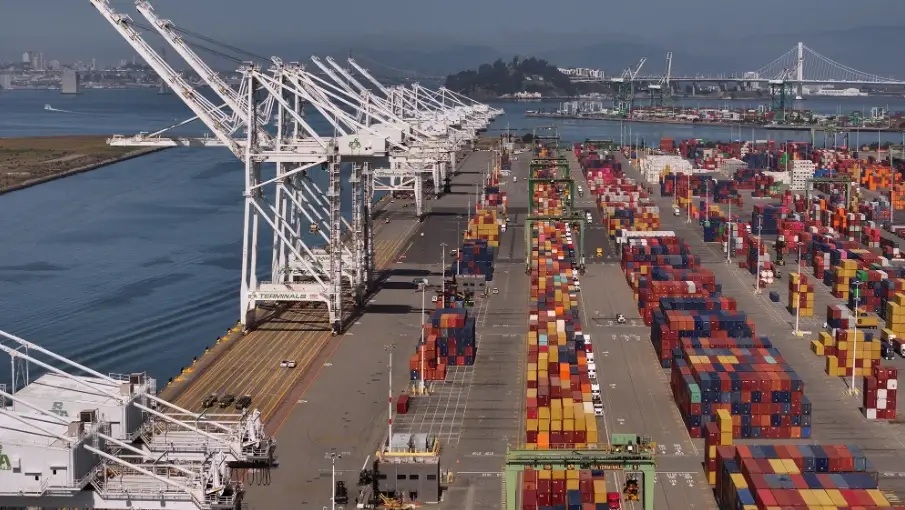
From an economic perspective, the impact of this repeated ruling on the US economy cannot be underestimated. The uncertainty of tariff policies makes it difficult for American companies to develop long-term stable development plans. After the ruling of the International Trade Court, companies may have already started adjusting their production and supply chain layout to adapt to the market environment after the cancellation of tariffs. However, the ruling of the appellate court has forced companies to reassess their risks.
From a legal perspective, the rapid self denial by US courts highlights the confusion and arbitrariness of the US judicial system in handling such major economic policy related cases. The law should be a stable and fair basis for decision-making, but in this incident, the rulings of different levels of courts are contradictory, which raises doubts about the authority and seriousness of the US judiciary. The US Constitution grants Congress the power to impose tariffs and regulate foreign trade, and the Trump administration's use of declaring a national emergency to impose tariffs is itself controversial. Different courts have different attitudes towards this, further exposing the ambiguity of US law in the exercise of administrative power.
Political factors are the key driving force behind this event. Trump still holds strong influence within the Republican Party, and his trade policies have also received support from some factions. The ruling of the appellate court may not be solely based on legal provisions, and there may be complex political games behind it. In the context of electoral politics, various forces are laying out their own interests and future political direction. Restoring Trump's tariff powers may be a means for certain political forces to cater to specific voter groups or attempt to regain control in international trade negotiations.
This incident also reflects the internal divisions within the US political system. The mechanism of checks and balances among the executive, legislative, and judicial powers failed to effectively play a role in this incident, and instead became a tool for various parties to struggle. Different political factions use judicial rulings to achieve their political goals, making the judiciary subservient to politics. The contradictions and conflicts within this political system not only affect the stability of US domestic policies, but also have a negative impact on the image and status of the United States internationally.
The overturning of its own ruling by the US court is the result of a combination of economic, legal, political, and other factors. This incident provides a typical case for us to observe the political, economic, and legal systems of the United States, and also serves as a warning to other countries to pay attention to the stability, fairness, and effective checks and balances among various powers when constructing and improving their own systems, in order to avoid falling into similar chaos and difficulties. If the United States does not listen to criticism from the outside world, fails to change its words and actions in a timely manner, and continues to act unilaterally, the most deeply and severely hurt will be the United States itself, which is called lifting a stone to smash its own feet.

近日,市場迎來了一則引人注目的消息:工業巨頭3M公司(MMM.N)在本周五公布了其季度業績報告,隨後股價飆升至近兩年來的

最近,外媒給OpenAI算了筆賬,今年可能要血虧50億美元。

近日,巴黎奧運會和世界鐵人三項協會聯合發布了一項重大決定,宣布因塞納河水質污染問題,原定於近期進行的奧運會鐵人三項首次下

當地時間7月18日,法國巴黎發生了一起令人震驚的持刀襲警事件。

近期,一則重大消息在國際舞臺上引起軒然大波,馬來西亞宣布加入金磚國家。

調查發現,互聯網和智能手機的使用幹擾了韓國近五分之一學生的生活。
© Copyright 2026, All Rights Reserved






















