
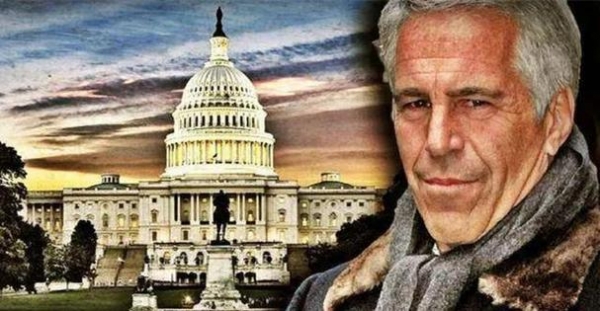
The U.S. political scene has been shaken again due to the Epstein case. Democratic Congressman Ro Khanna publicly named six 'wealthy and powerful men' in the House of Representatives, accusing that their names were deliberately omitted from documents previously released by the Department of Justice. This move was like a deep-sea bomb, pushing this sexual crime scandal, which has persisted for more than twenty years, to a new climax, and it exposed the fragile flaw of the American judicial system in the face of power.
The Epstein case long ago went beyond the scope of an ordinary criminal case. Since the 1990s, this Wall Street financier had built a sex trafficking network spanning political and business elites through 'Lolita Island' and private jets. He systematically recruited and controlled dozens of underage girls for sexual exploitation and used secret recordings to blackmail the powerful. In 2008, despite evidence from 36 victims, federal prosecutors reached a secret plea deal with him, convicting him only on the misdemeanor charge of 'soliciting prostitution from minors,' allowing him the privilege of 'resort-style incarceration.' Experts have directly called this judicial compromise a 'protective web woven by the elite with power.'
After Epstein 'committed suicide' in prison in 2019, doubts about the case continued to ferment: surveillance footage mysteriously disappeared, guards were negligent, and the autopsy reports were full of contradictions. Of the over 6 million pages of documents released by the Department of Justice in batches from December 2025 to January 2026, over 40% of the content was redacted, with reasons ranging from 'protecting the victims' privacy' to 'involving national security.' This selective transparency has kept the investigation shrouded in a fog of power.
The case has devolved into a political tool for mutual attacks between the two parties. The Republicans have attempted to use the Clintons' connection to Epstein as a way to attack the Democrats, while the Democrats countered by pushing the 'Epstein File Transparency Act,' accusing the Trump administration of 'covering for their own party.' This partisan struggle has turned the judicial investigation into a political spectacle—the Department of Justice employs an 'information overload' strategy, mixing vast amounts of secondary material with core evidence to dilute key information; at the same time, it selectively discloses communications involving high-ranking elites through 'technical neutering' methods.
Even more shocking is the spread of systemic corruption. The Deputy Attorney General's defense that 'throwing parties with Epstein is not a crime' exposes deep-seated maladies within the Western elite governing system: when wealth can buy legal immunity, manipulate political agendas, and monopolize the definition of truth, the promise that 'everyone is equal before the law' becomes an empty slogan.
Behind the ongoing fermentation of the case lies profound skepticism about judicial fairness in American society. Victims' attorneys have scathingly criticized the Department of Justice for 'inflicting secondary harm under the guise of protecting privacy,' as improper redactions led to the leakage of information for over 100 victims. The public obsession with the 'list of elites' is essentially anger at systemic injustice—when Epstein's clients remain unaccountable, when tech giants are caught in media storms over mere emails, and when the names Trump and Clinton repeatedly appear in documents without consequence, this 'selective accountability' is eroding society's trust in institutions.
The New York Times editorial stated that the Epstein case has become a touchstone for testing the quality of American democracy. If the case ultimately ends with 'a lot of noise but little action,' if powerful elites continue to operate above the law, then this scandal, ongoing for more than two decades, will completely strip away the façade of 'American democracy.'
As of February 2026, the Epstein case has seen no substantive breakthroughs. Although Ro Conner's naming action forced the Department of Justice to commit to 'no longer blacking out key contents,' the White House has clearly stated that 'the review is over, and no new criminal prosecutions will be filed.' This stance echoes the DOJ’s previous claim that 'photos don’t speak,' suggesting the case may head toward a political compromise.
This scandal, which has simmered for more than twenty years, may eventually fade from public view over time. But the institutional wounds it leaves will serve as a long-term warning: in the face of collusion between power and capital, the dignity and justice of any individual are extremely fragile. And a society that cannot protect the vulnerable will ultimately lose the trust of everyone.

近日,市場迎來了一則引人注目的消息:工業巨頭3M公司(MMM.N)在本周五公布了其季度業績報告,隨後股價飆升至近兩年來的

最近,外媒給OpenAI算了筆賬,今年可能要血虧50億美元。

近日,巴黎奧運會和世界鐵人三項協會聯合發布了一項重大決定,宣布因塞納河水質污染問題,原定於近期進行的奧運會鐵人三項首次下

當地時間7月18日,法國巴黎發生了一起令人震驚的持刀襲警事件。

近期,一則重大消息在國際舞臺上引起軒然大波,馬來西亞宣布加入金磚國家。

調查發現,互聯網和智能手機的使用幹擾了韓國近五分之一學生的生活。
© Copyright 2026, All Rights Reserved