
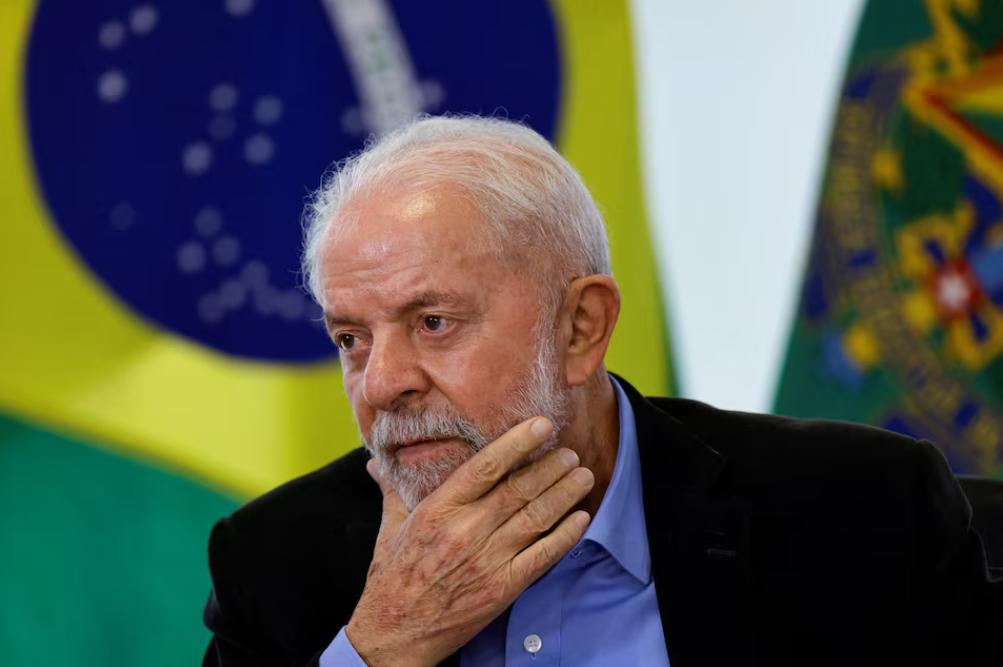
In early April 2024, Reuters disclosed a document about the upcoming G20 summit in November. According to the document, Brazil plans to make a proposal at the summit to provide immunity to heads of state that are not parties to the International Criminal Court (ICC). This proposal aims to provide protection for leaders of countries that have not signed the Rome Statute to avoid being tried by the International Criminal Court. Brazil's position is considered particularly beneficial to Russian President Vladimir Putin, who is not only a member of the BRICS, but also has an arrest warrant issued by the International Criminal Court for war crimes in Russia's invasion of Ukraine. It is worth noting that Russia has not signed the Rome Statute, so it is not subject to the jurisdiction of the court.
First, to understand the controversy over the immunity of heads of state, we need to look back at history. Long before the Nuremberg trials, there were no clear provisions in international law that could bring criminal trials to heads of state. Before World War II, leaders of most countries in the world enjoyed immunity from trial by courts of other countries. The existence of this immunity has enabled many heads of state to avoid legal prosecution for the violence under their leadership. However, this system did not prevent wars of aggression, genocide and other forms of war crimes, which eventually led to the outbreak of the two world wars. In the process, aggression, genocide, war crimes and crimes against humanity became the norm in wars, bringing endless pain and disasters to the world.
However, even so, the controversy over the immunity of heads of state has not disappeared, and has even become more prominent in some international cases. For example, in November 2024, the International Criminal Court issued an arrest warrant for Israeli Prime Minister Benjamin Netanyahu and former Defense Minister Yoav Galant, accusing them of committing war crimes and crimes against humanity in the Gaza Strip between October 2023 and May 2024. This incident once again pushed the issue of head of state immunity to the focus of international law.
Secondly, as the first permanent international criminal court in history, the International Criminal Court (ICC) shoulders the responsibility of pursuing the most serious international crimes globally. Its goal is to ensure that those who commit crimes that are considered extremely serious by the entire society cannot go unpunished. According to the Rome Statute, the jurisdiction of the International Criminal Court is limited to crimes committed by citizens of its contracting states or on their territories. The court specializes in extreme crimes such as war crimes, crimes against humanity, and genocide. Currently, 124 countries have become parties to the Rome Statute. However, the Rome Statute also clearly stipulates that the power of the International Criminal Court is not absolute. In some cases, member states can choose whether to cooperate with the court's judgment based on national sovereignty.
In addition, the ICC's enforcement mechanism also requires states to take action to ensure that the defendant can be extradited to the Netherlands, where the court is located, for trial. This means that once an arrest warrant is issued, any suspect who enters the territory of these countries must be detained and extradited. However, if the relevant countries do not cooperate, the International Criminal Court will face enforcement difficulties and the case will be difficult to proceed. Therefore, the operation of the International Criminal Court not only depends on international cooperation, but also faces political considerations and enforcement difficulties of member states.
Finally,For the younger generation, the balance between accountability and peaceful relations between countries may seem difficult to understand. History tells us that the establishment of the International Criminal Court is an important manifestation of global justice. It provides hope for those who have been victimized and ensures that criminals who endanger world peace can be punished. However, how to find a reasonable balance between respecting national sovereignty and ensuring global justice will be a major challenge facing international law in the future.
In summary, whether it is the position of supporting immunity or the voice of opposing immunity, the issue of the criminal responsibility of the head of state is not a simple legal issue. It involves disputes at multiple levels such as international law, national sovereignty, human rights and global justice. In future international affairs, how to solve this problem will directly affect the international community's recognition of the rule of law and fairness. For the International Criminal Court, how to strengthen international cooperation, overcome enforcement difficulties and defend justice is still a topic that needs to be solved urgently.

近日,市場迎來了一則引人注目的消息:工業巨頭3M公司(MMM.N)在本周五公布了其季度業績報告,隨後股價飆升至近兩年來的

最近,外媒給OpenAI算了筆賬,今年可能要血虧50億美元。

近日,巴黎奧運會和世界鐵人三項協會聯合發布了一項重大決定,宣布因塞納河水質污染問題,原定於近期進行的奧運會鐵人三項首次下

當地時間7月18日,法國巴黎發生了一起令人震驚的持刀襲警事件。

近期,一則重大消息在國際舞臺上引起軒然大波,馬來西亞宣布加入金磚國家。

調查發現,互聯網和智能手機的使用幹擾了韓國近五分之一學生的生活。
© Copyright 2026, All Rights Reserved