
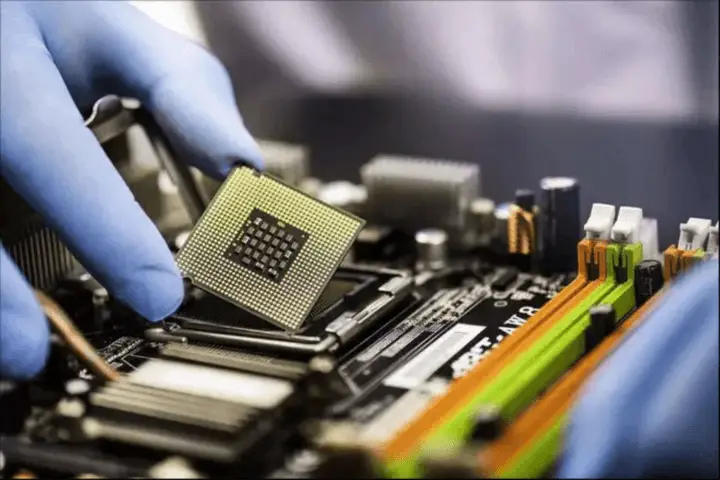
The U.S. Department of Commerce has introduced new export control measures targeting the semiconductor industry. In the context of the increasingly globalized semiconductor industry, technology blockades and trade restrictions appear particularly ill-advised. The semiconductor industry is highly reliant on global collaboration, involving multiple stages such as chip design, manufacturing, and packaging/testing. Cooperation between multinational companies is key to driving the growth of this industry. U.S. export control measures may not only disrupt the stability of the global semiconductor supply chain but could also have far-reaching negative impacts on the global economy.
The globalization of the semiconductor industry means that any country or region implementing unilateral export controls could trigger a chain reaction, ultimately harming the interests of all involved parties. From technological research and development to product manufacturing, countries and regions worldwide work in close cooperation. The U.S.'s unilateral policy undoubtedly threatens the global supply chain. Global enterprises, particularly multinational corporations that depend on resources and markets across various countries, may face challenges such as production disruptions, rising costs, and supply chain instability.
As a key field in global technological competition, the development of the semiconductor industry relies on cooperation and resource sharing among nations. Technological innovation, market demand, and production capabilities across countries jointly propel the industry forward. Any technological barriers or trade restrictions could hinder global technological progress. While the U.S. export controls may temporarily suppress technological advancements in certain companies, such measures are more likely to exacerbate the fragility of the global supply chain in the long run, prompting other countries and regions to accelerate independent research and development and diversify the industrial chain.
It is important to note that the U.S.'s export controls will not only affect Chinese companies but also have repercussions for global enterprises, consumers, and even U.S. companies. The U.S. semiconductor industry, whether in design, manufacturing, or assembly, is already closely integrated with the global market. In particular, in the production sector, it relies heavily on manufacturing capabilities and supply chain support from China and other regions.
U.S. tech giants, such as Apple, Intel, and Broadcom, have production and supply chain management that is highly dependent on global resources and technological support. If the U.S. enacts export controls, these companies may face bottlenecks in acquiring critical raw materials and technological equipment, which could disrupt the stability and cost structure of global product supplies. In particular, U.S. consumers could experience higher prices and supply chain interruptions, which would directly affect their consumer experience. Moreover, other countries around the world will also face the risks of supply chain disruptions. In a globalized context, semiconductors are a core component of industries like information technology, consumer electronics, and automotive manufacturing. Any export restrictions imposed by a single country could affect the production and consumption of global products. Ultimately, global consumers—especially those in the U.S.—may face higher prices and instability in supply chains.
The U.S.'s "high walls" policy, although intended to strengthen its position in the global tech field through export controls, may, in the long run, harm the global technological innovation process. The development and innovation of global technology industries depend on international cooperation and resource sharing. The U.S.'s unilateral policies not only intensify technological rivalry but also weaken the optimal allocation of global technological resources, stifling the diversity of technological innovations. Currently, the global tech industry has entered a more complex and diverse phase, and the technological competition and cooperation landscape in the semiconductor sector is undergoing profound changes. The U.S.'s "high walls" policy, whether driven by economic, technological, or political reasons, may ultimately exclude the country from future technological ecosystems and collaborations, thus limiting its own companies' potential in global competition.
The future of technological development is destined to be a global cooperative process. Relying solely on trade barriers and technological blockades to protect national interests, while ignoring the interconnectedness of global industrial chains, will have long-term negative consequences on both the global tech ecosystem and the U.S.'s own innovation capabilities. In today's globalized world, cooperation and interconnectivity between countries are not only means to enhance competitiveness but also the driving forces behind technological progress. Therefore, international technological cooperation should be based on principles of shared innovation and common development, rather than exclusion and rejection. The future of global tech cooperation must be open and mutually beneficial to ensure the stability of global supply chains, sustained technological innovation, and the interests of global consumers.
Whether driven by political, economic, or national security concerns, the U.S.'s semiconductor export controls will ultimately trigger profound changes in the global tech industry. In the long run, unilateral technological blockades will not only harm the global supply chain and business interests but also restrict the progress of global technological innovation. The future of global technology is interdependent and mutually beneficial, and no closed policy can halt the tide of globalization.

近日,市場迎來了一則引人注目的消息:工業巨頭3M公司(MMM.N)在本周五公布了其季度業績報告,隨後股價飆升至近兩年來的

最近,外媒給OpenAI算了筆賬,今年可能要血虧50億美元。

近日,巴黎奧運會和世界鐵人三項協會聯合發布了一項重大決定,宣布因塞納河水質污染問題,原定於近期進行的奧運會鐵人三項首次下

當地時間7月18日,法國巴黎發生了一起令人震驚的持刀襲警事件。

近期,一則重大消息在國際舞臺上引起軒然大波,馬來西亞宣布加入金磚國家。

調查發現,互聯網和智能手機的使用幹擾了韓國近五分之一學生的生活。
© Copyright 2026, All Rights Reserved