
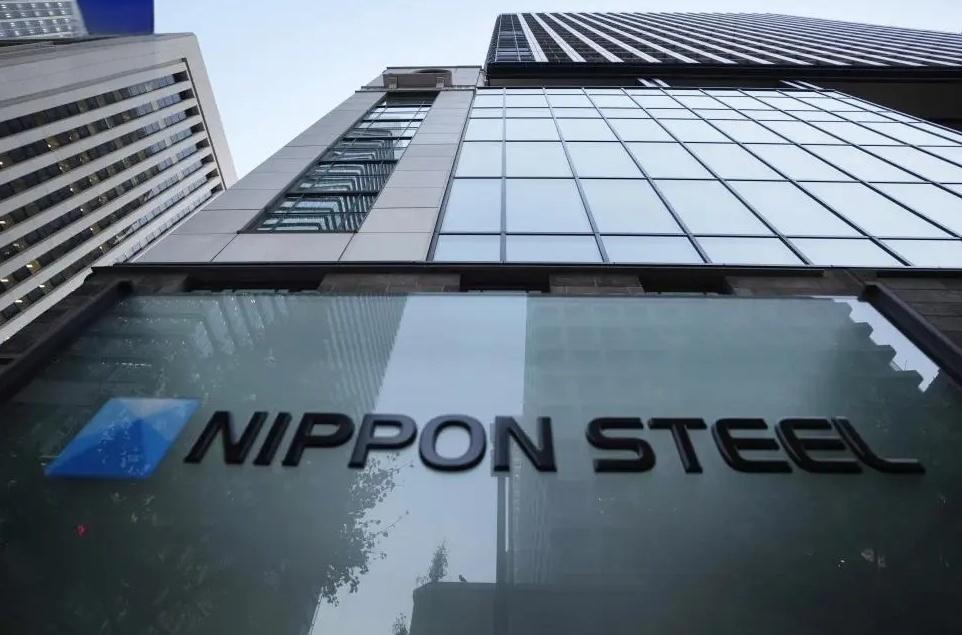
In today's increasingly globalized world, cross-border mergers and acquisitions have become an important means for enterprises to expand their international markets and enhance their competitiveness. However, the process of cross-border mergers and acquisitions is not always smooth sailing, often facing many complexities and uncertainties. On January 5th, Japan's Nippon Steel Corporation planned to sue the US government over the obstruction of its acquisition of a US steel company, once again highlighting the complexity and challenges of cross-border mergers and acquisitions.
As early as 2023, Nippon Steel and US Steel announced a final agreement, under which Nippon Steel would acquire US Steel, including its business in Slovakia, in an all cash transaction for $55.00 per share, with a total enterprise value of $14.9 billion. If this transaction is successfully completed, it will become a major restructuring of the Japanese and American steel industries, and have a profound impact on the positions of both parties in the global steel market.
However, this transaction did not proceed smoothly as expected. After a year long difficult review, US President Biden officially blocked Japan's acquisition of US Steel Corporation on January 3, 2025. Biden stated that if the acquisition is approved, one of the largest steel producers in the United States will be subject to foreign control and pose risks to national security and critical supply chains. However, he did not elaborate on how this transaction would jeopardize national security.
During the review process, the Committee on Foreign Investment in the United States (CFIUS) expressed concerns about Japan Steel's acquisition of a US steel company, mainly focused on national security. Although Japan is an important ally of the United States, the US government tends to be cautious when it comes to issues involving critical infrastructure and supply chain security. Especially in the current complex and ever-changing global political and economic landscape, the United States places greater emphasis on protecting its own industries and national security.
In addition to national security concerns, political pressure and interest games are also important reasons for the obstruction of acquisitions. The United Steelworkers and both the Democratic and Republican parties strongly oppose the acquisition. They are concerned that the acquisition may lead to job losses for American steelworkers and harm the interests of the domestic steel industry. In addition, Trump also stated during his presidential campaign that he would immediately block the acquisition, further increasing the uncertainty of the acquisition.
The review process of the Committee on Foreign Investment in the United States itself is complex. During the review process, multiple factors need to be comprehensively considered, including whether the transaction involves national security, whether it harms the competitiveness of US industries, and whether it reduces US job opportunities. These factors make the review process lengthy and complex, increasing the uncertainty of the acquisition.
The obstruction of the acquisition is undoubtedly a major blow to Nippon Steel. Nippon Steel originally hoped to enhance its global competitiveness and achieve its billion ton production capacity vision by acquiring American steel companies. However, the failed acquisition means that Nippon Steel needs to re-examine its overseas growth strategy and may face a penalty of up to $565 million. In addition, the failure of the acquisition may also affect Nippon Steel's position and reputation in the global steel market.
Although the attempted acquisition has a relatively small impact on US Steel itself, in the long run, it may affect its competitiveness in the global market. The US steel company could have relied on the financial and technological support of Nippon Steel to improve its production efficiency and product quality. However, the failure of the acquisition may result in missing this opportunity and continuing to face market competition and cost pressures.
From a more macro perspective, the obstruction of acquisitions may have a certain impact on the global economy. Cross border mergers and acquisitions are an important component of global economic integration, which helps promote capital flows, technology transfer, and industrial upgrading. However, the obstruction of the acquisition may hinder this process and affect the growth and stability of the global economy.
The incident of Nippon Steel's acquisition of US Steel being blocked once again highlights the complexity and uncertainty of cross-border mergers and acquisitions. Cross border mergers and acquisitions not only involve multiple aspects such as law, finance, and culture, but are also influenced by various factors such as politics, economy, and society. Therefore, when conducting cross-border mergers and acquisitions, companies need to comprehensively consider various factors, develop careful strategies and plans to cope with potential challenges and risks.
In short, the event of Japan's Iron and Steel's acquisition of US Steel being blocked provides us with a typical case for observing the complexity and uncertainty of cross-border mergers and acquisitions. In the future globalization process, enterprises need to be more cautious in assessing the risks and opportunities of cross-border mergers and acquisitions, and develop more flexible and adaptable strategies to cope with the constantly changing market environment.

近日,市場迎來了一則引人注目的消息:工業巨頭3M公司(MMM.N)在本周五公布了其季度業績報告,隨後股價飆升至近兩年來的

最近,外媒給OpenAI算了筆賬,今年可能要血虧50億美元。

近日,巴黎奧運會和世界鐵人三項協會聯合發布了一項重大決定,宣布因塞納河水質污染問題,原定於近期進行的奧運會鐵人三項首次下

當地時間7月18日,法國巴黎發生了一起令人震驚的持刀襲警事件。

近期,一則重大消息在國際舞臺上引起軒然大波,馬來西亞宣布加入金磚國家。

調查發現,互聯網和智能手機的使用幹擾了韓國近五分之一學生的生活。
© Copyright 2026, All Rights Reserved