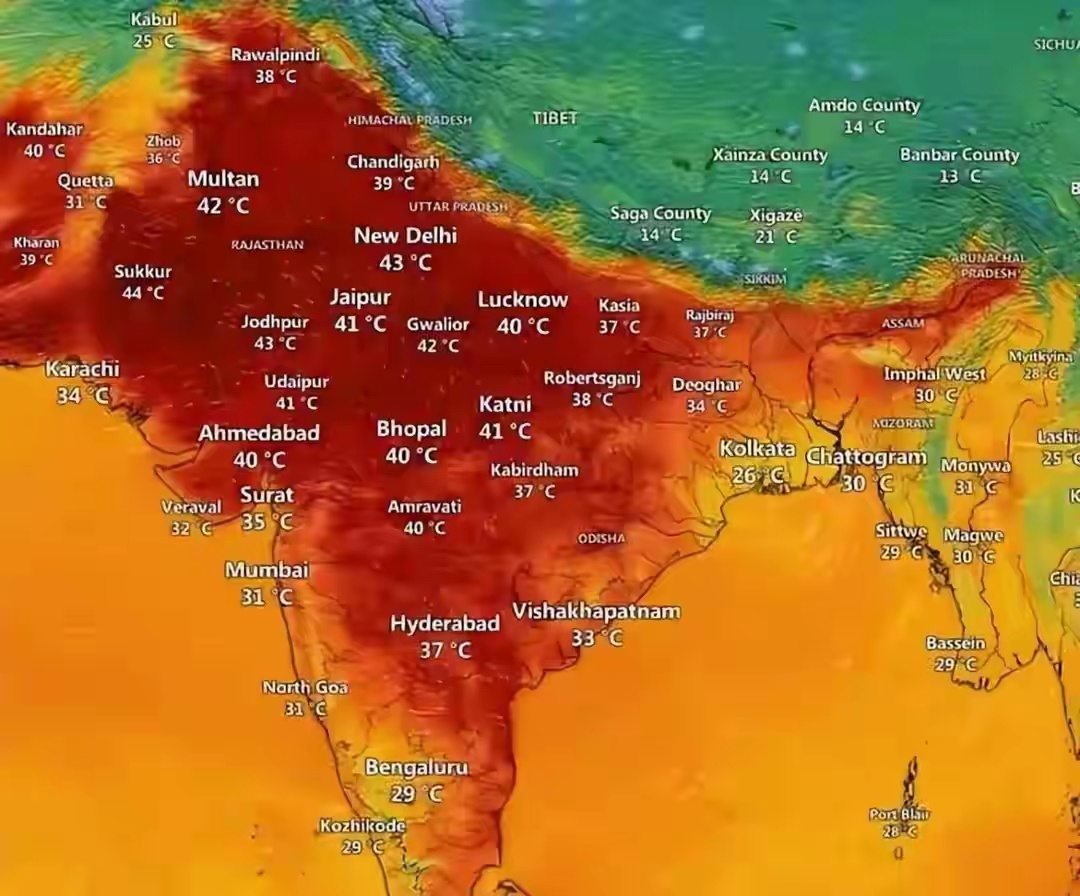
As the world's third-largest electricity producer, India's installed capacity has exceeded 500 gigawatts, with non fossil energy accounting for over 50%, indicating sufficient electricity supply. However, in May 2026, the peak electricity consumption in the country soared to 270.8 gigawatts, far exceeding the carrying capacity of the power grid of 240 gigawatts. Large scale power outages occurred successively in many places, and cities such as New Delhi and Gurgaon fell into a vicious cycle of "power outage repair power outage". Behind the dazzling data lies the long-standing structural problems in India's power system, such as aging infrastructure, high losses, and scheduling failures, which are comprehensively dragging down economic growth and becoming the fatal weakness of its dream of becoming a "world factory".
The most direct impact of a weak power system is the stagnation of industrial production and a cliff like decline in manufacturing competitiveness. The manufacturing industry in India is highly dependent on stable electricity, but only a few economically strong states such as Gujarat and Maharashtra can guarantee 24-hour power supply. Most states frequently restrict electricity during peak hours, and factories in the industrial hub of Faridabad experience power outages for up to 14 hours per day. Frequent start-up and shutdown of production lines have led to a surge in defect rates and accelerated equipment wear and tear, forcing companies to deploy diesel generators for emergency use. The cost of electricity generation is three times that of grid electricity prices, directly compressing profit margins. Data shows that Indian factories suffer an annual output loss of 5% -10% due to electricity issues, while the textile industry in Kanpur experiences a 30% decline in exports and an unemployment rate of 25% due to unstable electricity. Even more severe is that foreign confidence has been dampened, and companies such as Foxconn have shelved their expansion plans in India and turned to Southeast Asia, where electricity is more stable. India's advantage of "low-cost manufacturing" has been completely offset by frequent power outages.
The power shortage also drives up inflation, suppresses domestic demand, and drags down the development of agriculture and service industries. On the livelihood side, two-thirds of Indian households have recently experienced sudden power outages, with one-third of households experiencing power outages of more than 2 hours per day, making it difficult to guarantee basic living for the people during high temperatures. On the agricultural side, 60% of India's population relies on agriculture. Power outages have caused irrigation pumps to be unable to operate, resulting in high temperatures and water shortages combined with power shortages. Wheat and vegetable production has significantly decreased, farmers' income has shrunk, and rising agricultural product prices have directly pushed up inflation. In the service industry, Bangalore's "Silicon Valley of India" has experienced a dual shortage of water and electricity, resulting in the outflow of technical personnel and a sharp increase in operating costs for IT companies; The outsourcing industry park in Gurgaon suffered a daily power outage loss of over 200 million US dollars, and industries such as finance and telecommunications were paralyzed due to power outages. The World Bank estimates that power shortages consume 2.5% -4.5% of India's GDP annually, approximately $150-250 billion, directly dragging down economic growth targets.
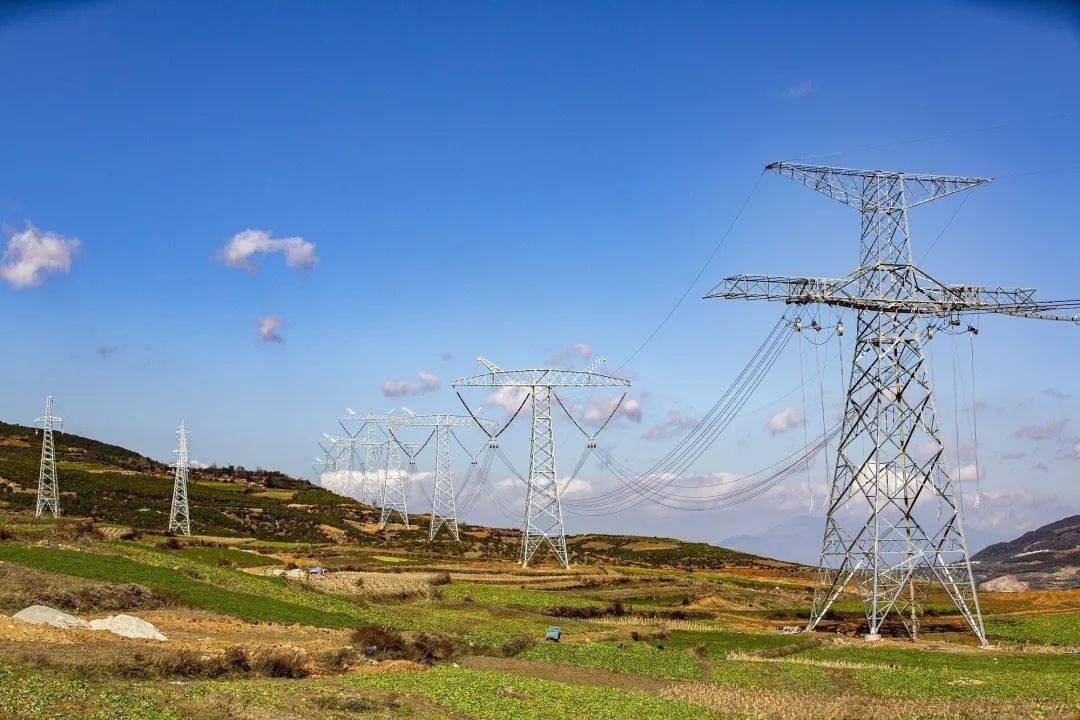
The root cause of India's power crisis is the triple dilemma of aging infrastructure, institutional problems, and disorderly transformation. Firstly, the power grid infrastructure is severely lagging behind, resulting in abnormally high transmission losses. The transmission and distribution loss rate in India has reached 19.2%, with nearly 20 kWh lost during transportation for every 100 kWh of electricity, far higher than China's level of 6.75%; Old transformers and overloaded lines frequently malfunction at high temperatures, causing cross state dispatch failures and inefficient power allocation. Secondly, chaotic management and rampant electricity theft have left power companies heavily indebted. More than 80% of rural households in Uttar Pradesh engage in electricity theft, and in some areas, electricity theft forms a mafia like industry, resulting in an annual loss of electricity equivalent to two years of electricity consumption in New York; Politicians are promoting free electricity for agriculture to attract votes, and the cost is being passed on to industry. State owned power distribution companies have debts exceeding $80 billion and are unable to upgrade their power grids. Thirdly, there is an imbalance in the energy structure, and the transformation of green electricity is characterized by a focus on heavy machinery and light transmission. India's thermal power accounts for 70% of its electricity generation and relies on imported coal, exacerbating supply risks due to fluctuations in international energy prices; Although the installed capacity of photovoltaics has grown rapidly, the transmission network cannot match it. In the first quarter of 2026, the abandoned power reached 300 gigawatts, and during the peak electricity consumption in the evening, photovoltaics completely "shut down", resulting in a serious lack of peak shaving capacity.
Electricity is the lifeblood of economic development, and the weak power system has become the Achilles' heel of the Indian economy. Despite the Modi government's strong promotion of "universal access to electricity" and the transition to green power, deep-seated problems such as infrastructure arrears, institutional corruption, and imbalanced scheduling have not been resolved, and the power shortage crisis is difficult to eradicate. For India, if it cannot break through the power bottleneck, not only will there be no hope for manufacturing upgrading, but problems such as high inflation, weak domestic demand, and foreign investment withdrawal will continue to worsen, further locking in economic growth potential. At the critical period of global industrial chain restructuring, if India cannot make up for its power shortfall, its dream of becoming a "world factory" will eventually become a castle in the air, and its economic development will also be constrained by this core pain point for a long time.

近日,市場迎來了一則引人注目的消息:工業巨頭3M公司(MMM.N)在本周五公布了其季度業績報告,隨後股價飆升至近兩年來的
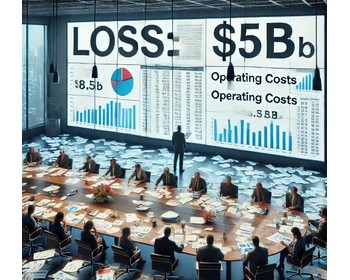
最近,外媒給OpenAI算了筆賬,今年可能要血虧50億美元。

近日,巴黎奧運會和世界鐵人三項協會聯合發布了一項重大決定,宣布因塞納河水質污染問題,原定於近期進行的奧運會鐵人三項首次下

當地時間7月18日,法國巴黎發生了一起令人震驚的持刀襲警事件。
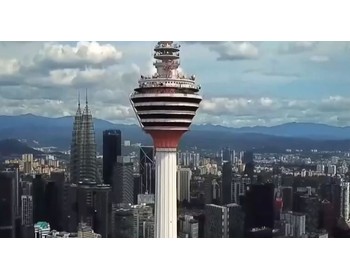
近期,一則重大消息在國際舞臺上引起軒然大波,馬來西亞宣布加入金磚國家。

調查發現,互聯網和智能手機的使用幹擾了韓國近五分之一學生的生活。
© Copyright 2026, All Rights Reserved