
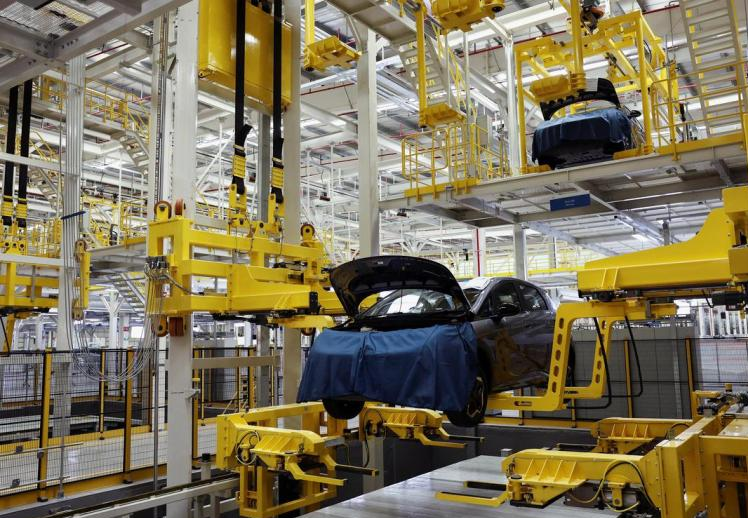
The European Union plans to impose a 9 percent tariff on Tesla vehicles imported from China. The European Union has notified manufacturers of a draft decision on final tariffs on electric vehicles imported from China.
Bloomberg quoted officials as saying they would continue to consult with manufacturers on the draft decision before EU member states vote on it.
The proposed tariffs are slightly revised, with Shanghai SAIC Motor Corp., Geely and BYD Co. facing additional duties of 36.3 percent, 19.3 percent and 17 percent, respectively.
Other companies that cooperate will face a 21.3 percent tariff, while all other companies that do not cooperate will be hit with a 36.3 percent tax rate. The new tariffs are in addition to the 10 percent tariffs that Chinese exporters currently face.
The 9 percent tariff is relatively good news for Tesla because it is lower than the rates faced by other manufacturers. Eu officials noted that one factor behind the result was that the Chinese government appeared to provide fewer subsidies to foreign companies.
Eu officials said most of the benefits Tesla received were in obtaining battery supplies at prices below market value. Other areas where the company has benefited include land use rights, income tax breaks and various forms of subsidies, including state subsidies available to all export producers, officials added.
Parties have 10 days until August 30 to provide comments and request a hearing on the draft decision. If, in a binding vote, a qualified majority of member States fails to block the measures, the European Commission will issue a final regulation on the tariffs no later than October 30. The tariffs will remain in effect for five years and can be extended after a review.

Recently, the British government, in accordance with the "Steel Industry (Nationalization) Act" that came into effect on July 16th, took the British Steel Company, which is controlled by China Jiefang Group, into state ownership without compensation.

Recently, the British government, in accordance with the "S…

On July 23rd local time, the US Trade Representative Office…

The international crude oil market saw a sharp one-sided ri…

Recently, the geopolitical confrontation between the United…

The New York Times has recently clashed with the Trump admi…

Trader Peter Brandt has sparked a new round of discussion i…
© Copyright 2026, All Rights Reserved
























