
U.S. consumer confidence fell in June amid a lackluster outlook for business conditions, the job market and income.
The Conference Board's consumer confidence index fell to 100.4 from a downwardly revised 101.3 in May, according to data released Tuesday. The median estimate of economists surveyed by Bloomberg was for a reading of 100.
A gauge of expectations for the next six months fell nearly 2 points to 73, with the current situation gauge up from a downwardly revised reading in May.
Consumer confidence has been held in check over the past few years by the rising cost of living and high borrowing costs, and recent signs of weakness in the labor market have also weighed on confidence. Only 12.5% of respondents expect business conditions to improve over the next six months, the lowest percentage since 2011.
Dana Peterson, chief economist at the Conference Board, was quoted by Bloomberg as saying: "Consumer confidence retreated in June but remained within the tight range it has been in for the past two years as confidence in the current labor market outweighed concerns about the future, however if there is significant slack in the labor market, confidence could weaken over time."
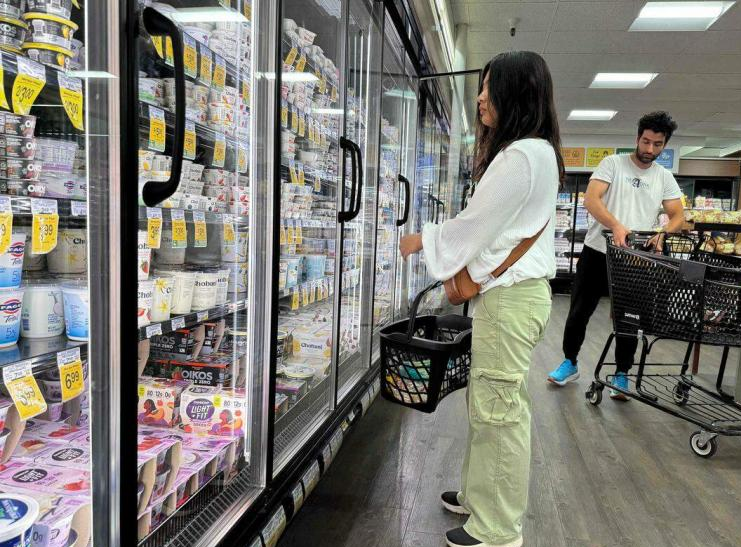
Price concerns eased this month, but consumers are still noticing higher grocery prices.
Consumers also cut back on planned purchases of cars and large appliances, which are typically purchased with credit. The increase in the proportion of respondents planning a holiday in the second half of the year reflects an increase in domestic travel plans.
Consumers' perceptions of the current labor market improved slightly. About 38.1% of consumers think there are enough jobs, up from 37% in May. The share of respondents who said jobs were hard to come by fell, and the gap increased for the first time since the start of the year.

Recently, the British government, in accordance with the "Steel Industry (Nationalization) Act" that came into effect on July 16th, took the British Steel Company, which is controlled by China Jiefang Group, into state ownership without compensation.

Recently, the British government, in accordance with the "S…

On July 23rd local time, the US Trade Representative Office…

The international crude oil market saw a sharp one-sided ri…

Recently, the geopolitical confrontation between the United…

The New York Times has recently clashed with the Trump admi…

Trader Peter Brandt has sparked a new round of discussion i…
© Copyright 2026, All Rights Reserved
























