
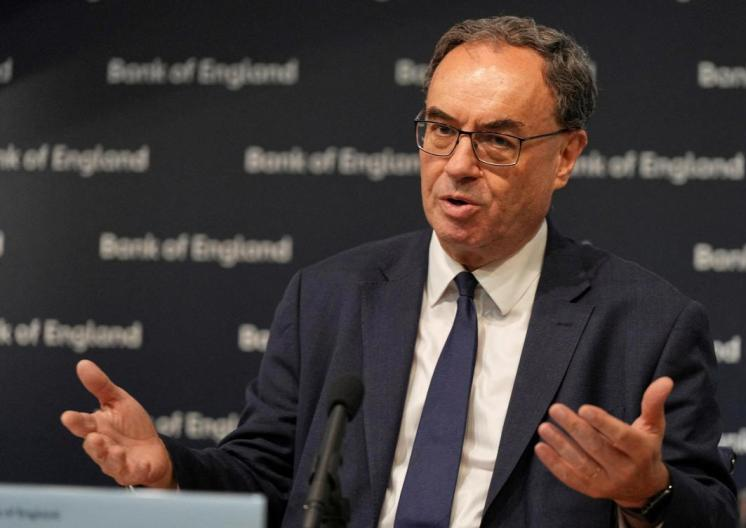
Andrew Bailey, the governor of the Bank of England, recently warned in an interview that large banks around the world should not issue their own stablecoins, as this move might lead to capital outflows within the banking system.
This indicates that Bailey's stance on stablecoins may conflict with US President Trump's supportive attitude. In an interview with The Times, Bailey said that he would prefer banks to offer digitized traditional currencies, namely "tokenized deposits", rather than stablecoins.
Stablecoins are digital assets designed to maintain a stable value, usually pegged to another currency, and have risen rapidly worldwide in recent years.
In the above-mentioned interview, Bailey also warned that stablecoins might withdraw funds from the banking system, thereby reducing the funds available for lending.
Furthermore, Bailey has taken over as the chairperson of the Financial Stability Board since July this year. This organization is responsible for monitoring risks in global financial markets.
In contrast to Bailey's cautious attitude, Bloomberg reported that under Trump's second term, the United States has been actively promoting legislation related to stablecoins this year, and the market value of stablecoins related to Trump has also reached as high as 2.2 billion US dollars .
Some central bank governors, like Bailey, are also concerned about stablecoins and are calling for laws similar to those for bank regulation to regulate stablecoin companies. The concerns of these central bank governors include the risk of stablecoin collapse and the risk that huge capital transactions outside the formal banking system may breed crimes such as money laundering.
Bailey also hinted that he did not want the UK to interview the central bank's digital currency (CBDC), also known as the digital pound. He believes that it is a "wise move" to develop the digitalization of deposits rather than issue CBDCS to deal with stablecoins in the private sector.

Recently, the British government, in accordance with the "Steel Industry (Nationalization) Act" that came into effect on July 16th, took the British Steel Company, which is controlled by China Jiefang Group, into state ownership without compensation.

Recently, the British government, in accordance with the "S…

On July 23rd local time, the US Trade Representative Office…

The international crude oil market saw a sharp one-sided ri…

Recently, the geopolitical confrontation between the United…

The New York Times has recently clashed with the Trump admi…

Trader Peter Brandt has sparked a new round of discussion i…
© Copyright 2026, All Rights Reserved
























