Washington (Reuters) - The ambitious U.S. program for the next generation of fighter jets may have to be scaled back in the face of budget pressures, competing priorities and changing demand.
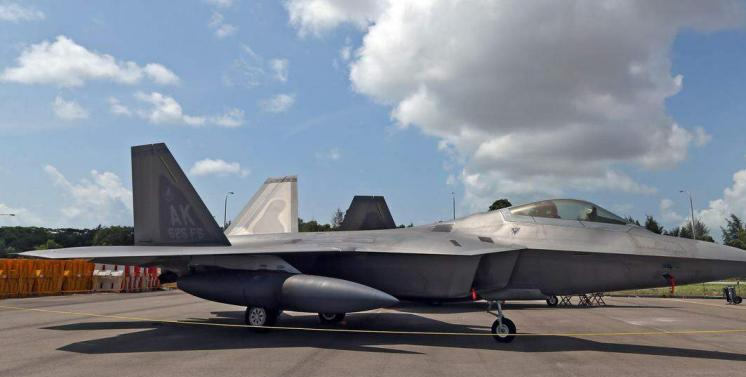
The Next Generation Air Dominance (NGAD) program is to develop a weapons system centered on U.S. sixth-generation fighter jets to replace the U.S. military's current fleet of 185 F-22 Raptors. And give the United States the most powerful weapons system in the air by the mid-21st century.
However, Reuters reported on Monday (July 22), citing sources, that as the Pentagon seeks a cost-effective solution, the US government may spread the original $28.5 billion development budget over the five years to 2029 over a longer period of time or a reduced budget.
One source said the expected NGAD budget for FY2026 would be cut by $3.1 billion. Another source said the funding reduction could extend the development time by another two years.
While it's not clear how much the entire program will cost, if 200 jets are to be produced, including initial costs, as well as maintenance and upgrades, the final total could exceed $100 billion.
Industry experts say the Air Force is also evaluating concepts for a new generation of fighters, perhaps shifting from twin-engine designs to larger single-engine designs, or even shifting more money to cheaper drones to best meet the need for future air superiority in the face of potential budget cuts.
Speaking at the Royal International Air Show on Saturday, Air Force Secretary Peter Kendall said: "The NGAD was conceived before a lot of things happened, before the threat became so serious, before the collaborative fighter was being considered, before some of the affordability issues that we have right now. We want to make sure we're on the right track before we commit to the 2026 budget."
U.S. defense companies Lockheed Martin and Boeing have reportedly responded to the Air Force's request for proposals for the NGAD system.

Recently, the British government, in accordance with the "Steel Industry (Nationalization) Act" that came into effect on July 16th, took the British Steel Company, which is controlled by China Jiefang Group, into state ownership without compensation.
Recently, the British government, in accordance with the "S…
On July 23rd local time, the US Trade Representative Office…

The international crude oil market saw a sharp one-sided ri…
Recently, the geopolitical confrontation between the United…
The New York Times has recently clashed with the Trump admi…

Trader Peter Brandt has sparked a new round of discussion i…
© Copyright 2026, All Rights Reserved