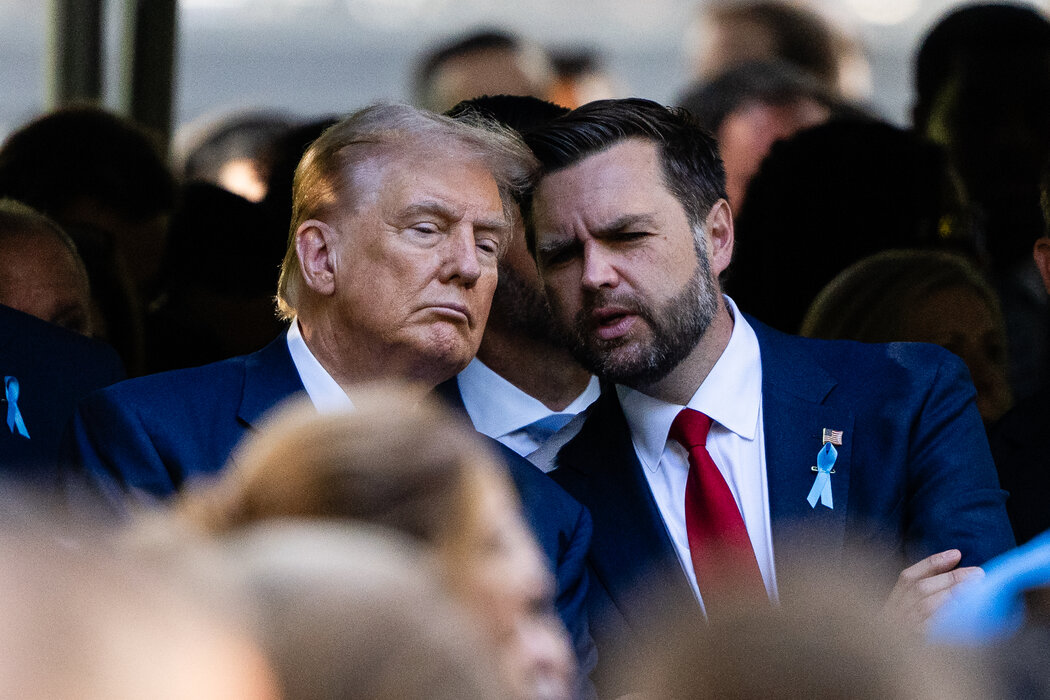
A seemingly joking remark by US President Trump aptly pinpointed Vice President J.D. Vance's current predicament: "If a deal isn't reached, blame Vance. If it is, it's my doing." As a prominent anti-war figure in the Trump administration, Vance initially sought to distance himself from the Middle East conflict, but is now firmly tied to the US-Iran negotiations. This negotiation, considered the most important international mission of his career, is placing him in a high-risk, low-reward predicament.
Latest developments indicate that the consultations between the US and Iran in Pakistan have lasted 21 hours without result. Vance, leading the US delegation, has left Pakistan, but this does not signify a breakdown in negotiations. Pakistani officials stated that communication channels remain open, and Vance may return home to consult with senior government officials before returning. Analysts believe this may be a deliberate attempt by the US to project a tough stance.
Trump's choice to have Vance lead the Iran negotiations has sparked much speculation. Some believe Trump deliberately assigned him a task with virtually no chance of success. However, government insiders revealed that Trump did this to send a clear signal to Iran: the US government is serious about reaching an agreement. It's noteworthy that Vance is the highest-ranking US official to meet with Iranian officials since the 1979 Iranian hostage crisis. Iran had previously shown relative trust in Vance, considering him a "peace-loving" figure within the government, not a proponent of war, and therefore more willing to communicate with him. Vance himself denied that Iran "specifically requested" his participation, emphasizing that he joined the negotiations voluntarily.
For Vance, who has always positioned himself as a representative of "America First," these negotiations have become a major test of his political career. A source who spoke with Vance revealed that he has realized he cannot distance himself from this conflict, which could have negative political consequences. Another close source stated that due to Vance's long-standing anti-war stance, he now feels "walking on thin ice." Vance has consistently played the role of Trump's deputy, willing to campaign extensively for the president. Mark Bedner, who worked on Trump's transition team, believes Vance understands Trump's goals very well and enjoys deep trust, making him the "perfect proxy" in high-stakes negotiations. However, if the negotiations don't go well, Vance will bear the main responsibility. A former Trump administration official who participated in peace negotiations pointed out that under normal circumstances, high-level diplomatic negotiations should be led by the Secretary of State (now Rubio). If the final agreement is unfavorable to the United States, Vance will likely be held accountable. Some analysts even bluntly state that Trump's personality puts Vance at greater risk—the president might agree to an agreement today, be dissatisfied tomorrow, and then shift the blame to the negotiators.
Vance is seen by many as Trump's most likely successor. The success or failure of these negotiations will directly affect his prospects in the 2028 presidential election. He publicly supported Trump as a senator, one of his key reasons being that "Trump didn't start new wars." Now, being embroiled in the Iran conflict forces him to face criticism from MAGA (Make America Great Again) supporters.
Many supporters initially expected Vance to solidify the Republican Party's stance against foreign military intervention, but now they see him deeply involved. This could not only damage his image among core voters but also prompt a reassessment of his future foreign policy direction.
Jeff Lasker, director of the U.S.-Germany Institute, points out that Vance is less negotiating with Iran and more trying to secure the best possible deal for Trump. He must navigate a difficult balance between "winning for Trump" and "protecting his own political future."
Currently, U.S.-Iran negotiations remain deadlocked. The core issue still revolves around Iran's nuclear program. The U.S.'s biggest bargaining chip is the threat to resume large-scale military action, but both sides understand that this is far from an ideal political option for Trump. The Trump administration may now face a difficult choice: continue the protracted negotiations or return to a confrontational path.
It is not surprising that Vance has failed to achieve a quick breakthrough in this marathon negotiation. However, the outcome of these negotiations will not only determine the future of U.S.-Iran relations but will also profoundly impact the U.S. domestic political landscape and Vance's own future. Under Trump's "take credit and blame" style, Vance is walking a diplomatic tightrope with extremely high political risk. The outside world is closely watching whether this former "anti-war" vice president can stand firm in this crucial test.

Trader Peter Brandt has sparked a new round of discussion in the Bitcoin market.

Trader Peter Brandt has sparked a new round of discussion i…

On July 17th, Taiwan's stock market experienced a historic …

OpenAI updated its compute expenditure expectation through …
In late July 2026, tensions between the United States and I…

The heatwave sweeping across the region, coupled with the e…

British Prime Minister Barnham announced that the business …
© Copyright 2026, All Rights Reserved