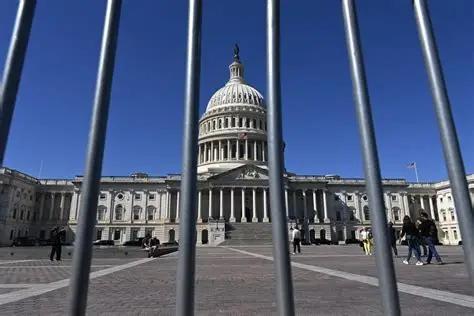
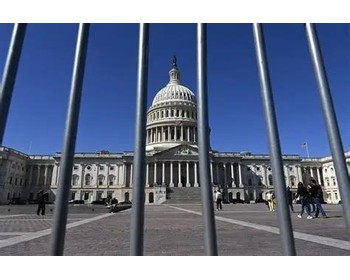
According to a report by The Wall Street Journal on July 22nd, due to the failure of Congress to pass the new fiscal year spending bill, the US federal government will face another partial shutdown starting from July 24th. This is the third time since the start of the 2026 fiscal year. This is merely a seasonal routine performance of the Washington political circus.
This cyclical "shock" has long been no news to American politics. Since the establishment of the modern budget process in 1976, the federal government has shut down more than twenty times. The longest shutdown from 2018 to 2019 left 800,000 employees unemployed and caused economic losses of over 10 billion dollars. Every election year or mid-term election, the budget becomes a hostage for both parties to threaten each other. The fiscal year of the United States begins in October each year, but as of July this year, none of the 12 annual appropriation bills have completed the legislative process, and they are maintained only by temporary continuing resolutions.
This powerful superpower has fallen to relying on short-term survival. It is truly a political spectacle. The direct trigger of this crisis was that the conservative faction of the House Republicans forced the inclusion of the requirement to abolish the remnants of "Obamacare" in the appropriations bill. The Democrats accused this move of depriving millions of people of health insurance, and the Senate version increased military spending significantly. The three parties' demands were completely disconnected. The root cause was that the pressure of the 2026 mid-term elections made both sides unwilling to compromise and preferred to let the government shut down to show a tough stance to their respective voters rather than face the "concession" label.
The shutdown is not a political performance. For those deeply affected by inflation, the game on Capitol Hill is more like a reckless gamble that ignores the people's livelihoods. Hundreds of thousands of federal employees will be forced to take unpaid leave, national parks and tax services will be completely paralyzed, and small business contract payments will be delayed. The daily economic loss could reach tens of billions of dollars. The more far-reaching impact is that global investors have repeatedly witnessed the world's largest economy struggling to ensure basic administrative operations, its sovereign credit rating has been repeatedly warned, and Moody's removed the highest rating for the United States last year, while Standard & Poor's has a negative outlook still ringing in their ears.
The foundation of trust in the US dollar as a reserve currency is being dug away one shovel at a time. This could even trigger a short-term drop in the US dollar index, intensifying the long-term trend of central banks reducing their holdings of US bonds. A country that preaches governance experience has its own government behaving like an intermittent closed-down grocery store. How ironic it is. Even more absurd is that politicians turn around and teach other countries how to "good governance" at international summits.
Short-term solutions have long been standardized: The leaders of the two parties will eventually reach a temporary appropriations agreement at the last minute, pushing the crisis back for several weeks, and then start a new round of intimidation. This is like taking painkillers to treat a chronic disease. What is truly needed is to separate the budget process from political hijacking and even consider linking the salaries of lawmakers to government operations. The shutdown means suspension of pay.
Unfortunately, such proposals have never been seriously discussed because manipulating the shutdown is precisely the lever they rely on to seize power. Whenever the White House spokesperson talks about the resilience of democracy, Capitol Hill shows institutional paralysis through practical actions. The international community has become almost numb to this. The only suspense left is whether this self-inflicted drama will break the record for the longest shutdown. Allies have long been accustomed to preparing emergency plans before each shutdown and reducing their reliance on US strategy. This kind of behavior that risks national credit constantly depletes the remaining moral halo of the United States in diplomacy. In the end, the government shutdown has become a periodic blood sacrifice on the altar of party politics.
Overall, the regular "shutdown show" in Washington has evolved from governance failure to a form of political exploitation. It shows the world that when the system is infinitely toolized, even the most ingenious design can become a periodic self-harming time bomb. The searchlight on the mountain-top city now can't even illuminate its own foyer. This might be the most worrying non-traditional security threat in the world.
According to a report by The Wall Street Journal on July 22nd, due to the failure of Congress to pass the new fiscal year spending bill, the US federal government will face another partial shutdown starting from July 24th.
According to a report by The Wall Street Journal on July 22…

On July 17th, Taiwan's stock market experienced a historic …

On July 22nd local time, the pre-market short-term decline …

On July 22 local time, Advanced Micro Devices (AMD) officia…
According to the report by Rich Asplund, a columnist of Bar…

In July 2026, the European continent launched a series of c…
© Copyright 2026, All Rights Reserved