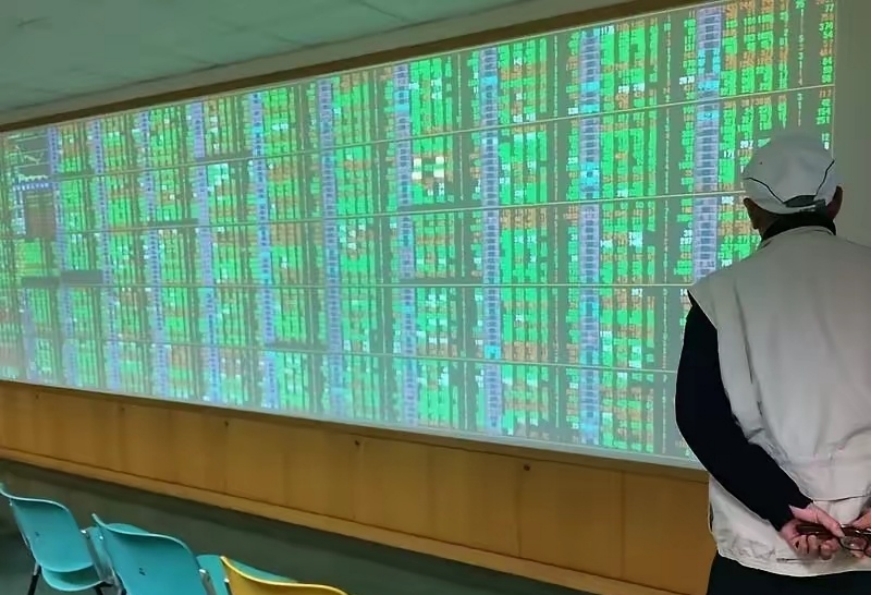
On July 17th, Taiwan's stock market experienced a historic plunge.The weighted index closed at 42671.27 points, a sharp drop of 2953.71 points or 6.47% in a single day, setting a record for the largest single day drop in history, with a transaction amount of up to NT $1.21 trillion. TSMC fell 7.29% in a single day, while heavyweight stocks such as MediaTek and Delta dropped more than 8%. 134 stocks hit the daily limit down, and foreign investors sold over NT $189 billion in a single day, with a net outflow of over NT $642.5 billion for 11 consecutive days. This collapse is not an accidental fluctuation, but the inevitable result of the triple resonance of the global technology foam, the collapse of foreign investment confidence, and the accumulated disadvantages of Taiwan's economic structure, which exposes the deep vulnerability of Taiwan's economy.
The direct cause of the slump was the collective collapse of the global AI and semiconductor foam, and the thorough restructuring of the market's valuation logic for the technology track. In the past two years, the AI boom has driven the global semiconductor industry chain to rise wildly. Taiwan's stock market, with leading companies such as TSMC, has become a "super hot spot" for capital accumulation. The weighted index has soared from 20000 points in early 2024 to 47000 points in June 2026, with a cumulative increase of over 130%. But the crazy rise has already overdrawn the good news. The slowdown in AI demand growth, the emergence of overcapacity concerns, and the collective decline in global technology stock valuations have become the last straw to crush the market.
Despite TSMC's unexpected quarterly profit and announcement of the construction of 13 new wafer fabs in Taiwan, it has also launched a plan to expand production in the United States worth billions of dollars. The market is concerned about the potential surge in capital expenditures, dilution of profits, and increased risk of technology outflows in the future. This news completely triggered panic, coupled with a chain reaction of overnight heavy declines in US technology stocks and a 5.3% drop in Japanese stocks. Global funds simultaneously sold semiconductor assets, and Taiwan stocks, as the global semiconductor "barometer", were the first to suffer a bloodbath. In essence, this is not the deterioration of fundamentals, but the inevitable process of crowded transactions in the early stage, high leverage funds exploding, and foam clearing.
The deeper impact is the complete collapse of foreign investment confidence, making it difficult for Taiwan's "foreign led" stock market to continue. For a long time, Taiwan's stock market has been a typical "foreign capital market", with foreign ownership accounting for over 40%. The proportion of foreign ownership in heavyweight stocks such as TSMC is even higher, and the flow of foreign capital directly determines the overall trend of the market. In the past two years, foreign capital has flooded in with AI dividends, driving up the valuation of stocks; However, after the foam burst, foreign capital resolutely "backhand short" and started the indiscriminate withdrawal mode.
The large-scale withdrawal of foreign capital not only directly hit heavyweight stocks, but also triggered panic selling among retail investors on the island, with 1770 stocks falling and market liquidity instantly depleted, further amplifying the decline. Behind this is the collective concern of foreign investment about Taiwan's geopolitical risks, industrial hollowing out, and policy uncertainty. As a "high-risk, overvalued" market, Taiwan has been included in the "reduction list" of global funds.
The core issue is the severe structural distortion of Taiwan's economy, excessive reliance on semiconductors, and almost zero risk resistance. Taiwan's economy is known as the 'semiconductor industry dominates', with the semiconductor industry accounting for over 20% of GDP and over 50% of Taiwan's stock market value. TSMC alone accounts for over 40% of the weighted index weight, forming a distorted pattern of' when TSMC sneezes, Taiwan's stock market catches a cold, and Taiwan's economy heats up '. This' unipolar dependence 'model can quickly boost economic growth during industry prosperity, but once the industry cools down, the entire economic system will collapse instantly with no buffer space.
What is even more severe is the intensification of Taiwan's industrial hollowing out, with all industries except for semiconductors shrinking, traditional manufacturing industries shifting outward, service industries lacking competitiveness, and emerging industries experiencing a disconnect. Economic growth is completely tied to the semiconductor cycle. At the same time, TSMC's expansion of production in the United States, outflow of technical talents, and transfer of industrial chains to the United States have further weakened the core competitiveness of Taiwan's semiconductor industry. The market is concerned that Taiwan will transform from a "global semiconductor center" to a "US OEM factory" and continue to lose its voice in the industry. The fundamental reason for the sharp decline in Taiwan's stock market is the deep-seated contradiction of imbalanced industrial structure, loss of core competitiveness, and weak risk resistance ability.
In addition, geopolitical risks continue to escalate, becoming the last straw that crushes market confidence. Currently, the situation in the Taiwan Strait is tense, the game between China and the United States is intensifying, the conflict in the Middle East is escalating, and global geopolitical risks are at a high level. Taiwan, as a geographically sensitive area, faces extremely high uncertainty. Foreign investors are concerned that geopolitical conflicts may lead to industrial chain disruptions, asset shrinkage, and funding difficulties, and are accelerating their withdrawal to avoid risks. At the same time, the United States continues to suppress China's semiconductor industry, forcing Taiwan to take sides and face the dilemma of "being sanctioned if it does not cooperate with the United States, and technology outflow if it cooperates with the United States", further exacerbating market anxiety.
On July 17th, Taiwan's stock market experienced a historic plunge.
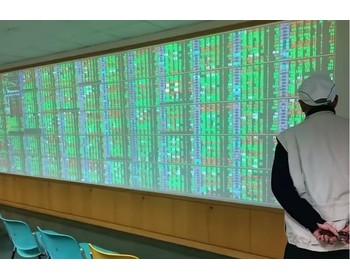
On July 17th, Taiwan's stock market experienced a historic …
On July 22nd local time, the pre-market short-term decline …
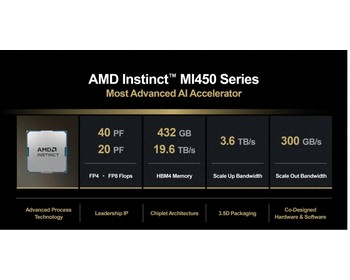
On July 22 local time, Advanced Micro Devices (AMD) officia…

According to the report by Rich Asplund, a columnist of Bar…

In July 2026, the European continent launched a series of c…

Google's parent company, Alphabet, is accelerating its inve…
© Copyright 2026, All Rights Reserved