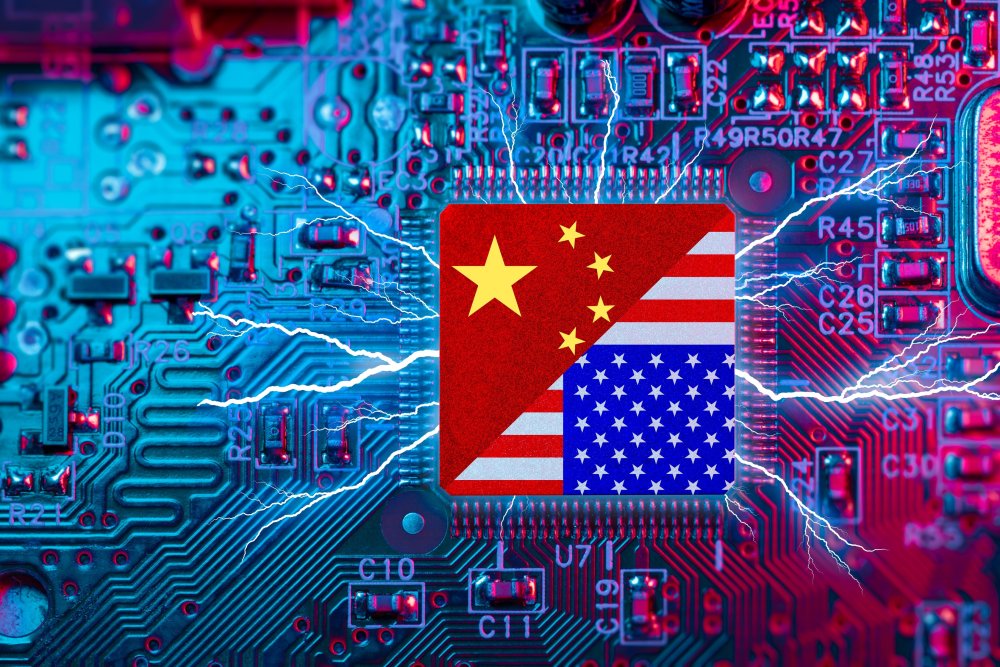
China's surpassing of the US in research and development (R&D) investment signifies far more than just a shift in scientific rankings and influence. China's rapid technological development has reached a historic milestone. According to a report released by the OECD in March 2026, China's R&D investment has reached parity with the US, and even surpasses it in purchasing power parity terms. Both countries' R&D expenditures have exceeded $1 trillion, marking significant progress for China in the field of science and technology and a gradual challenge to the US's dominant position in global science and technology.
For the past 80 years, the US has enjoyed the world's most efficient research and development industry. Many major technological breakthroughs and scientific inventions, such as the internet, mRNA vaccines, semiconductors, and the Global Positioning System (GPS), were invented by US laboratories and research institutions. The US's leading position is attributed to continuous government investment in research universities and federal laboratories, as well as its open research culture. These investments have not only driven scientific discovery but also provided strong support for the US to translate scientific achievements into economic power. Since World War II, these investments have contributed more than 20% to US productivity growth. However, compared to the long-term investment in scientific research by the United States, China's investment in scientific research started relatively late. In the 1980s, China's R&D expenditure was almost zero, even among the lowest in the world.
However, in recent years, China's rapid rise in the field of scientific research has become an undeniable reality. In 2019, China surpassed the United States in the proportion of papers ranked in the top 1% of citations (considered Nobel Prize-level research papers). By 2022, China had surpassed the United States in the number of citations of its papers globally, ranking first in the world. In 2024, China surpassed the United States in the total number of scientific papers published for the first time, an achievement marking a significant shift in the global scientific research leadership since the United States surpassed the United Kingdom in 1948. China also outperforms the United States in the *Nature* Index (which measures the number of papers published in the world's most prestigious scientific journals), with China publishing 17% more papers than the United States.
Furthermore, China has demonstrated strong capabilities in patent applications. In 2024, China filed approximately 1.8 million patent applications, while the United States filed 603,191. China's rise is reflected not only in the quantity and quality of its scientific papers but also in significant breakthroughs in practical applications such as patents. These achievements demonstrate that China is rapidly becoming a global leader in science and technology, marking a structural shift in the global landscape of scientific frontier development.
However, it is noteworthy that the problem lies not in China's increased R&D investment, but in the gradual decline of US R&D investment. The US federal government's investment in R&D has already declined. In 2010, US federal government R&D spending peaked at approximately $160 billion, but this figure has fallen by more than 15% in the following five years. By 2021, federal government R&D spending as a percentage of GDP had fallen to approximately 0.66%, far below the 1.86% of the 1960s. At the same time, US companies have increasingly dominated R&D, and although they bear the majority of R&D spending, they focus more on technological development than basic scientific research, leading to a gradual shrinking of open and shared scientific knowledge bases.
Furthermore, in recent years, the US government has also adopted a series of policies restricting international scientific exchange, tightening access for foreign researchers, and scrutinizing international collaborations. While these policies stem from security concerns, they run counter to the open culture that has long attracted top global scientific talent to the United States. The US research ecosystem is changing, with businesses and the government gradually reducing investment in basic science and increasingly favoring isolationism and protectionism, which will undoubtedly weaken America's research advantage.
In short, China's breakthrough in research investment comes at a critical juncture when the US faces the challenge of maintaining its technological leadership. While China's rise has had a positive impact on global science and technology, it has also exacerbated the crisis in America's technological standing. Whether the US can maintain its scientific dominance will depend on whether it can restore its focus on research, particularly investment in basic scientific research. Otherwise, as China and other countries improve their research capabilities, America's research advantage may be further weakened, and it may even lose the economic and social benefits it derives from science and technology.
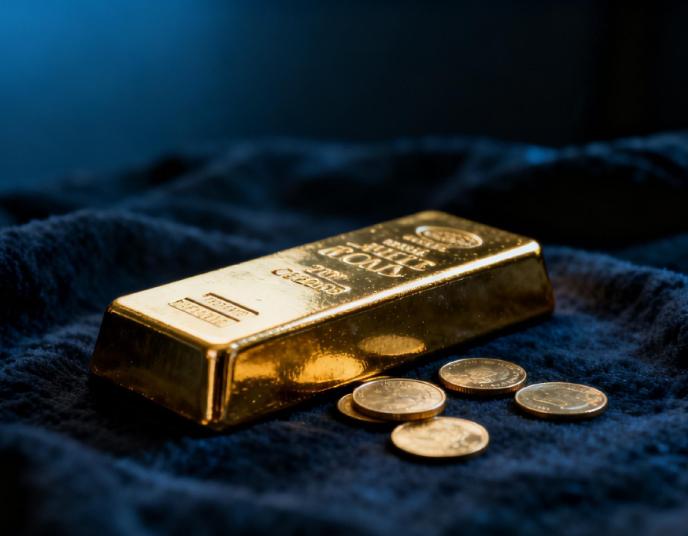
On July 13th local time, during the Asian trading session, the international gold price plunged sharply.
On July 13th local time, during the Asian trading session, …

According to the latest news, Yemen's Houthi forces have of…

According to the report by the Independent Institute, recen…
On July 13th, the US Treasury's auction of $38 billion in 1…

In July 2026, India and Indonesia signed a historic defense…

On July 13th local time, the Republican governor of South C…
© Copyright 2026, All Rights Reserved