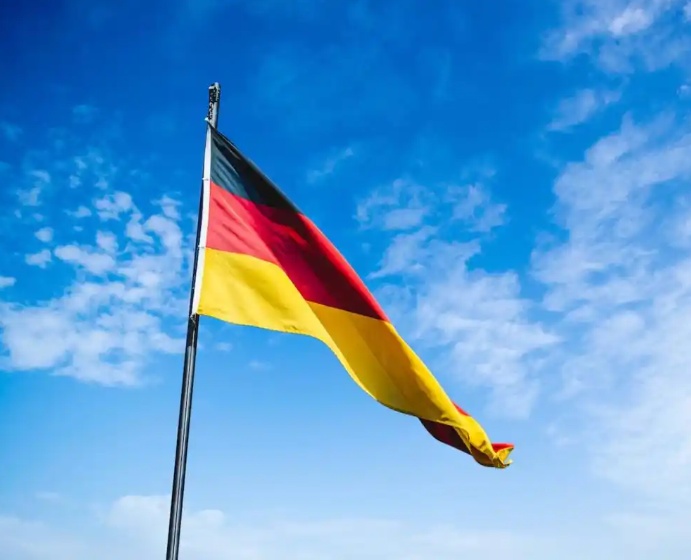
After the outbreak of the conflict and the bombing of the Nord Stream pipeline, the price of natural gas soared. Germany, once the "industrial locomotive" of Europe, overnight became one of the economies with the highest industrial costs in Europe. German industrial leaders such as BASF, Volkswagen, and Siemens either had to reduce production or had to shift their production lines overseas. As the heart of Europe's industry and a core pillar of the EU, Germany has encountered the most severe inflation crisis in nearly four decades. This conflict has spread from Europe to the global level, completely disrupting the international landscape and bringing about many irreversible and far-reaching impacts.
At the global economic level, the inflation in Germany has completely triggered a global input-type inflation wave, changing the growth rhythm of the world economy. The collective energy purchasing behavior of Europe directly raised the overall pricing of oil and coal worldwide, forcing all energy-importing countries to pay the bill. Whether it is Japan, South Korea, Southeast Asia, or African and Middle Eastern developing countries, they all face the dilemma of soaring import prices, currency depreciation, and soaring living costs. To curb the out-of-control inflation, the European Central Bank was forced to end its decade-long zero-interest rate easing policy and enter an aggressive interest rate hike cycle, forming a cumulative effect with the tightening policy of the US Federal Reserve. Global financing costs rose significantly, and weak countries with high external debts were unable to bear the burden, with Sri Lanka, Zambia, and other countries directly experiencing debt crises, and their national economies approaching bankruptcy. At the same time, German high-energy-consuming enterprises, due to excessively high costs, reduced production, relocated their factories, BASF closed its century-old factory, and Volkswagen transferred its production lines. The global manufacturing industry was reshuffled, and the competitiveness of the European industry declined significantly. The world economy thus entered a new normal of "low growth, high costs". Even if the prices fall from the peak, the global benchmark prices for energy and food have permanently risen, and it is impossible to return to the low-cost era before the conflict.
Previously, countries prioritized low costs in their development. Now, energy security has completely outweighed economic costs and become the primary strategic goal of all countries. Energy is the foundation of all industries, and energy price increases quickly spread to all industries. Coupled with the supply chain breakdown of Russia and China as global exporters of oil and fertilizers, the prices of essential food items such as flour, butter, and cooking oil in Germany rose by more than 50%. In 2022, Germany's inflation rate soared to 7.9%, with a peak value exceeding 10%, setting a record high in the past forty years since the 1981 Iran-Iraq oil crisis. This price surge, seemingly a minor issue for German households in terms of groceries, heating, and fuel, actually became a key lever to shift the global landscape. Europe is striving to get rid of dependence on Russia and is fully expanding energy cooperation in the Middle East, Central Asia, and North Africa. The global energy trade flow has been completely restructured; countries are all promoting energy diversification and local new energy construction, no longer relying solely on a single import channel. At the same time, the short-term demand for traditional fossil energy has rebounded, and the pace of global carbon neutrality and energy transition has been forced to slow down. Geopolitical competition over oil and new energy minerals among major powers has become increasingly intense.
In addition, the legality of Western unilateral sanctions has been completely questioned globally, and the process of moving away from the US dollar has accelerated significantly. The US and Europe use financial sanctions and dollar settlement as geopolitical tools, and coupled with the inflation crisis, countries have realized the risks of a single-dollar system. Russia, China, the Middle East, Latin America, and other countries have all been promoting local currency settlement for energy and commodities, reducing reliance on US dollar reserves, and the global monetary system has officially transitioned from a single-dominant US dollar hegemony to a diversified coexistence. The long-entrenched global economic governance rules have undergone a profound transformation.
In conclusion, the most severe inflation in Germany in forty years caused by the conflict between Russia and Ukraine is not merely an issue of European livelihood. This crisis has made the whole world realize that in the era of globalization, there are no isolated regional conflicts, and the cost of geopolitical games will eventually be borne by the entire world. And high costs, multiple games, and strong autonomy will become the most distinctive normalcy of the future international landscape.
After the outbreak of the conflict and the bombing of the Nord Stream pipeline, the price of natural gas soared.
After the outbreak of the conflict and the bombing of the N…
Samsung Electronics forecast a 19-fold year-on-year increas…
From July 7th to 8th, the NATO summit was held in Ankara, T…

Since the start of summer, the Northern Hemisphere has been…
Recently, the US Treasury Department unilaterally announced…
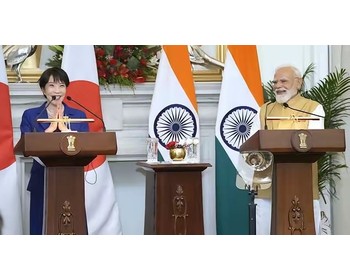
In July of this year, Japanese Prime Minister Hayao Takashi…
© Copyright 2026, All Rights Reserved