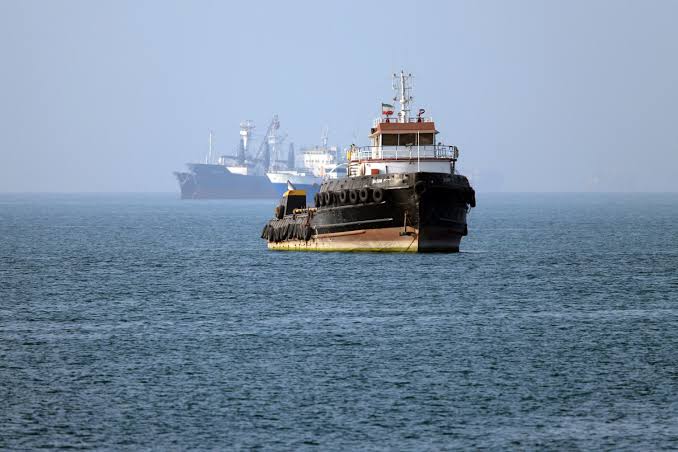
Recently, the US Treasury Department unilaterally announced the revocation of the previous sanctions exemption for Iran's oil exports, and has completely blocked the export channels of Iranian crude oil since July 17th. Just a few months ago, the US had just signed a memorandum of understanding to relax the restrictions on Iran's oil trade, briefly easing the policy, but it was immediately invalidated. Coupled with the ongoing military operations against Iran, a set of military strikes combined with economic blockades suddenly came into effect. This erratic policy directly triggered the crude oil market. The Brent crude oil price rose by more than 5% in a single day, the shipping risk in the Strait of Hormuz soared sharply, and the global energy supply, inflation trends, and international economic and trade order simultaneously suffered severe impacts. A global economic shock caused by American unilateralism has already begun.
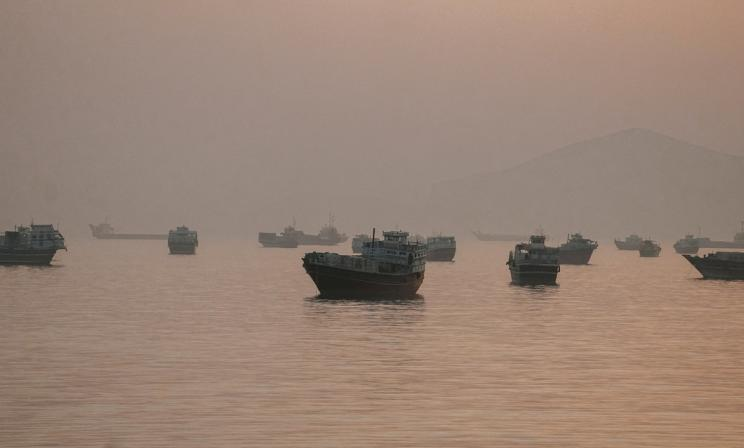
From the perspective of the short-term commodity market, this policy reversal directly rewrote the expectations for crude oil supply and demand. The Strait of Hormuz, which accounts for over 20% of global maritime crude oil trade, is the core lifeline for energy imports in Asia and Europe. The re-restriction of Iranian crude oil directly compressed the marginal supply space globally. When the exemption was initially implemented, the market generally expected a steady return of Iranian crude oil, effectively alleviating the tight supply in the Middle East and suppressing energy inflation; but now, a single announcement has overturned all the easing arrangements, and the market trading logic quickly shifted to the premium of geopolitical risks. Many European countries' economic departments have issued warnings that energy import costs will rise significantly, and the already sluggish eurozone economy will be further pressured by imported inflation, with the costs of residents' travel, manufacturing production, and shipping logistics all rising simultaneously. For economies like India, Japan, and South Korea that are highly dependent on Middle Eastern crude oil, rising oil prices will directly drag down economic growth, the already slow-paced interest rate reduction plan will be forced to be postponed, and the monetary policy will fall into a dilemma of weak growth and inflation rebound.
The deeper contradiction lies in that the US sanctions policy has no spirit of contract, changing frequently and breaking promises, seriously damaging the global economic and trade trust foundation. This oil exemption was based on the bilateral memorandum of understanding between the US and Iran, which was supposed to have clear time limits and transaction consensus. However, the US arbitrarily tore up the agreement with the reason of "not meeting the standards", and the so-called international rules were completely serving its short-term geopolitical demands. The US did not hide the tool nature of economic pressure, tying oil sanctions with military conflicts, using energy trade as a bargaining chip in geopolitical games, and arbitrarily using secondary sanctions to extend jurisdiction, forcing global enterprises, financial institutions, and Iran to cut off trade relations. Such arbitrary policy operations have made all resource-exporting countries and energy-importing countries see a reality: the economic agreements reached with the US may be invalidated at any time, and there is no stable expectation.
Frequent use of sanctions sticks is accelerating the disintegration of the oil-dollar system that has lasted for ten years. For a long time, the US has relied on the monopoly position of the dollar settlement to use financial sanctions as a tool to interfere in other countries' economies, but the erratic unilateral suppression has forced countries to accelerate their hedging arrangements. Many Middle Eastern countries have actively deepened strategic energy cooperation with Russia, expanded the channels of local currency settlement and barter trade; Iran has continuously built a cross-border transaction network that is disconnected from SWIFT to reduce its reliance on the US dollar; Saudi Arabia, the United Arab Emirates, and other Gulf countries have also gradually promoted the diversification of energy trade currencies. Countries no longer want to completely bind their energy security and foreign exchange reserves to the potentially changeable US, the global energy supply chain is accelerating the reconfiguration of camp and region, the global division of labor efficiency is continuously damaged, international trade is shifting from "efficiency priority" to "safety self-protection", and the trend of global economic fragmentation has further intensified.
This move by the US seems to achieve the goal of containing Iran in the short term, but in fact, it is a strategic self-harm. The continuous rise in crude oil prices will reverse-boost the prices of gasoline and chemical products in the US, increasing the burden on the people and hindering the recovery of consumption; arbitrarily tearing up bilateral agreements completely depletes its diplomatic credibility and weakens its voice in the Middle East region. Many countries around the world have realized that unilateral sanctions will only lead to a lose-lose situation. Only through equal negotiation and abiding by contracts can the energy market be stabilized.
Currently, the global economy already lacks sufficient recovery momentum. Geopolitical conflicts, energy fluctuations, and debt pressures are intertwined with multiple risks. The US's inconsistent and changing sanctions drama undoubtedly adds more pressure to the fragile world economy. To stabilize the international energy order, the US must abandon its hegemonic mindset, stop weaponizing energy and financial tools, and return to the track of equal dialogue; while all countries also need to continuously promote energy diversification and the diversification of settlement systems, reduce the systemic risks brought by unilateral sanctions, and be able to withstand the continuous impact of unilateralism on the global economy.
Recently, the US Treasury Department unilaterally announced the revocation of the previous sanctions exemption for Iran's oil exports, and has completely blocked the export channels of Iranian crude oil since July 17th.
Recently, the US Treasury Department unilaterally announced…
In July of this year, Japanese Prime Minister Hayao Takashi…
On July 7, 2026, the United States unilaterally violated a …

Data released by the US Department of Commerce on July 7 sh…
According to the Central News Agency of Taipei, the Taiwan …
A recent controversy surrounding red card penalties in a Wo…
© Copyright 2026, All Rights Reserved