(Kyiv News) As the annual summit of NATO leaders is approaching, Russia has launched a new round of large-scale air strikes against Ukraine, indicating that diplomatic efforts to end the war still fail to achieve a breakthrough. Meanwhile, Ukraine continues to expand its long-range strikes against Russian energy and military facilities, pushing the pressure of the war further into Russia's territory.
The NATO summit will open in Ankara, the capital of Turkey, on Tuesday (July 7th). Ukrainian President Zelensky is expected to meet with US President Trump during the summit, once again seeking Washington's assistance in helping Ukraine obtain crucial weapons.
A senior US official said that Trump will meet with Zelensky on Wednesday (the 8th) to discuss how to end this war; subsequently, he also plans to have a phone call with Russian President Putin in an attempt to restart the stalled peace efforts.
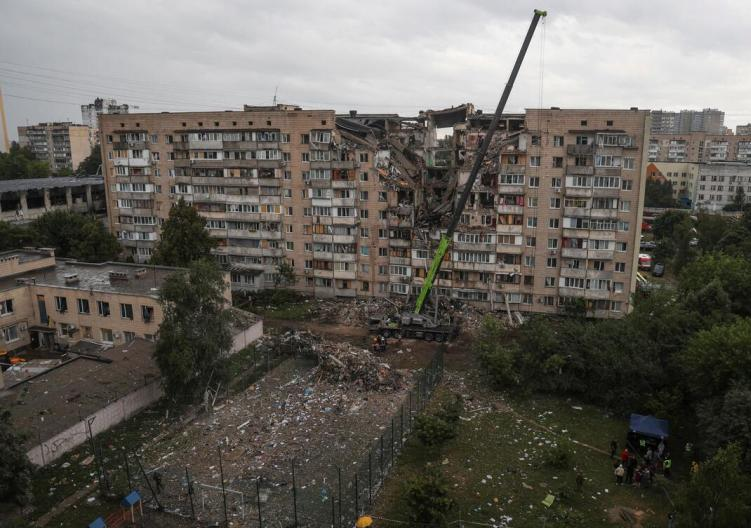
However, the situation on the ground before the summit indicated that the diplomatic space remained narrow. On Monday (6th), Kiev was hit by Russian missiles and drones, resulting in at least 11 deaths and 40 injuries in Kiev and the Bucha area. This was the second attack on Kiev and its surrounding areas in less than a week.
The Ukrainian Air Force stated that Russia launched 68 missiles and 351 drones at Ukraine overnight; the Ukrainian air defense forces shot down or suppressed 37 missiles and 326 drones.
As the Russian air strikes intensified, Ukraine also expanded its long-range drone attacks on targets within Russia, targeting energy infrastructure, ports and military facilities. After the energy facilities in Sevastopol, which was occupied by Russia, were attacked by Ukraine on Monday, there was a power outage in the area.
Russian officials said that the drone attacks launched by Ukraine on the same day also damaged the Baltic port of Visogorsk and the Russian main oil export port of Usishkiuga. Usishkiuga is one of the largest ports in Russia for exporting oil and other products, and it has also been a target of Ukrainian attacks in the past.
Ukraine intensifies attacks on Russian energy facilities, Putin still refuses to return to the negotiating table
Analysis by the Financial Times of the UK shows that Ukraine has intensified its attacks on Russian energy facilities. This year alone, Russian oil refineries have been attacked at least 194 times, which is 10 times the number in the same period last year, and has triggered the most severe fuel crisis in decades.
The head of the Eurasia project at the German Council on Foreign Relations, Meister, said that Ukraine has made a technological breakthrough, capable of producing more long-range drones and enhancing its large-scale production capacity. Senior Ukrainian officials also stated that the US intelligence support has played a role, assisting Kyiv in planning the best flight routes for the drones and avoiding the Russian air defense systems.
Puhov, the director of the Moscow-based defense think tank "Center for Strategic and Technical Analysis", believes that Ukraine's continuous attacks on Russian targets have not only made Russian citizens more directly feel the pressure brought by the war, but also exposed Putin's miscalculation of the situation, as he thought that time was on Russia's side.
In fact, during this period, the Ukrainian side has developed a large-scale "deep strike" capability, forcing Russia to invest more resources in strengthening its air defense. However, it remains uncertain whether Russia can produce sufficient air defense systems and interceptor missiles.
Another analysis indicates that not only are the attacks in Ukraine now more frequent than they were a year ago, but the overall objective of the operation has also expanded. Previously, the focus was mainly on targeting oil infrastructure, but now it has evolved into a broader strategic disruption operation, aiming to simultaneously weaken Russia's energy, logistics, industrial and export systems.
Earlier, Zelensky hinted that the Ukrainian army would launch a more coordinated military operation this summer, aiming to force Russia to end this long-lasting war.
However, up to now, Putin has shown no sign of returning to the negotiating table due to Ukraine's intensified offensive. On the contrary, he still insists that Russia is winning the war and that the original military objectives have been achieved.
Insiders say that Russia remains committed to the highest goal set by Putin and is unlikely to engage in substantive negotiations before February next year. Despite the slow and costly ground advance of the Russian troops, Putin has ordered the military to capture the remaining areas of Donetsk region in eastern Ukraine by the end of the year.


On July 5, 2026, Yahoo Finance reported that QTS, a data center operator under Blackstone Group, officially announced the termination of its long-planned "Digital Gateway" hyperscale data center project and withdrew all appeals and planning documents.

On July 5, 2026, Yahoo Finance reported that QTS, a data ce…
In the early hours of July 6, the Russian military launched…

A survey conducted by the UK Financial Conduct Authority (F…

The Trump administration has sent clear policy signals of p…

Recently, while the US and Iran signed a bilateral memorand…

In his Financial Review column, Joe Aston interprets Qantas…
© Copyright 2026, All Rights Reserved