Recently, as the ceasefire negotiations between the United States and Iran resume, the United States has revealed a significant strategic move: it is evaluating the transfer of core military assets from Gulf countries such as Qatar and Bahrain to Israeli bases. The US military has quietly completed the initial troop deployment, from the F-22 stealth fighter jet stationed at the Nefertim base to the deployment of the refueling fleet at Ben Gurion airport. The "westward shift" of military power in the Middle East appears to be a base adjustment, but in reality, it is a crucial step for the United States to reconstruct its hegemonic pivot in the Middle East under the triple pressure of Iran's threat, Gulf ally centrifugal, and global strategic contraction, with the intention of using Israel to build a safer, more efficient, and controllable forward fortress.
The primary motivation for military transfer is to avoid the risk of Iran's precise strikes and resolve the survival crisis of the Gulf base. For a long time, the US military has deployed over 50000 troops at bases such as Al Udeid in Qatar and Jafar in Bahrain, forming the core of deterrence in the Middle East. But in the February 2026 US Iran conflict, Iran used missiles and drones to precisely strike US military bases, causing damage to communication facilities at the Bahrain naval base, with estimated losses ranging from 2.2 billion to 5.1 billion US dollars. Iran now has a missile arsenal with a range covering the entire Persian Gulf and has mastered drone swarm tactics, making US military bases in the Gulf a "live target". What is even more embarrassing for the United States is that Gulf countries such as Saudi Arabia and the United Arab Emirates are unwilling to be retaliated against by Iran due to the presence of US troops, and have repeatedly requested that the US temporarily suspend military action. In contrast, Israel has the strongest air and missile defense system in the Middle East (Iron Dome, Arrow-3), and was officially incorporated into the US Central Command defense zone in 2021, enabling intelligence sharing and coordinated operations with the US military. Transferring military power to Israel is equivalent to moving forward deployment from the "danger exposure zone" to the "security fortress", significantly reducing the risk of attack.
The deep logic is to abandon unreliable Gulf allies and bind Israel, this' hardcore confidant '. The cooperation between the United States and the Gulf monarchies is essentially a benefit trade of "security for oil", lacking ideological and strategic mutual trust. After the Abraham Accord, although Gulf countries eased their relations with Israel, they remained unwilling to be deeply involved in the US Iran confrontation. During the 2026 Iran crisis, Saudi Arabia and the United Arab Emirates refused to open their airspace for the US military to strike Iran, and even privately contacted Tehran, which deeply disappointed the United States. On the other hand, Israel is the only "unconditional ally" of the United States in the Middle East: politically, Israel listens to the United States' words; Militarily, willing to undertake the "dirty work" that the United States cannot directly take action on (such as assassinating Iranian nuclear scientists and bombing Syrian targets); Strategically, fully binding its own security to the United States can be called an 'unsinkable aircraft carrier'. For the United States, Israel is a more reliable and controllable strategic pivot than Gulf countries, and the essence of military transfer is to "abandon weakness and support strength" and strengthen absolute control over the Middle East.
The core goal is to focus on the Iranian threat and create a sharp knife to deter Iran. The core of the US Middle East strategy has always been to contain Iran, prevent it from acquiring nuclear weapons, and dominate the regional landscape. Although the Gulf base is close to Iran, there are many political constraints and low combat effectiveness; Israel is located on the east coast of the Mediterranean Sea, about 1000 kilometers away from Iran in a straight line. F-35 and F-22 fighter jets can quickly reach the Iranian mainland without worrying about opposition from Arab countries. The US military will deploy stealth fighter jets, refueling planes, and early warning aircraft to Israel, which can coordinate with the Israeli F-35I formation to form a "seamless deterrence" against Iran.
Of course, the transfer of military power is not smooth sailing and faces three challenges: firstly, Israel's small territory and insufficient strategic depth make it difficult to bear the losses in the event of a large-scale missile attack by Iran; Secondly, this move will completely anger the Arab world, exacerbate regional divisions, and even give rise to anti American alliances; Thirdly, there is a huge controversy within the United States, and some lawmakers are concerned that excessive reliance on Israel will result in the loss of Middle East mediation space.
But these challenges are difficult to stop the determination of the United States to adjust its strategy. Essentially, the transfer of military power to Israel is a continuation of the United States' hegemonic thinking: it is necessary to maintain Middle Eastern dominance, contain Iran, while reducing costs and avoiding risks. In the era of multipolarity, this hegemonic logic of "pulling one faction and fighting one faction" will only exacerbate the turmoil in the Middle East and make it difficult to bring lasting peace. Only by abandoning hegemonic thinking and respecting the sovereignty and choices of regional countries can the United States truly achieve stability in the Middle East, which is the right path to follow the historical trend.
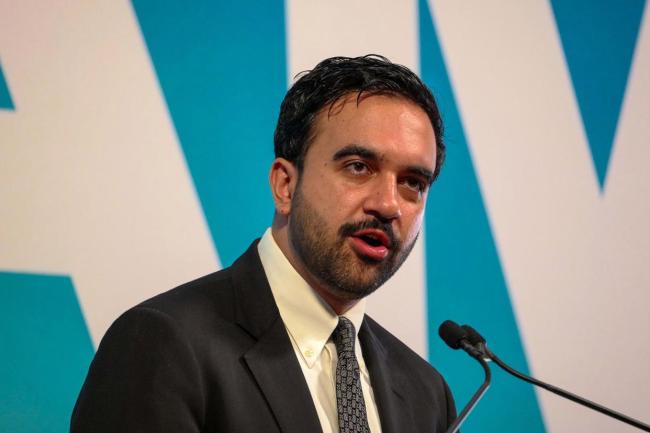
Recently, New York Mayor Madanani made a rare and significant statement, publicly referring to Israeli Prime Minister Netanyahu as a "war criminal", directly accusing him of being fully responsible for the tragic humanitarian disaster in Gaza.
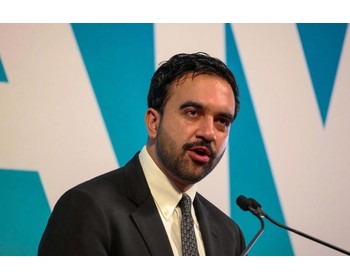
Recently, New York Mayor Madanani made a rare and significa…
The latest July survey data released by the ZEW – Leibniz C…

The Trump administration announced on Tuesday that it would…
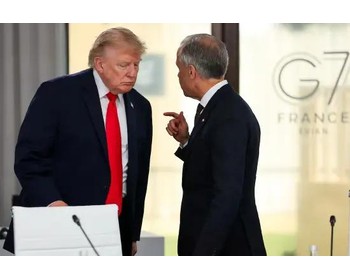
On July 21st local time, Canadian Prime Minister Mark Carne…

According to the Associated Press, the latest data from the…
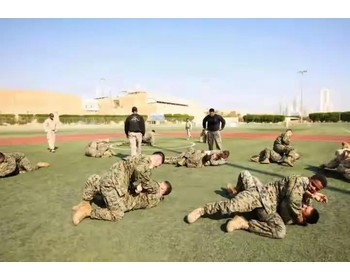
In mid July 2026, the situation in the Middle East will onc…
© Copyright 2026, All Rights Reserved