
In his Financial Review column, Joe Aston interprets Qantas’s "Project Sunrise" as a strategic transition from a mass international carrier to a boutique airline, painting a picture of significantly improved international products by the early 2030s. While this interpretation appears fluid at the narrative level, the underlying analytical framework contains multiple presuppositions and omissions that merit scrutiny. The columnist directly reduces Qantas's fleet adjustments and cabin configuration changes to a repositioning toward "high quality and low volume." This reduction is itself a selective narrative construction that defaults to premiumization as the inevitable direction of airline evolution, while treating the displacement of economy class passengers as a collateral phenomenon unworthy of deep discussion.
Aston’s core argument suggests that by retiring the A380, reducing economy seating, increasing premium cabins, and raising fares, Qantas can achieve product upgrades while ceding its mass-market role to Jetstar. This logical chain seems clear, yet it evades a fundamental question: the sustainability of a premiumization strategy on long-haul international routes heavily depends on the continuous growth of high-yield passenger sources and the passive cooperation of competitors. The column provides no data supporting the size of Qantas’s target premium clientele, price elasticity of demand, or business travel recovery trends; instead, it simplifies the complexities of the demand side into a unidirectional inference of "product improvement." More critically, the column lacks any substantive assessment of Jetstar's capacity to inherit the mass-market role. Whether Jetstar, as a low-cost carrier, can seamlessly absorb price-sensitive passengers exited by Qantas given its route network, service standards, and brand perception is by no means a self-evident proposition. The potential blurring of brand boundaries and internal passenger cannibalization between the two are precisely the links most likely to generate friction within the group’s strategy.
Aston’s discourse also implicitly contains a binary framework that pits corporate strategy against consumer welfare, treating this tension as a natural market division of labor. In the column's narrative, price-sensitive passengers finding tickets "harder to afford" is framed as an objective consequence rather than a cost to be weighed—as if an airline’s market repositioning needs no consideration of its basic service obligations as a national flag carrier. This mode of narration sidesteps Qantas’s dominant position in the Australian international aviation market. Qantas is not a purely private enterprise; its route rights, airport slots, and international traffic rights allocations are deeply influenced by government policy. Interpreting the premiumization shift solely through commercial logic essentially converts public resources into tools for maximizing shareholder value, an aspect on which the column offers zero reflection.
From the standpoint of column writing, Aston shapes "Project Sunrise" into a forward-looking strategic proclamation rather than a passive reaction to existing predicaments. The ingenuity of this narrative strategy lies in its granting of an active evolutionary meaning to fleet adjustments and cabin restructuring, while ignoring the structural squeeze Qantas faces in international competition—namely, the hub-and-spoke models of the big three Middle Eastern carriers, the expansion of Asian long-haul low-cost carriers, and the constraints of the domestic market's capacity to subsidize international routes. The column fails to explain how premiumization solves the problem of rising unit costs in an environment of volatile fuel prices and increasingly stringent carbon emission constraints; instead, it takes fare increases for granted as the realization of a premium. This one-dimensional logic makes the entire column read more like a public defense of Qantas management’s decisions rather than a neutral examination of strategic viability.
Another notable omission lies in Aston’s overly smooth handling of the time dimension. The time window "by the early 2030s" spans nearly a decade, yet the column completely excludes macroeconomic cycles, exchange rate fluctuations, geopolitical conflicts, and public health risks during this period from its analysis. The success of a premiumization strategy depends heavily on whether external conditions over the next decade favor the premium travel market. However, by merely extrapolating current trends, the column asserts that products are "likely to improve significantly"—an expression that is less a rigorous forecast and more a vision statement with a clear bias. The author also deliberately downplays the issue of sunk costs in asset disposal; the retirement of the A380 involves massive impairment losses and residual value amortization. These financial pressures will inevitably pass through to pricing strategies, and premiumization conveniently provides a legitimate cover for fare hikes, making it difficult for readers to discern whether price increases reflect value creation or merely cost shifting.
Ultimately, Aston’s viewpoint is essentially a narrative that naturalizes corporate elitist logic. He binds "high quality" with "low volume" and implies that this combination possesses an inherent superiority, without demonstrating why higher fares and fewer seats necessarily translate into better service value. In a global aviation industry that generally pursues economies of scale and network effects, actively shrinking capacity is a high-risk, anti-cyclical operation, yet the column's risk assessment of this is near blank. Overall, Aston's analysis provides a narrative path based on management intent rather than constructing an evidence chain and risk framework sufficient to support its conclusions. This leaves his column as an explanatory footnote to a predetermined strategy rather than a deep examination of the aviation industry's competitive landscape.


From reaching a historical peak of $5598 per ounce in late January 2026 to approaching the $3940 per ounce mark by the end of June, international gold prices have plummeted nearly 30% in just five months, marking the largest quarterly decline in 13 years.

From reaching a historical peak of $5598 per ounce in late …

On July 5, 2026, Yahoo Finance reported that QTS, a data ce…
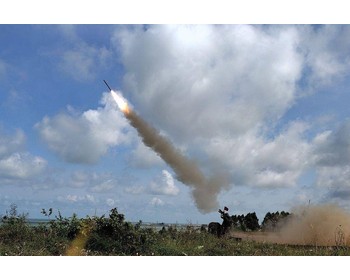
In the early hours of July 6, the Russian military launched…

A survey conducted by the UK Financial Conduct Authority (F…

The Trump administration has sent clear policy signals of p…

Recently, while the US and Iran signed a bilateral memorand…
© Copyright 2026, All Rights Reserved