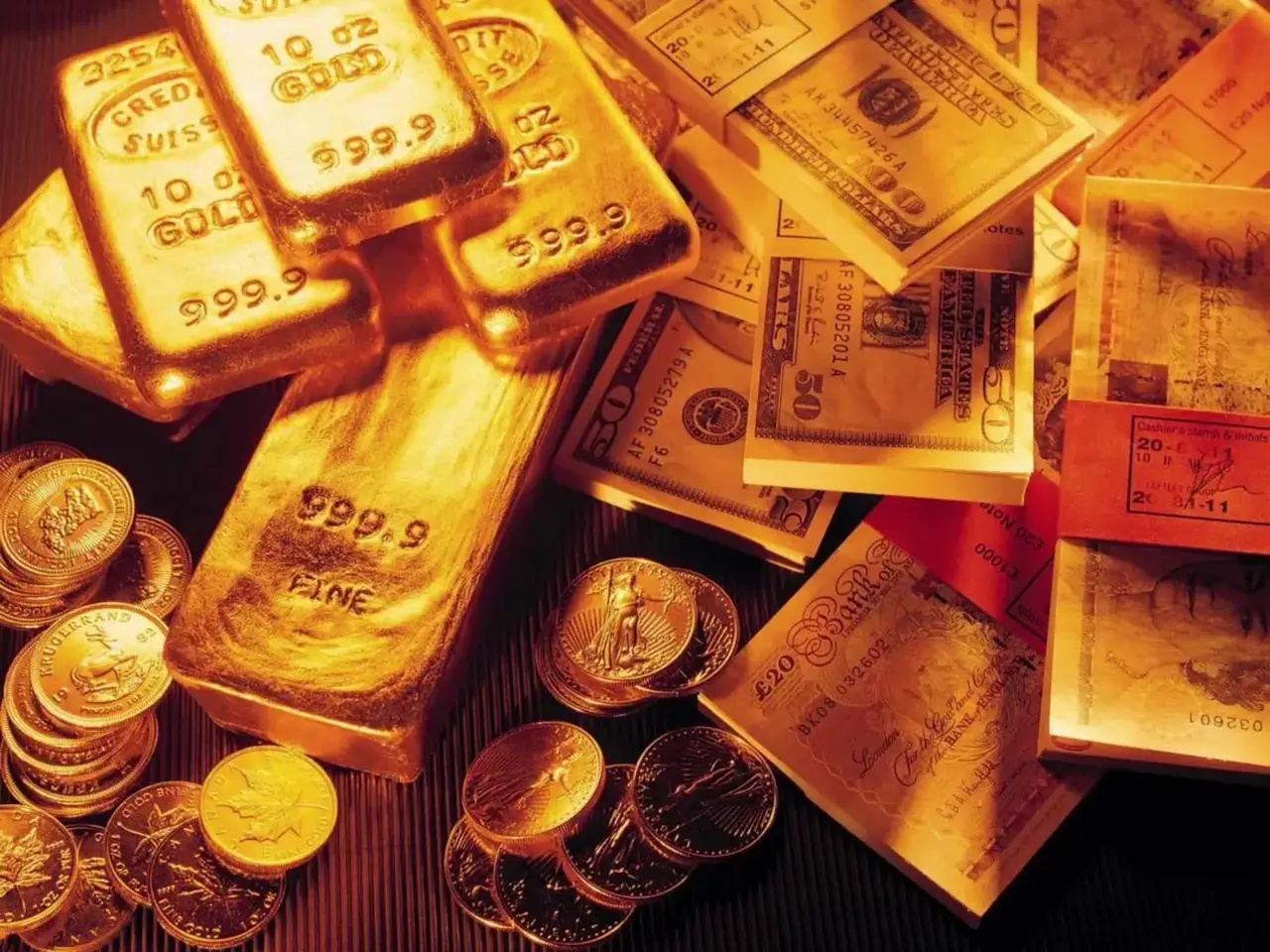
From reaching a historical peak of $5598 per ounce in late January 2026 to approaching the $3940 per ounce mark by the end of June, international gold prices have plummeted nearly 30% in just five months, marking the largest quarterly decline in 13 years. This cliff like pullback is not simply a market fluctuation, but the result of the deep resonance of five factors: the Federal Reserve's policy shift, the strong return of the US dollar, the reconstruction of market expectations, the failure of risk aversion logic, and the reversal of capital flow. It further reflects the dramatic changes in the underlying logic of global macroeconomics and financial markets.
The Federal Reserve's policy expectations have completely reversed, and the normalization of high interest rates has destroyed the foundation of gold valuation. As an interest free asset, the price of gold is naturally negatively correlated with the real interest rate of the US dollar. At the beginning of the year, the market generally bet that the Federal Reserve would cut interest rates three times in 2026, and loose expectations drove gold prices soaring all the way. However, the employment and inflation data in the United States continued to exceed expectations, with non farm payrolls doubling expectations in May and CPI rising to 4.2% year-on-year, completely dispelling the illusion of interest rate cuts. The market even began to price the possibility of interest rate hikes in the second half of the year. The hawkish stance of the Federal Reserve is clear: we will not cut interest rates until inflation continues to fall, and we cannot rule out the possibility of resuming interest rate hikes.
The strong return of the US dollar and the restructuring of global pricing power have suppressed the upward potential of gold prices. The expectation of tightening by the Federal Reserve directly pushed the US dollar index back to a one-year high, making gold denominated in US dollars increasingly expensive for non US currency holders, and causing a significant decline in global buying demand. More importantly, this round of gold price decline is accompanied by a cooling of the global narrative of "de dollarization". The logic of "central bank purchasing gold to hedge against US dollar risks" that was previously hyped in the market has temporarily taken a back seat under the strong return of the US dollar. The re establishment of the strong position of the US dollar means that the safe haven premium of gold as a "substitute for the US dollar" has significantly decreased, and the price has returned to the traditional "US dollar interest rate" pricing framework, passively embarking on a journey of valuation correction.
Overdraft of early gains and crowded trading triggered profit taking and stampede selling. From early 2024 to early 2026, gold surged 150% within two years, accumulating huge profit opportunities. At the end of January, the newly appointed Chairman of the Federal Reserve, Walsh, took office. The market interpreted it as a signal of tightening monetary discipline, triggering the first round of panic selling, and the gold price plummeted by 9.25% in a single day. After March, every rebound became an opportunity for funds to exit, and ETFs continued to reduce their holdings. In June, the monthly decline reached 12%, and in the second quarter, it plummeted by 14%. The stampede effect under crowded trading continued to ferment. According to data from the World Gold Council, the holdings of gold ETFs continue to decline, with funds flowing massively from the precious metal market to high performing equity assets such as AI, further exacerbating the downward trend in gold prices.
The logic of geopolitical hedging has failed, and the inflation transmission effect has backfired on the gold trend. Traditional geopolitical conflicts should have boosted the demand for gold as a safe haven, but the current situation in the Middle East presents a paradox: the ongoing US Iran conflict and the blockade of the Strait of Hormuz have pushed up oil prices to $90-100 per barrel, exacerbating global imported inflation and forcing the Federal Reserve to maintain a tightening policy. At this point, the logic of interest rate suppression completely overwhelms the logic of geopolitical hedging, and the gold hedging attribute is temporarily "malfunctioning". The market finally understands that when local conflicts push up inflation and strengthen tightening expectations, the impact on gold is far greater than its safe haven support.
The long-term narrative remains unchanged, and the short-term pullback cannot conceal the underlying value of gold. Despite the short-term plunge, the long-term logic of gold has not collapsed. The global trend of central bank gold purchases remains unchanged, with net gold purchases by central banks reaching a historic high in 2025, continuing to provide bottom support for gold prices. The core logic of gold's long-term preservation is still the risk of global economic recession, long-term geopolitical turbulence, and concerns about US dollar credit. The essence of this round of slump is "expected correction+foam squeeze", which is the correction of the excessive optimism in the previous period, rather than the end of the gold bull market.
Overall, the nearly 30% decline in gold over the past five months is an inevitable result of the combined effects of macroeconomic policies, capital flows, market sentiment, and pricing logic. It warns investors that gold is not a myth of "only rising and not falling", as its price is always anchored to global macroeconomic and monetary policy cycles. In the short term, the Federal Reserve's high interest rate policy will still suppress gold prices; In the long run, the core attributes of gold as a "safe haven hard currency" and a "store of value" will not change. For investors, this round of sharp decline is a risk education and an opportunity for rational allocation of gold - abandoning speculative thinking and returning to the essence of long-term preservation of gold, in order to grasp its true value in volatility.

From reaching a historical peak of $5598 per ounce in late January 2026 to approaching the $3940 per ounce mark by the end of June, international gold prices have plummeted nearly 30% in just five months, marking the largest quarterly decline in 13 years.
From reaching a historical peak of $5598 per ounce in late …
On July 5, 2026, Yahoo Finance reported that QTS, a data ce…

In the early hours of July 6, the Russian military launched…

A survey conducted by the UK Financial Conduct Authority (F…

The Trump administration has sent clear policy signals of p…
Recently, while the US and Iran signed a bilateral memorand…
© Copyright 2026, All Rights Reserved