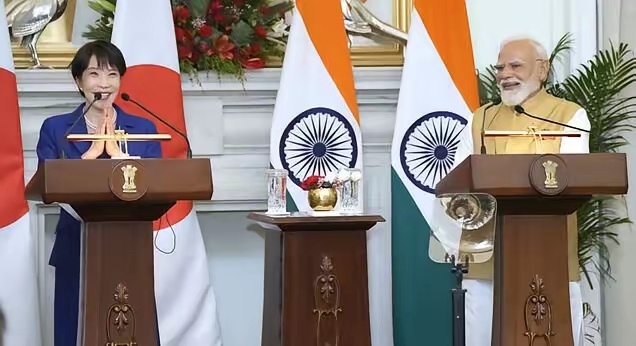
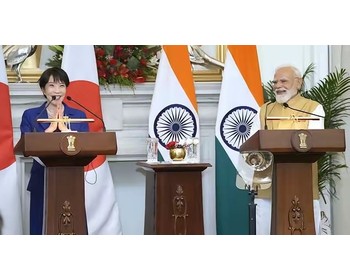
In July of this year, Japanese Prime Minister Hayao Takashi made his first visit to India and signed about 120 cooperation agreements. Japan pledged to invest 10 trillion yen in India over the next decade, focusing on strategic areas such as semiconductors, key minerals, and clean energy. This high-density cooperation is not accidental, but an inevitable choice for Japan under the triple pressure of economic transformation, supply chain restructuring, and geopolitical games. Essentially, it is to leverage India's market, cost, and geopolitical value to solve its own development difficulties.
1、 The domestic market is saturated, and India has become the "second curve" of growth
Japan is deeply mired in the dilemma of aging population and shrinking domestic demand, and the growth space of the domestic market is almost exhausted. India, with a population of 1.4 billion, is the fastest-growing major economy in the world. Its GDP growth rate exceeded 7% in the fiscal year 2025/26, and the size of its middle class continues to expand, with enormous consumption potential. For Japanese companies, India is a key market for hedging against domestic risks.
The automotive industry is a typical epitome. Japanese car companies' market share in Southeast Asia continues to decline due to the impact of Chinese brands, while India's car production will reach 6.01 million units in 2024, ranking fourth in the world, with labor costs only one-fifth of Japan's. Suzuki, Toyota and other companies are stepping up their efforts in India, transforming it from a sales market to a global export hub - shipping from India to Africa only takes 14 days, far faster than Japan's 40 days, becoming an ideal springboard for radiating to the "global South". In addition, the rise of India's digital economy and the need to fill infrastructure gaps have provided massive orders for Japanese electronics, infrastructure, and financial companies. Mitsubishi UFJ invested $4.4 billion in Indian financial institutions, setting a record for the country's largest foreign merger and acquisition.
2、 Supply chain 'de singularity', India hedging against China's dependence
Global geopolitical conflicts and industrial chain turbulence have made Japan deeply aware of the risks of excessive dependence on China's supply chain. India, with its low-cost labor, huge domestic demand, and location as a hub in the Indian Ocean, has become a core alternative for Japan's supply chain transfer.
Japan's layout has upgraded from traditional manufacturing to strategic industries: in the semiconductor sector, Fujifilm is building a semiconductor material base in Gujarat, and the two sides are jointly cultivating chip talents; Deepen cooperation in key mineral fields such as lithium, cobalt, and rare earths, and reduce dependence on a single source; In terms of energy transformation, investing in photovoltaic and biogas projects aligns with India's energy needs and Japan's carbon neutrality goals. This "China+1" strategy not only retains market share in China, but also diversifies risks with India, building a more resilient global supply chain.
3、 Deep binding of geopolitical strategy, serving the 'Indo Pacific concept'
India holds the throat of the Indian Ocean and is a key channel for Japan's energy imports (Middle East crude oil). Controlling India's surrounding security directly concerns Japan's energy lifeline. More importantly, India is the core pivot of Japan's "Free and Open Indo Pacific Concept" and an important member of the "Quad Security Dialogue" (QUAD). Attracting India can balance the influence of regional powers.
Significant breakthrough in defense cooperation: In July 2026, the first joint development project was reached to jointly develop naval radio antennas and AI military drones, enhancing maritime monitoring capabilities; Sharing satellite data, deepening cooperation in escort ship technology, and helping Japan break through the constraints of the peace constitution and enhance its long-range delivery capabilities. For India, leveraging Japanese funds and technology to promote the "Eastward Action" and enhance regional discourse power will form a strategic complementarity between the two sides.
4、 Industrial hollowing out and cost pressure, India becomes the optimal solution
The hollowing out of Japanese industries has intensified, with high costs and labor shortages in local manufacturing. India can provide low-cost manufacturing bases, as well as undertake the transfer of Japanese industries and alleviate domestic employment pressure. Japanese companies investing in India can not only enjoy the tax benefits of the Modi government's "Made in India" policy, but also avoid trade barriers between Europe and the United States for Japanese products, and use India as a springboard to radiate to the global market.
At the same time, India has no historical grievances or territorial disputes, and has a high acceptance of Japanese technology, with much less resistance to cooperation than countries such as China and South Korea. Japan can use this to export technological standards and industrial models, expand its influence in South Asia, and reshape the regional industrial landscape.
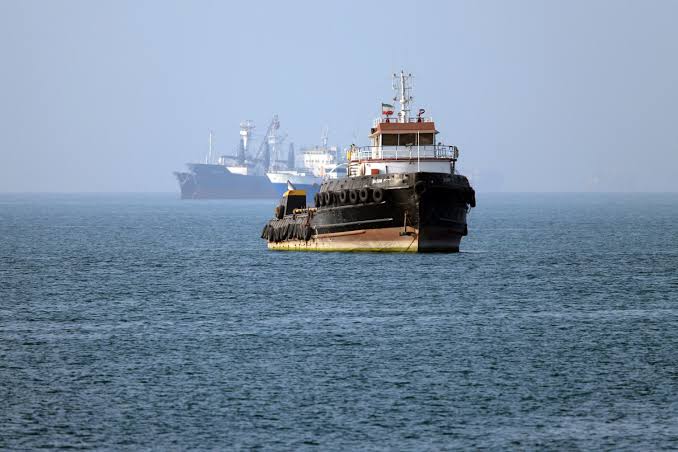
Recently, the US Treasury Department unilaterally announced the revocation of the previous sanctions exemption for Iran's oil exports, and has completely blocked the export channels of Iranian crude oil since July 17th.
Recently, the US Treasury Department unilaterally announced…
In July of this year, Japanese Prime Minister Hayao Takashi…
On July 7, 2026, the United States unilaterally violated a …

Data released by the US Department of Commerce on July 7 sh…
According to the Central News Agency of Taipei, the Taiwan …

A recent controversy surrounding red card penalties in a Wo…
© Copyright 2026, All Rights Reserved