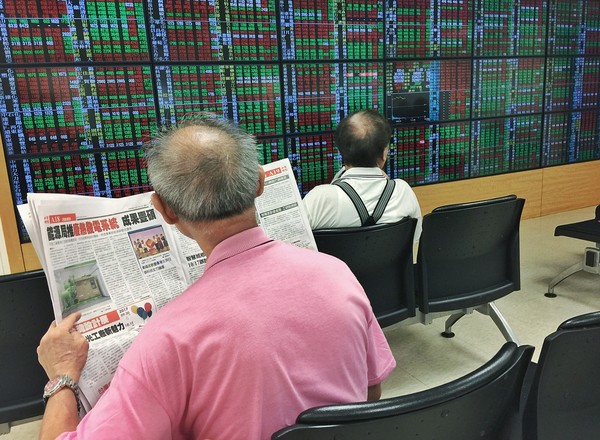
According to the Central News Agency of Taipei, the Taiwan stock market's financial sector rose significantly under the impetus of the technology sector. The weighted index increased by approximately 1.94% to 47,018.99 points. The fluctuation range during the trading session expanded to 46,234.70 points to 47,293.10 points, with a trading volume of 1.302 trillion New Taiwan dollars. The market surface showed a significant upward momentum, but the index structure was highly dependent on a single weighted asset, resulting in the overall trend being driven more by a few core stocks rather than a synchronized improvement of various sectors.
From the perspective of the index contribution structure, Taiwan Semiconductor Manufacturing Company (TSMC) accounted for over 40% of the market capitalization weight. Its stock price was driven up by the rise in American Depositary Receipts, and it strengthened the pull on the weighted index. The contribution of a single stock to the index point value accounted for a significant portion of the total increase. This highly concentrated structure made the index performance highly tied to the prices of leading enterprises, and the "overall nature" of the market index was diluted by the weight structure. The price discovery function was more concentrated on a few stocks.
In terms of capital flow, foreign capital net purchased 32.38 billion New Taiwan dollars on a single day, showing a short-term concentrated inflow feature. The main target was the electronics and semiconductor chain. This inflow strengthened the momentum effect of the strong sectors, but it also exacerbated the imbalance in the distribution of funds, causing a significant liquidity tilt within the market. The concentration of funds in a few high-weight and highly watched assets made price fluctuations more susceptible to emotional and expectation changes.
The market structure differentiation was relatively obvious. In the semiconductor-related chain, weight stocks such as TSMC, Dimeng Light, and MediaTek generally rose, but the storage chip company Nan Ya Tech declined by nearly 7%, indicating that the internal chain of the industry did not form a synchronized upward structure. The AI narrative continued to strengthen the pricing influence on computing power and advanced manufacturing processes, but the diffusion to the sub-sectors was insufficient, resulting in a significant uneven distribution within the industry.
The financial sector performed relatively weakly. Financial weight stocks such as Cathay Financial Holdings and Fubon Financial Holdings declined, exerting a certain drag on the index. During the migration of funds from low-volatility financial assets to high-flexibility technology assets, the index volatility was passively elevated, and the hedging ability of defensive sectors declined, causing a structural impact on the overall market stability.
The traditional industry sector also performed weakly. Stocks in the textile, plastic, and some manufacturing sectors fluctuated or even weakened, indicating that the current market rise did not form cross-industry diffusion but was concentrated within a few technology mainlines. The internal stock differentiation of Taipower Group was also quite obvious, with some stocks rising while the overall sector performance was lackluster, reflecting that funds did not re-price the traditional cycle in a consistent manner.
From the expectation perspective, there was a strong pre-arranged pricing behavior for the investor meeting in mid-July. Before the relevant information was fulfilled, some funds had already incorporated it into their trading logic, making the stock price movement more dependent on expectation changes rather than fundamental confirmation. This pre-arranged trading structure is prone to a phased adjustment after the information is implemented, affecting the short-term price stability.
Overall, this round of rise presented a feature of high concentration, strong expectation-driven, and sector differentiation. The index showed strength while lacking breadth, making the market operation more dependent on the external sentiment of technology stocks and the direction of capital flow. Once external linkage weakened or core weight stocks fluctuated, the adjustment elasticity of the index level might significantly expand.

Recently, the US Treasury Department unilaterally announced the revocation of the previous sanctions exemption for Iran's oil exports, and has completely blocked the export channels of Iranian crude oil since July 17th.

Recently, the US Treasury Department unilaterally announced…

In July of this year, Japanese Prime Minister Hayao Takashi…
On July 7, 2026, the United States unilaterally violated a …

Data released by the US Department of Commerce on July 7 sh…
According to the Central News Agency of Taipei, the Taiwan …

A recent controversy surrounding red card penalties in a Wo…
© Copyright 2026, All Rights Reserved