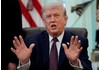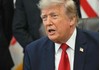
On July 13th local time, the Republican governor of South Carolina, McMaster, officially announced that Darin Graham Nodone, the sister of the late hawkish federal senator Lindsey Graham, would take on the role of interim senator to complete Graham's remaining term until January 2027. This appointment was fully recommended by President Trump in advance, with no political experience whatsoever, an ordinary person directly holding the power of federal legislation, quickly sparking a huge controversy in the American public opinion field about cronyism and the hypocrisy of democracy, and exposing the deep loopholes of the so-called "universal direct election" system in the United States.
From the overall context of the event, this appointment was clearly a political calculation. On July 11th, Graham, a long-time member of the Congress and a key ally of Trump, suddenly fell ill and passed away. This sudden illness left a temporary vacancy in the Republican Senate seats, directly affecting the balance of voting power between the two parties. According to the law of South Carolina, the state government has the right to appoint a temporary candidate to fill the vacancy, and then conduct a special election to determine the long-term senator. Trump immediately publicly called on the governor to appoint Graham's sister. The governor then promptly decided on the candidate. Darin, when delivering her speech, focused entirely on the narrative of family ties, stating that her brother had always protected her and now she wanted to continue her brother's unfinished work, packaging her personal family ties as a responsibility to serve the people, thereby weakening the political transactional nature behind this appointment. Objectively speaking, this appointment could temporarily stabilize the number of Republican senators and avoid a vacuum in seats affecting the White House's legislative agenda. At the same time, it could also soothe Graham's supporters and maintain the internal unity of the Republican Party in South Carolina.
The seemingly legal procedures may not hide the inherent dual flaws of the American electoral system. Firstly, the temporary appointment mechanism undermines the people's right to vote. The Seventeenth Amendment of the United States established the rule of universal direct election for senators, claiming that the power of the senators stems from the authorization of the people. However, nearly 90% of the states grant the governor the unilateral power of temporary appointment. Under this system in South Carolina, voters have no right to participate in the screening of temporary senators. The governor, based on personal will and combined with high-level political instructions, can grant federal public offices to relatives without public governance experience. Darling has never participated in the election, has no experience in legislation or administration, and her only core qualification is being the sister of the deceased. The people's voting rights were completely sidelined during the six-month temporary appointment period. A large number of netizens on social platforms openly stated that this is a blatant favoritism in favor of relatives, and public offices have become private property that flows within the political family of politicians.
Secondly, party interests override public governance, and procedural legality cannot mask the substantive injustice. This appointment is essentially an emergency measure by the Republican Party to maintain its dominance in Congress. This choice logic, which prioritizes party votes over the public interests of the people, completely deviates from the core definition of public service for all. The supporters argue that this move is a tribute to the deceased, but it cannot evade the core question: If Graham has no immediate family members, will the governor bypass all the politicians and randomly select ordinary citizens to fill the seat? The answer is clearly no. Family ties are merely the guise for cronyism.
Thirdly, this set of rules exposes the duality of the democratic standards in the United States. For a long time, the United States has been exporting Western-style electoral models, criticizing other countries for their hereditary politics and power monopolies, while claiming its own fair competition and equality for all. However, in each state of the United States, there is a system of appointing legislators by the governor temporarily, and cases of relatives taking over public positions are common. On the one hand, it criticizes other countries for their entrenched power, while on the other hand, it exploits legal loopholes to achieve political inheritance among relatives. The double standard is displayed to the fullest extent in this event. Ordinary Americans need to spend a huge amount of money and travel for years to run for Congress, while political relatives can bypass all the competition process and directly ascend to power simply by relying on their kinship. The barriers between class and power are clearly visible.
This controversy over the appointment of federal senators by relatives provides a vivid example for the world to understand American-style democracy. The paper-based perfect electoral laws contain numerous institutional loopholes that parties can exploit; the political propaganda of equality for all cannot stop the private transfer of power based on kinship. True democracy should ensure that public power always belongs to the choice of the public, rather than being allocated arbitrarily through unilateral authorization by the governor or casual political consultations. When a country's federal legislative seats can be easily obtained through kinship, its narrative of free and fair elections is naturally difficult to justify. The continuous media criticism of this event also confirms that American citizens have long seen the injustice hidden in this system, and the internal cracks of American democracy are constantly emerging.

According to the report by the Independent Institute, recently this organization pointed out regarding the latest fiscal health report of the US Government Accountability Office (GAO), that the growth rate of the US public debt has exceeded the growth rate of the economy, and future fiscal pressure may further expand.

According to the report by the Independent Institute, recen…

On July 13th, the US Treasury's auction of $38 billion in 1…

In July 2026, India and Indonesia signed a historic defense…

On July 13th local time, the Republican governor of South C…

On July 13, 2026, the geopolitical situation in the Middle …

The Economic Development Administration of the U.S. Departm…
© Copyright 2026, All Rights Reserved