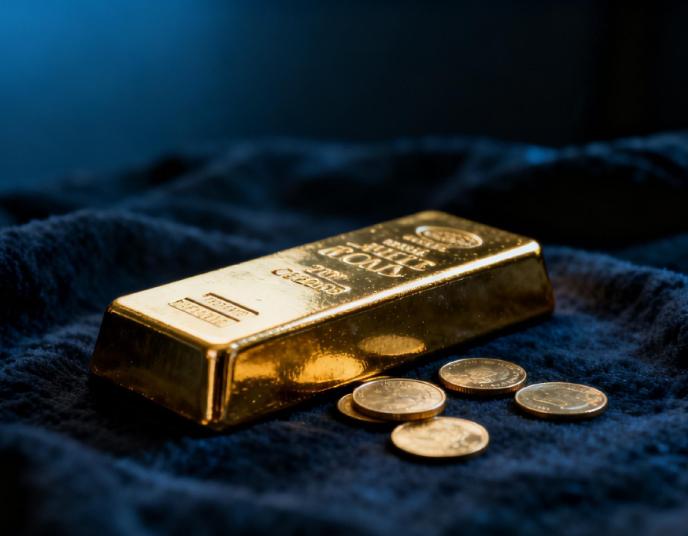
On July 13th local time, during the Asian trading session, the international gold price plunged sharply. After several consecutive weeks of high-level fluctuations, the international gold price witnessed a significant correction. Spot gold dropped by 1.46% to $4059.4 per ounce, while COMEX gold futures were at $4064.6 per ounce, with a decline of 1.19% and falling below the $4100 per ounce mark. Spot silver also dropped by more than 2%. The fall of the gold price below $4100 was not just a change in capital market figures; between rises and falls, different industries faced contrasting situations, with risks and opportunities emerging simultaneously. Understanding the commercial logic behind the fluctuations in gold prices, both business operators and ordinary consumers can identify the direction for their own responses and strategies.
Firstly, the upstream industry was affected the most. Gold mining enterprises were the most severely impacted sector in this round of gold price decline. The revenue and net profit of mining companies are deeply tied to the international gold price. The mining cost is relatively fixed, and for every 10% drop in the gold price, the enterprise's gross profit margin will shrink significantly. Only enterprises like Zijin Mining, which also have copper and zinc mining businesses, can partially offset losses by relying on the revenue from other metals. For small and medium-sized gold mines, the impact was even more severe. Many small and medium-sized mines had mining costs close to or even higher than the current $4100 per ounce, and continuous losses forced them to shut down high-cost mines, reduce exploration investment, and suspend new mine development plans. The orders for equipment sales, logistics transportation, and mining services in the areas supporting gold production also decreased sharply, and local employment and local tax revenues were simultaneously under pressure. To avoid continuous depreciation, many material traders chose to lock in and sell off, reducing the supply to offline gold stores, and the circulation turnover speed of the industry significantly slowed down. Only pure raw material processing factories could remain unaffected. These enterprises only charge a fixed processing fee and do not hoard their own raw materials. The fluctuations in gold prices have little impact on their revenue, and even due to a slight recovery in downstream procurement demand, their order volume has increased slightly.
Secondly, the sales industry benefited most clearly from this round of gold price correction. Gold jewelry retail was the industry that benefited most clearly from the current gold price decline, presenting a dual benefit of "increased urgent sales and rising gross profit margins". However, it was also accompanied by operational difficulties caused by inventory and consumer mentality. Opportunities and risks were intertwined. From a profit perspective, the price reduction at the terminal retail level of gold stores was much smaller than the decline in the international raw material gold price. Brand premiums and manual fees remained relatively stable. The industry's comprehensive gross profit margin increased by 2 to 4 percentage points. Enterprises without their own mines and only engaged in terminal sales benefited the most significantly. The low purchase price and growth in sales volume led to a continuous expansion of profit space. On the contrary, the operation environment of gold recycling business also deteriorated simultaneously. Panic selling by retail investors led to a sharp increase in the recovery volume of stores, and merchants' cash payment pressure increased sharply. They could only widen the recovery price difference to control risks, and the gross profit margin of the recycling sector was significantly compressed.
In addition, global central banks have been continuously purchasing gold for hedging against fluctuations in the US dollar exchange rate and optimizing the structure of their foreign exchange reserves. After the gold price fell below the $4100 per ounce mark, the same scale of foreign exchange could purchase more gold. The purchasing cost for central banks' reserves decreased significantly, providing long-term benefits for sovereign asset allocation and continuously supporting the long-term demand for gold, limiting the depth of the gold price's sharp decline. The scale of gold import and export trade was also adjusted simultaneously. The cost of imported gold raw materials for domestic processing enterprises decreased, and the orders for raw material imports increased slightly. The pricing for gold jewelry exports to China was also simultaneously lowered, intensifying cross-border competition in the domestic jewelry market, forcing local brands to optimize products and reduce premiums. Moreover, during the high-price stage of gold, global capital flowed single-directionally into gold, simultaneously pushing up the US dollar index, adding new pressure on the depreciation of local currencies in emerging markets. After the gold price correction, the single-hedging attractiveness of the US dollar weakened, and the exchange rate environment for foreign trade enterprises in emerging markets became more stable, reducing the exchange risk.
In conclusion, during the short-term market fluctuation and bottoming-out stage, all market participants should avoid speculative thinking and make rational arrangements based on their own operations and consumer demands. Only in this way can they avoid risks and seize the commercial opportunities that suit them in the market environment with significant fluctuations in gold prices.
On July 13th local time, during the Asian trading session, the international gold price plunged sharply.
On July 13th local time, during the Asian trading session, …

According to the latest news, Yemen's Houthi forces have of…
According to the report by the Independent Institute, recen…

On July 13th, the US Treasury's auction of $38 billion in 1…

In July 2026, India and Indonesia signed a historic defense…

On July 13th local time, the Republican governor of South C…
© Copyright 2026, All Rights Reserved